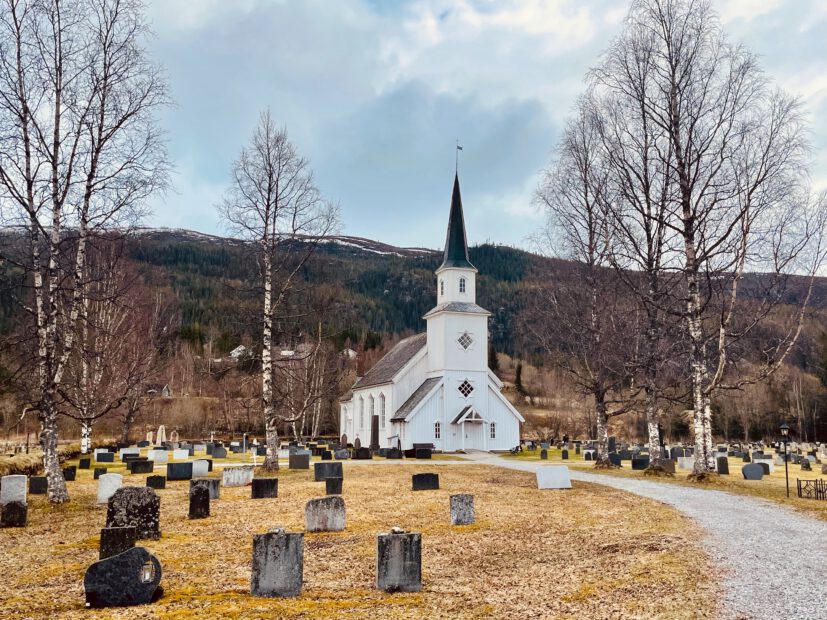
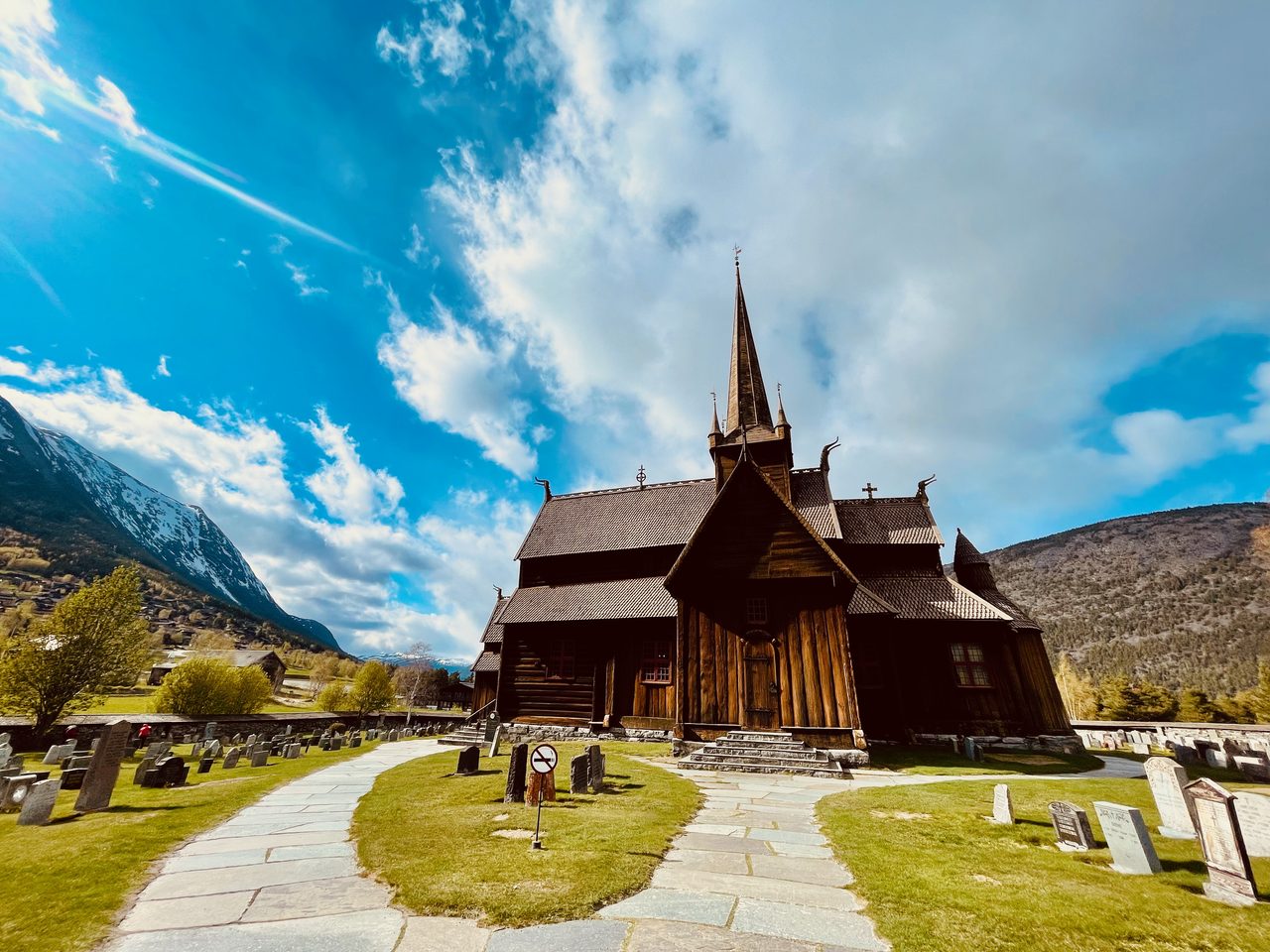

Lom Stave Church is one of those places that can turn a normal road trip stop into a real memory. During our journey through Norway, my travel companion had already been here by chance two years earlier. That earlier visit clearly stayed in mind, because this time there was a strong wish to stop again and show me why this church is so special. I am glad that happened, because Lom Stave Church became one of the quiet highlights of the day.
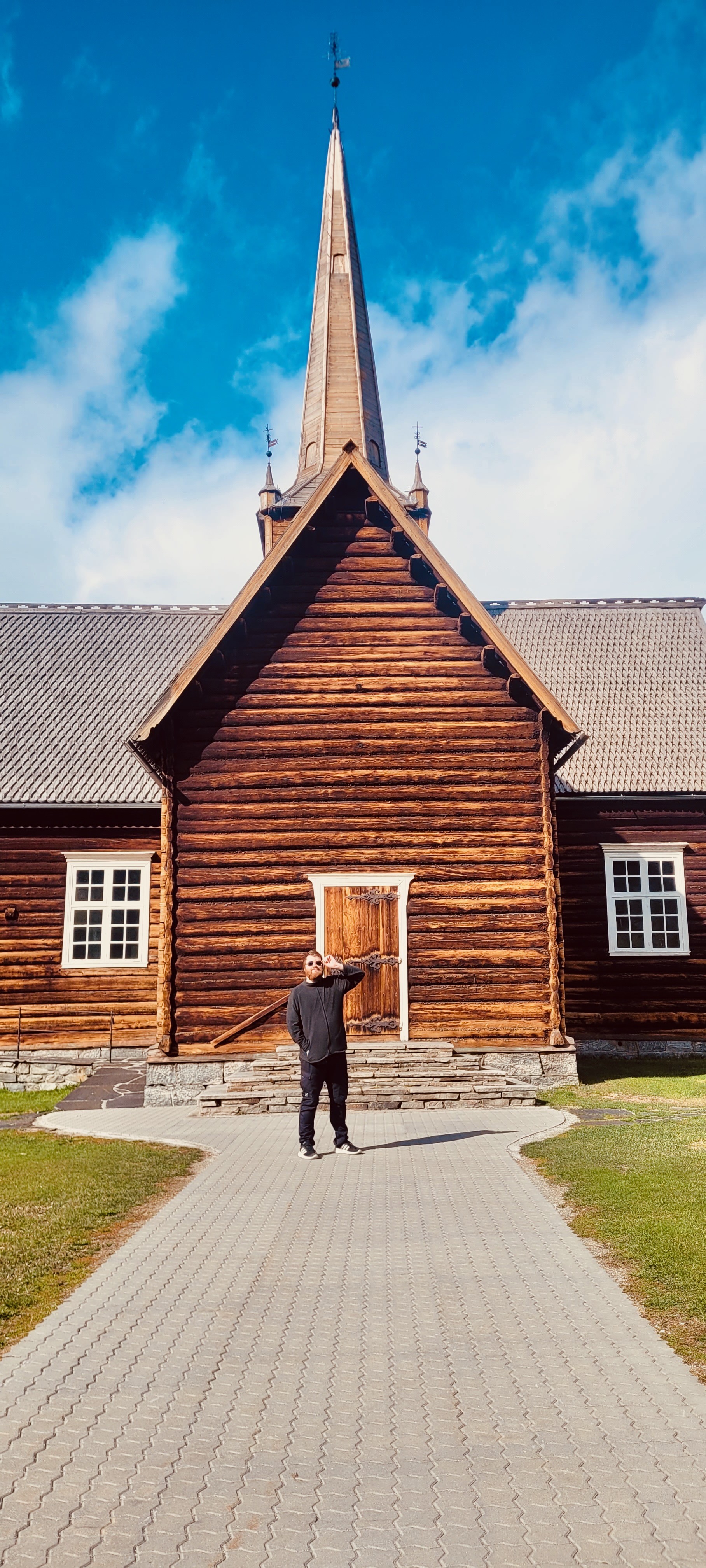
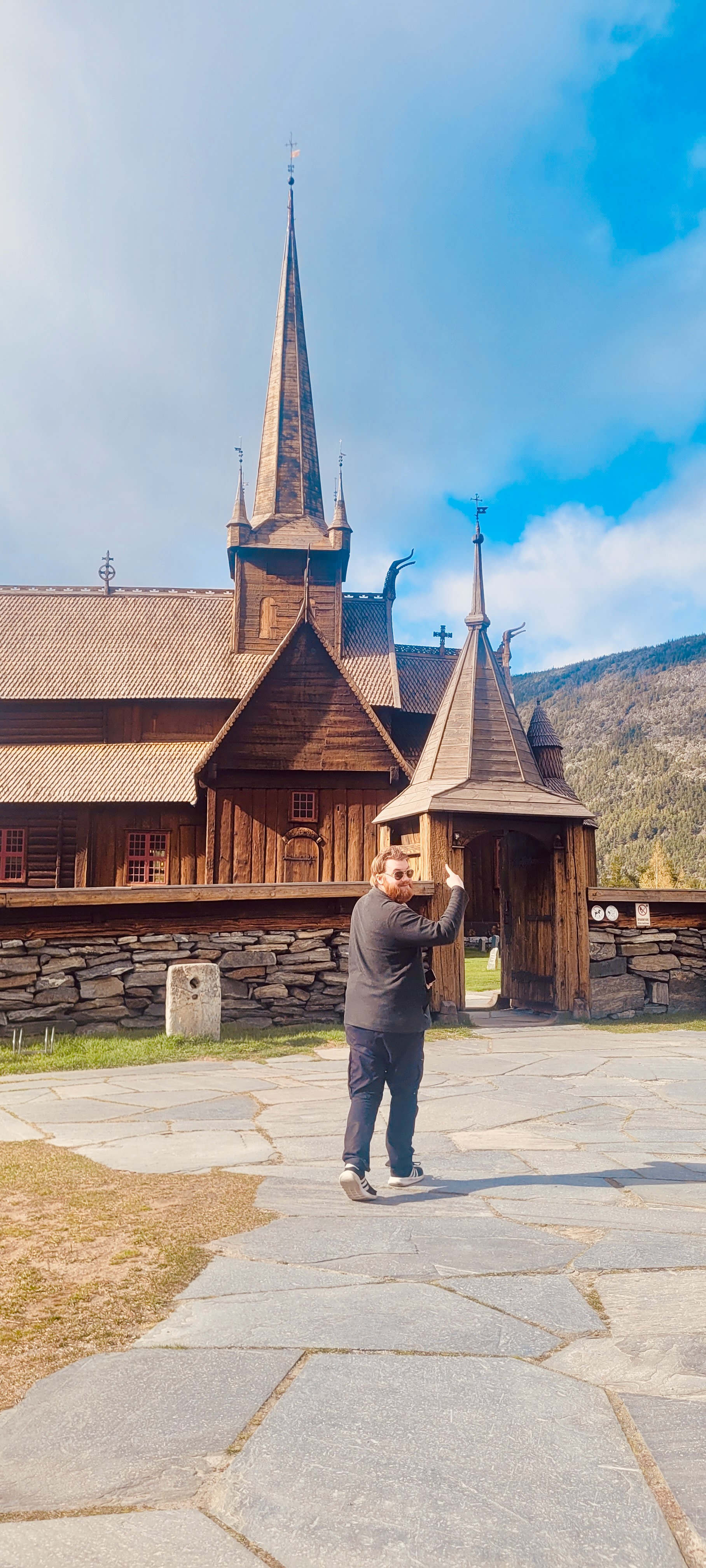
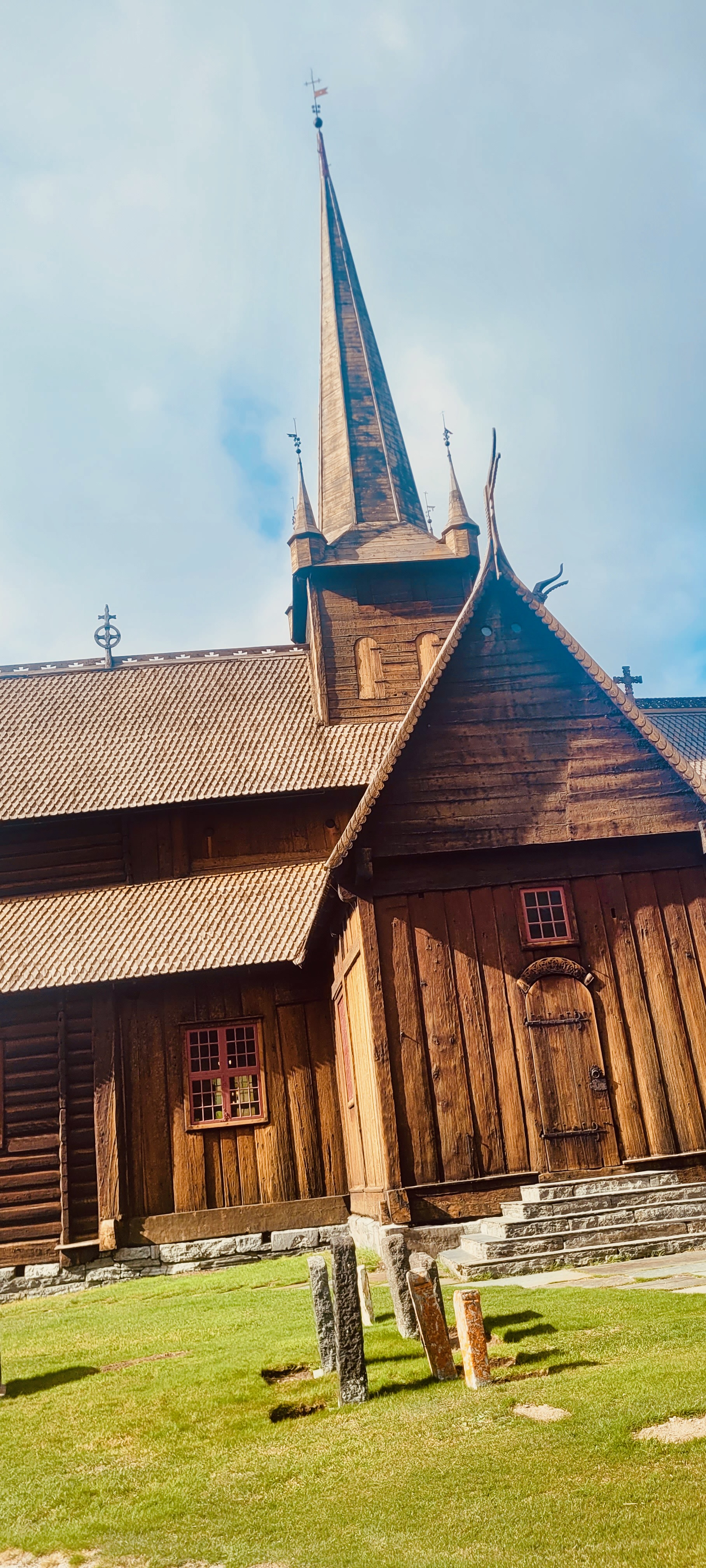
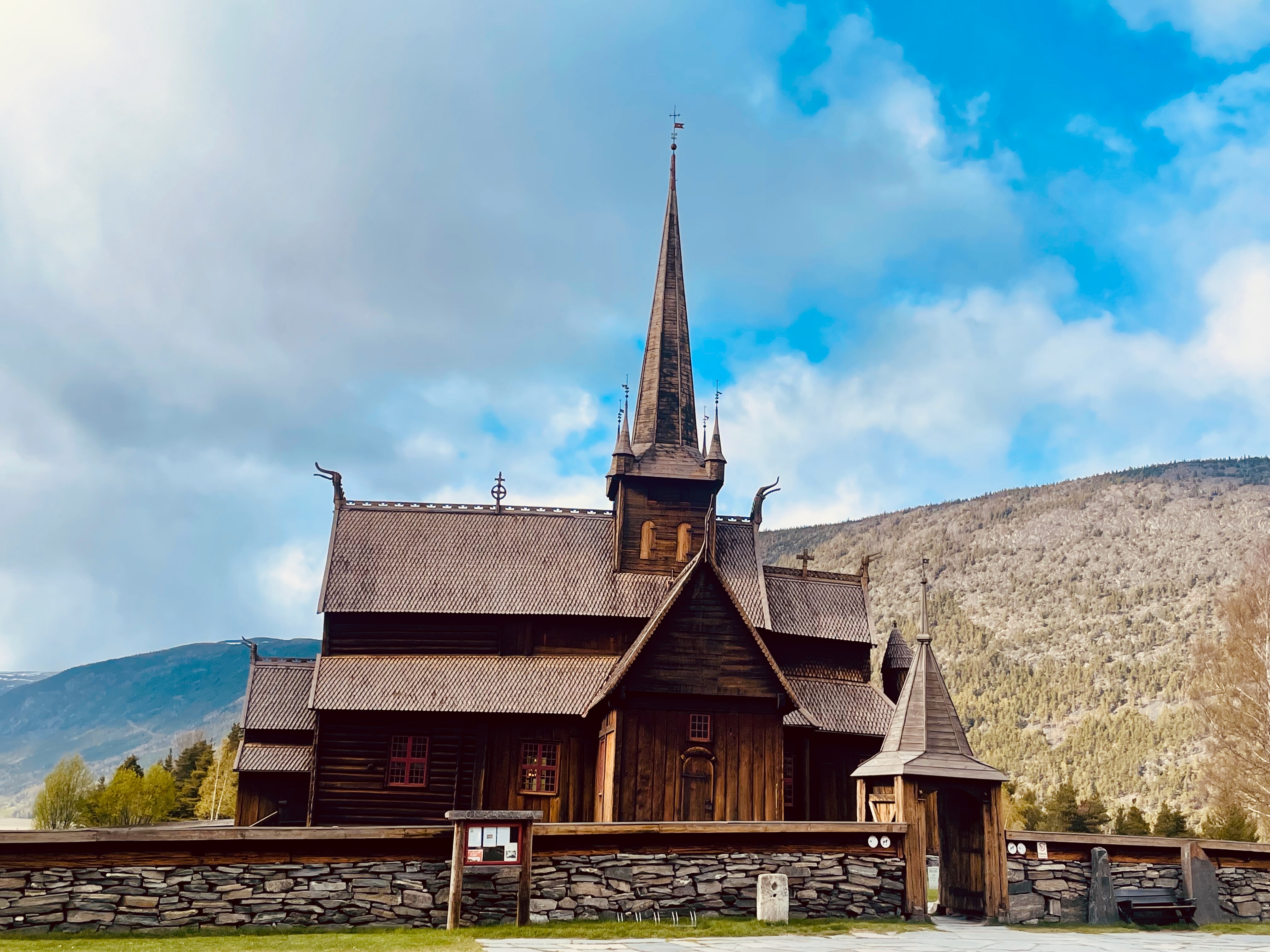
The church building itself was closed during our visit, so we could not step inside. Luckily, the gate to the churchyard was open, and that was already enough to make the stop worthwhile. Walking around the outside gave us time to notice the dark timber, the layered roof shapes, the carved details and the way the whole building seems to belong naturally in the Norwegian mountain landscape.
Why Lom Stave Church Is Worth A Stop
Lom Stave Church is not just an old wooden church. It is a piece of Norwegian medieval history that is still standing in the village of Lom, in Innlandet County. The church sits in a region connected with the valleys and mountain routes around Jotunheimen, making it a strong cultural stop between dramatic nature, road trip routes and old Norwegian village life.
What makes the visit powerful is the contrast. One moment you are driving through a rugged landscape of mountains, rivers and small settlements, and then this dark wooden church appears with a design that feels almost unreal. It has that rare feeling of being both peaceful and dramatic at the same time.
What Is A Stave Church?
A stave church is a medieval wooden church built with a special timber construction method. The word stave refers to the vertical wooden posts that carry the structure. Instead of stone walls, these churches use wooden frames, wall planks and corner posts, creating a strong building style that could survive harsh Norwegian conditions for centuries.
Norway once had many stave churches during the Middle Ages. Today, only a small number still remain, which makes each surviving church valuable. Lom Stave Church is one of the larger and older examples, and it gives a clear look at how advanced Norwegian wood building already was in the 1100s.
The style also has a unique atmosphere. Many stave churches combine Christian church design with older Nordic visual traditions. Dragon heads, animal ornamentation and carved wooden portals remind visitors that Norway was still close to its Viking Age past when many of these churches were built.
The History Of Lom Stave Church
Lom Stave Church was built in the mid 12th century. The timber in the oldest part of the church was cut during the winter of 1157 and 1158, which places the church deep in Norway’s medieval period. The building was used by locals, but also by travelers moving between east and west. That makes the location important, not only as a religious place, but also as a historical meeting point.
In the Middle Ages, Lom was a busy crossroad. Pilgrims and other travelers passed through the area, and the church became part of that wider travel network. This makes the visit feel even more interesting as a road trip stop today, because modern travelers are still doing something similar, stopping in Lom while moving through the mountains.
The Black Death in 1349 changed life in Norway heavily, and the church remained mostly unchanged for almost 300 years afterward. Later, the Reformation in 1537 removed many Catholic objects and symbols from the building, although the main structure stayed in place.
Architecture, Woodwork And Details
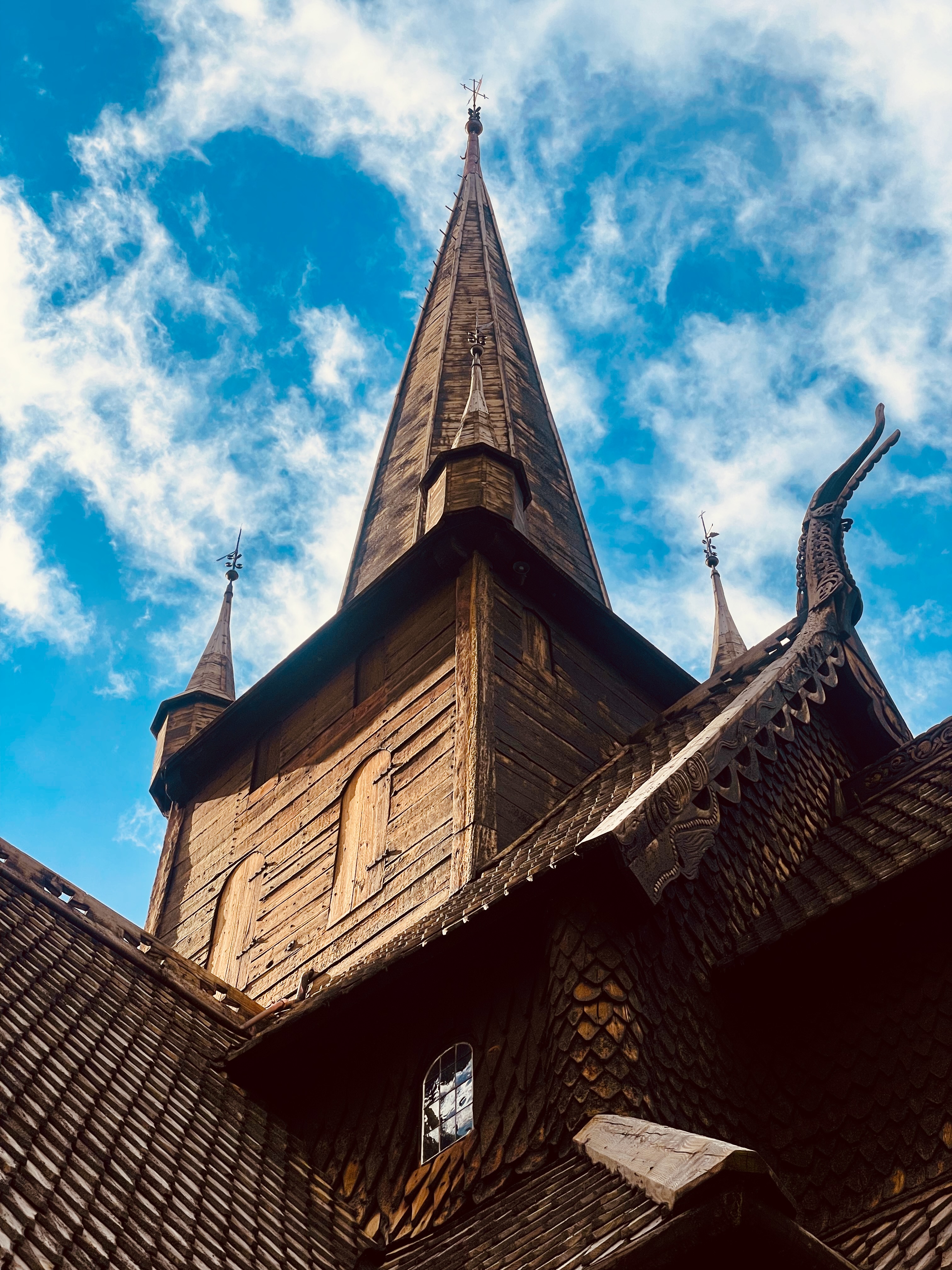
The details are the reason Lom Stave Church stays in your head. Even from the outside, the building shows craftsmanship everywhere. The dark tarred wood, the roof levels, the old portals and the carved dragon heads all create a very strong visual identity.
The original church had a stave built nave and choir, with a raised central room held up by interior posts. There was once also a gallery around the exterior, but this was removed when the church was expanded in the 1600s. These later changes gave the church a larger shape, including transepts to the north and south.
The roof dragon heads are especially important. Some visible decorations are replicas made in 1964, based on medieval originals. That detail matters, because it shows how careful preservation work keeps the historic appearance alive while protecting the oldest pieces.
Visiting When The Church Is Closed
Our visit proved that Lom Stave Church can still be worth it even when the inside is closed. Of course, seeing the interior would have added more context, especially because the church has paintings, pulpit details and historic decoration inside. But the churchyard alone gives a strong impression.
Walking around the building slowly is the best way to experience it. From one angle, you notice the height and roof structure. From another angle, the wooden walls and old portals stand out. Then the surrounding churchyard adds a quiet atmosphere that makes the stop feel respectful instead of touristy.
If the gate is open, take your time. Do not treat this place as a quick photo stop only. The building rewards slow looking, especially because the details in the wood are the main attraction.
A Road Trip Highlight In Lom
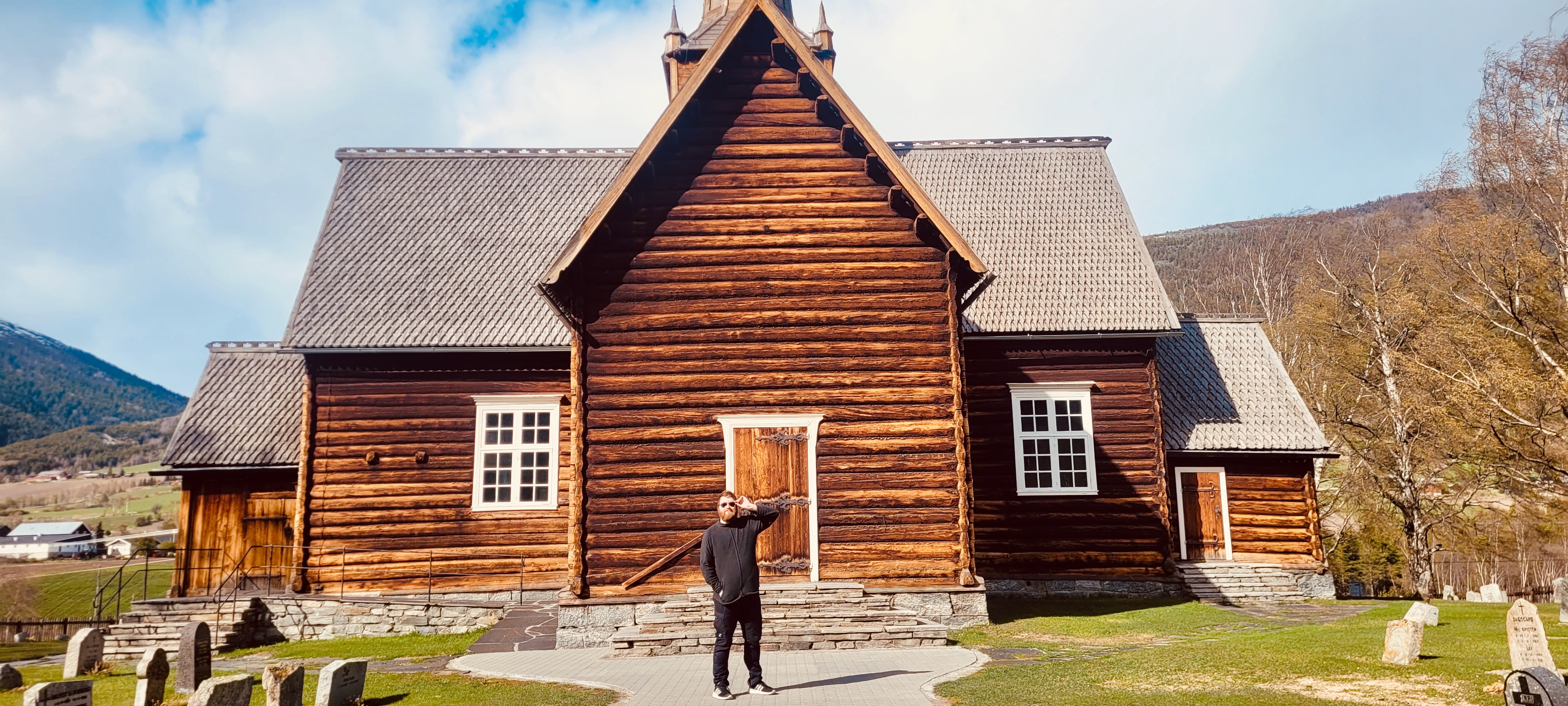
For me, Lom Stave Church became a day highlight because the stop was unexpected in the best way. It was not just about checking off a famous landmark. It was about being shown a place by someone who had already discovered it before and clearly remembered the feeling of standing there.
That personal layer made the visit better. Travel is often strongest when one person says, “we should stop here,” and the place turns out to be genuinely worth it. That is exactly what happened here.
Practical Tips For Visiting Lom Stave Church
If you are planning a stop at Lom Stave Church, check opening hours before your visit, especially outside the summer season. The church is still an active parish church, so access can depend on services, ceremonies and seasonal guiding.
Even when the church is closed, the exterior can still be beautiful to see if the churchyard is accessible. Bring a camera, but also give yourself a few minutes without taking photos. The atmosphere is part of the experience.
Lom itself is also a useful stop on a Norway road trip. It works well as a cultural break between mountain roads, national park scenery and longer driving days through Innlandet and the Jotunheimen area.
Final Thoughts On Lom Stave Church
Lom Stave Church is one of the most memorable wooden churches I have seen in Norway. The building feels ancient, detailed and calm, while still being easy to visit during a road trip. Even without entering the church, the outside was impressive enough to make the stop feel special.
If you are traveling through Lom, do not skip it. This is more than a historic building. It is a beautiful reminder of Norway’s medieval craftsmanship, mountain culture and long travel routes through the heart of the country.