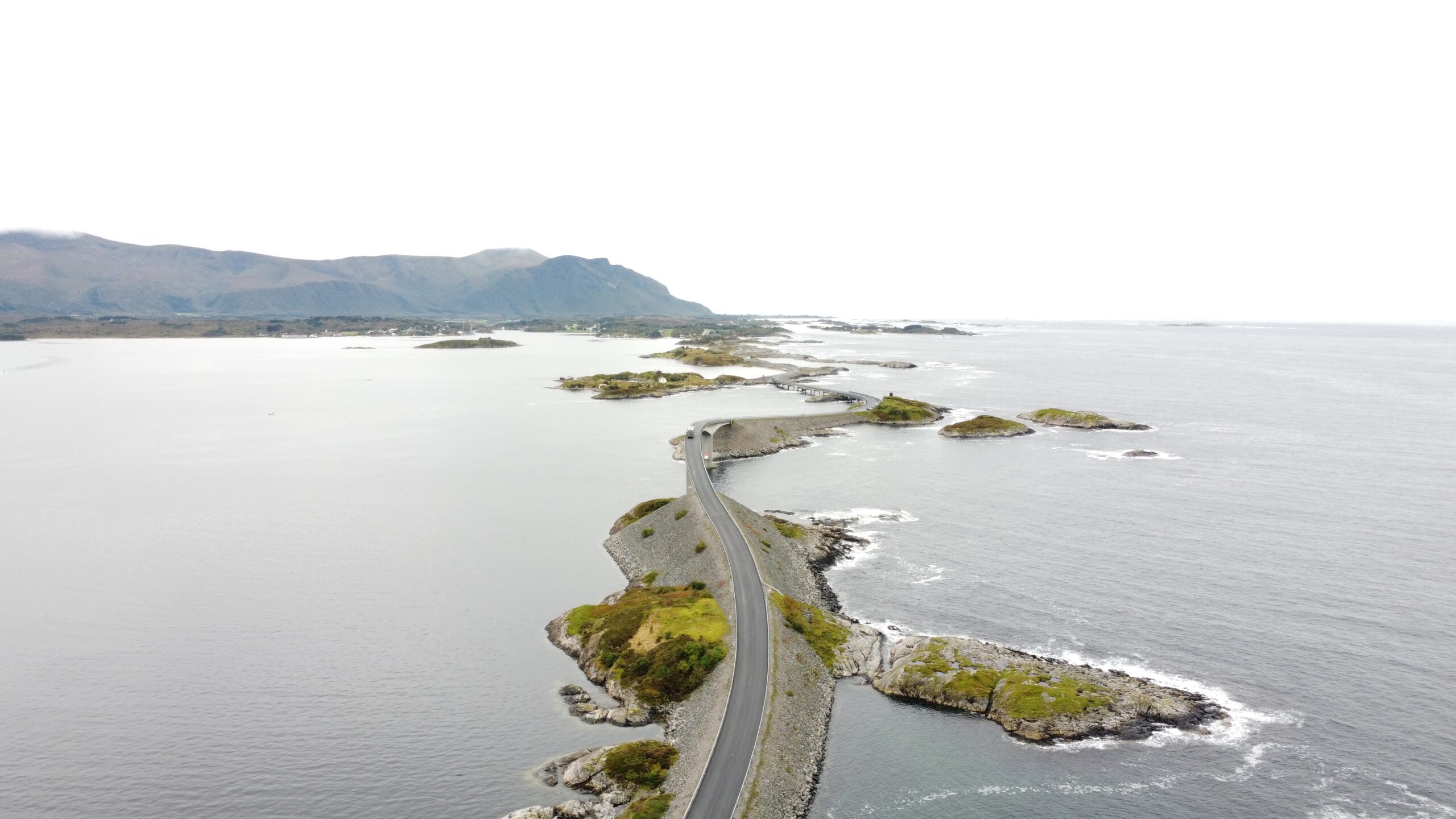

Atlantic Ocean Road Norway is one of the most scenic coastal drives in Europe, and Atlantic Ocean Road Norway was a natural highlight on our road trip through Western Norway. Driving from Sunndal and Oppdal toward Molde, Atlantic Ocean Road Norway simply fit perfectly into our route. It was never a question of if we would stop, it was a question of how long we would stay.
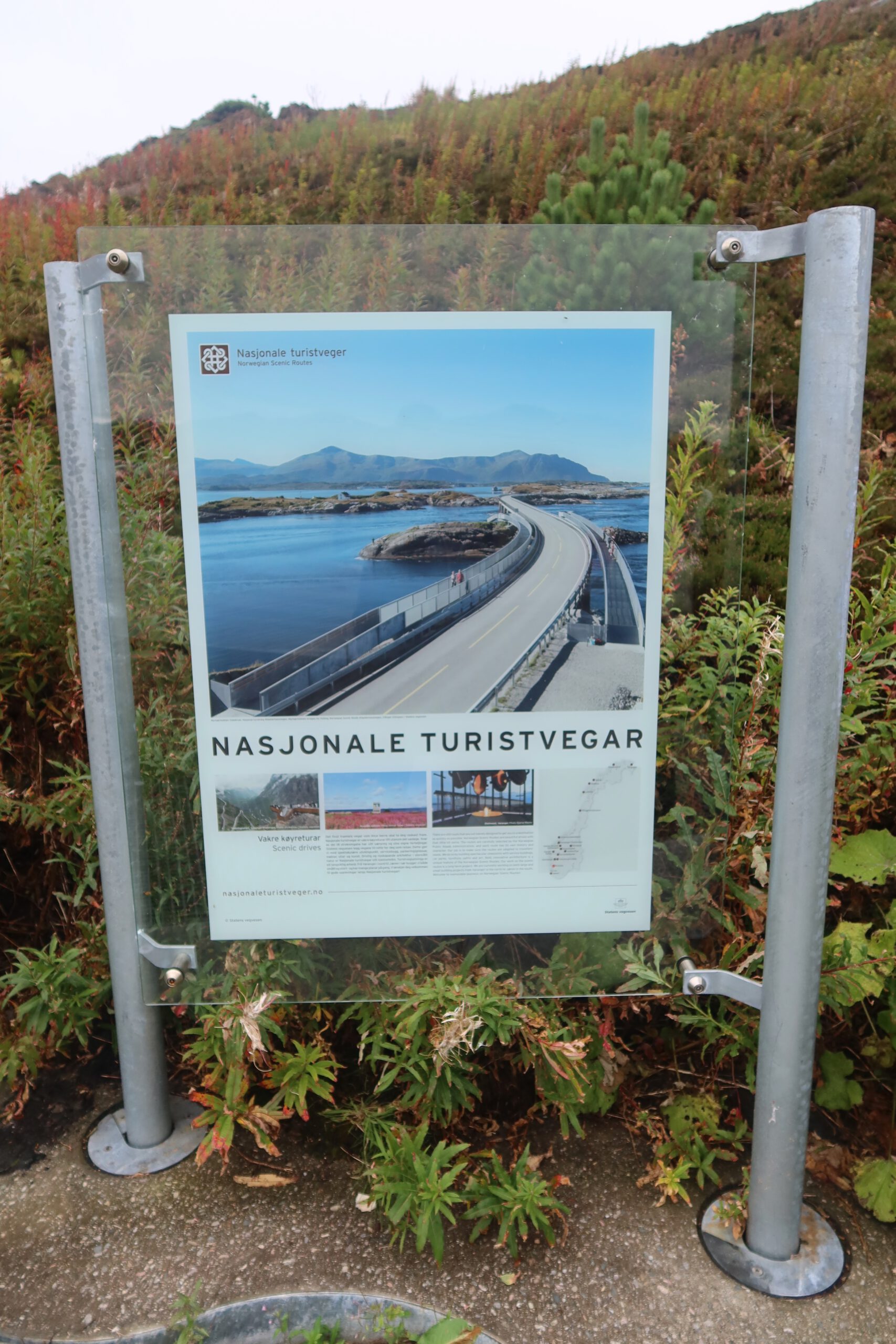
Atlantic Ocean Road stretches 8.3 kilometers, 5.2 miles, across the exposed coastline of Møre og Romsdal. This iconic section of County Road 64 connects Averøy with the mainland near Vevang and is officially part of Norway’s National Tourist Routes. Atlantic Ocean Road Norway opened in 1989 after six demanding years of construction in one of the roughest coastal environments in the country.

Why Atlantic Ocean Road Norway Was Built
Atlantic Ocean Road was built to create a permanent transport connection between the small coastal islands and the mainland. Before the road existed, ferries were necessary. The coastline around Hustadvika is shallow and historically dangerous for shipping, so improving infrastructure was both practical and strategic.
Construction began in 1983 and finished in 1989. During those six years, workers faced twelve severe Atlantic storms. Imagine building bridges while the ocean literally tries to take them down. Atlantic Ocean Road was eventually named Norway’s Construction of the Century, and once you stand there in strong wind with waves crashing below you, that title makes complete sense.
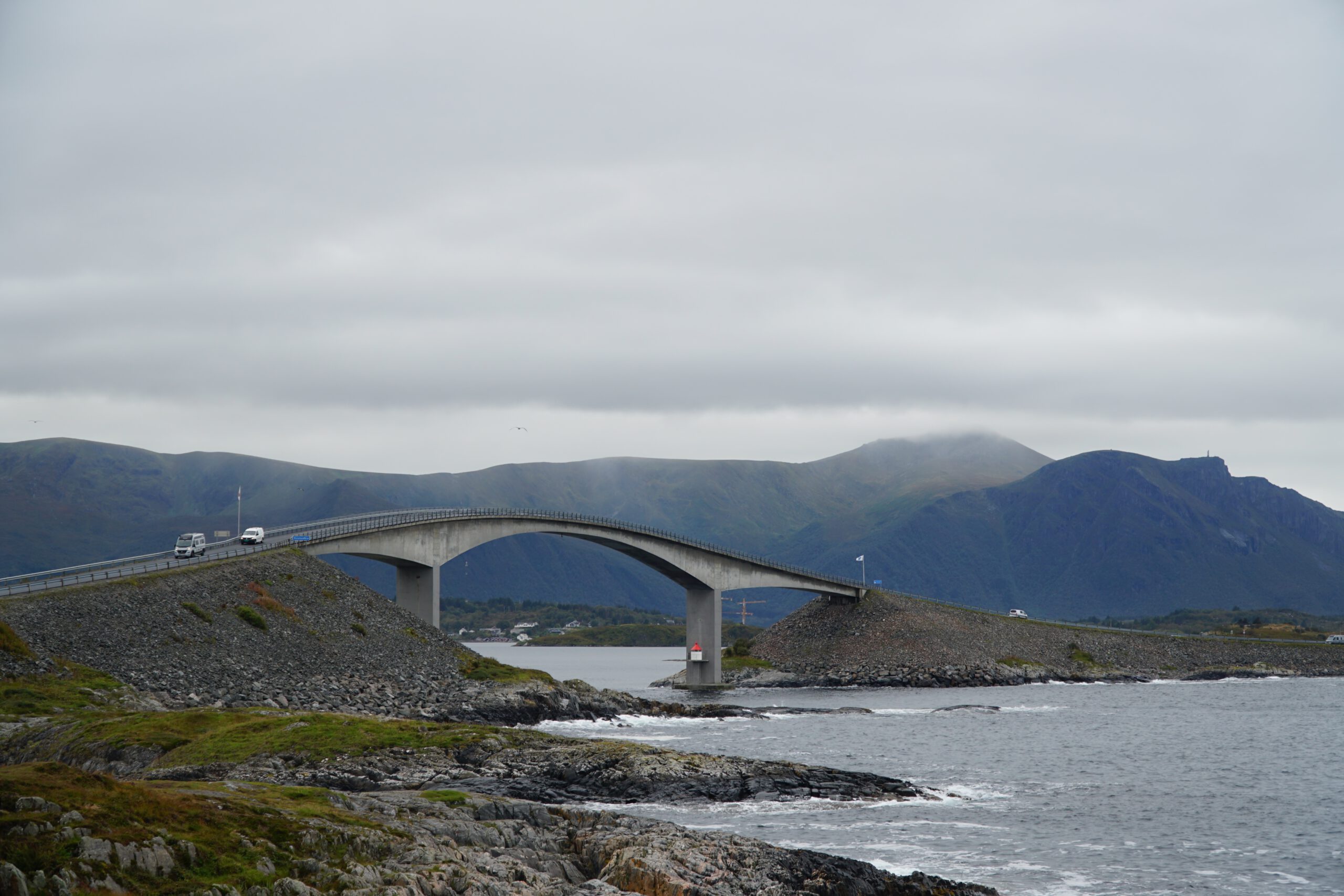
Atlantic Ocean Road Norway consists of eight bridges linking small islands and skerries. The most famous is Storseisundet Bridge, the one that appears to leap dramatically into the sky from certain angles. Other bridges include Hulvågen Bridges, Geitøysundet Bridge, Store Lauvøysund Bridge, and Lille Lauvøysund Bridge. Together they form the flowing structure that defines Atlantic Ocean Road Norway.
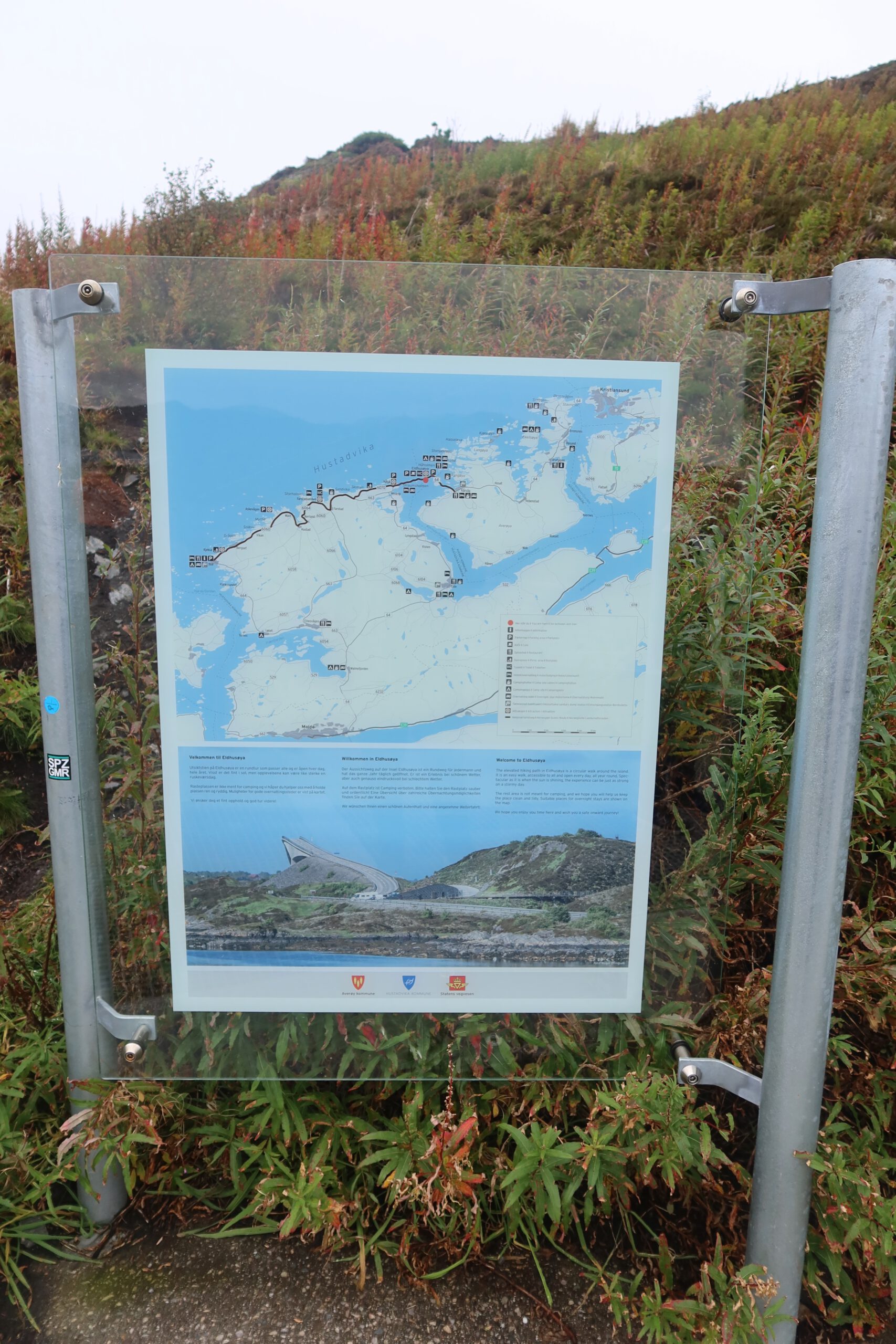
Arriving at Atlantic Ocean Road Norway
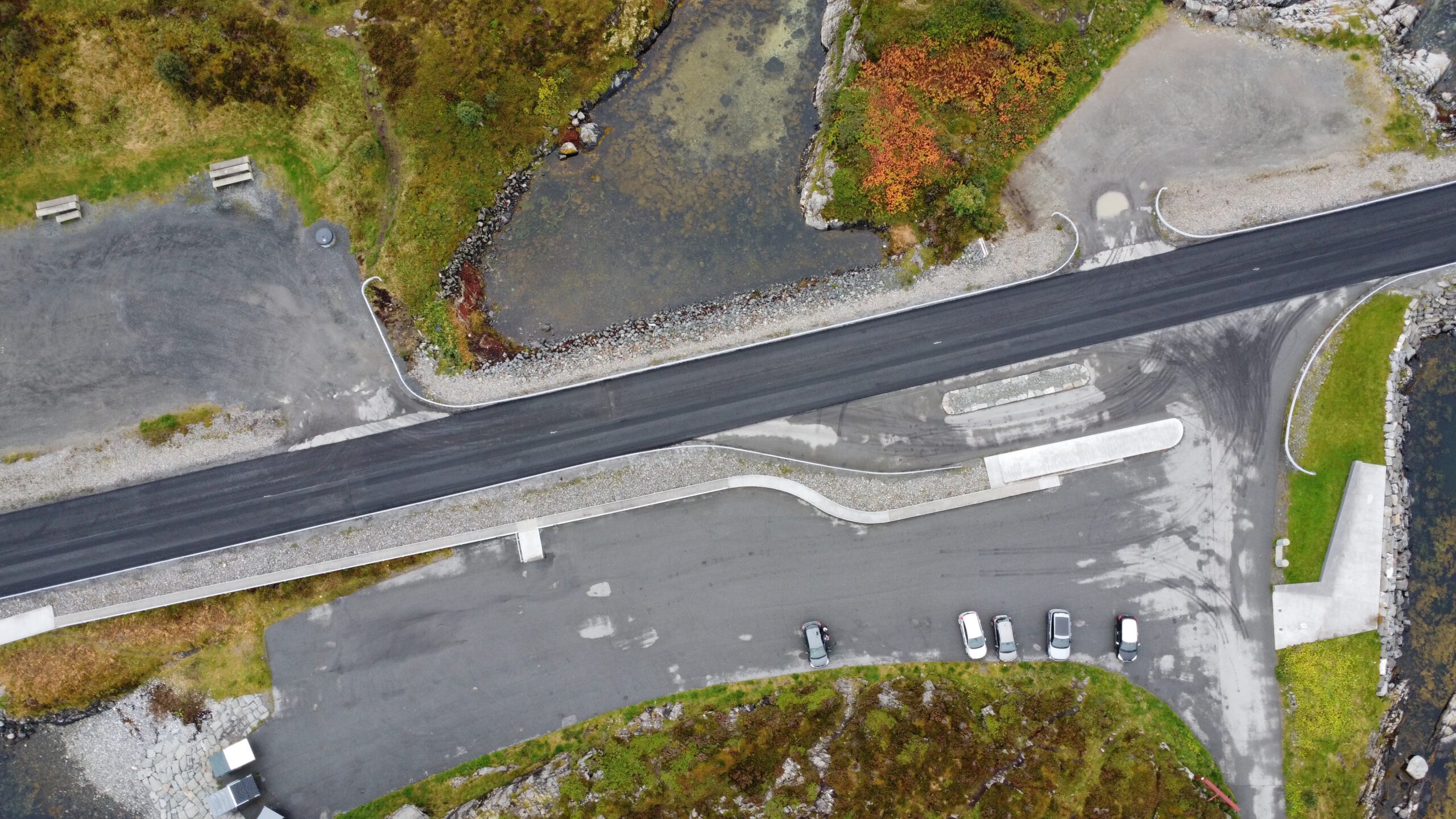
We parked just before the main bridge section at one of the official parking areas, right before the bridges begin. Atlantic Ocean Road Norway has several designated viewpoints and rest areas, which makes exploring easy.
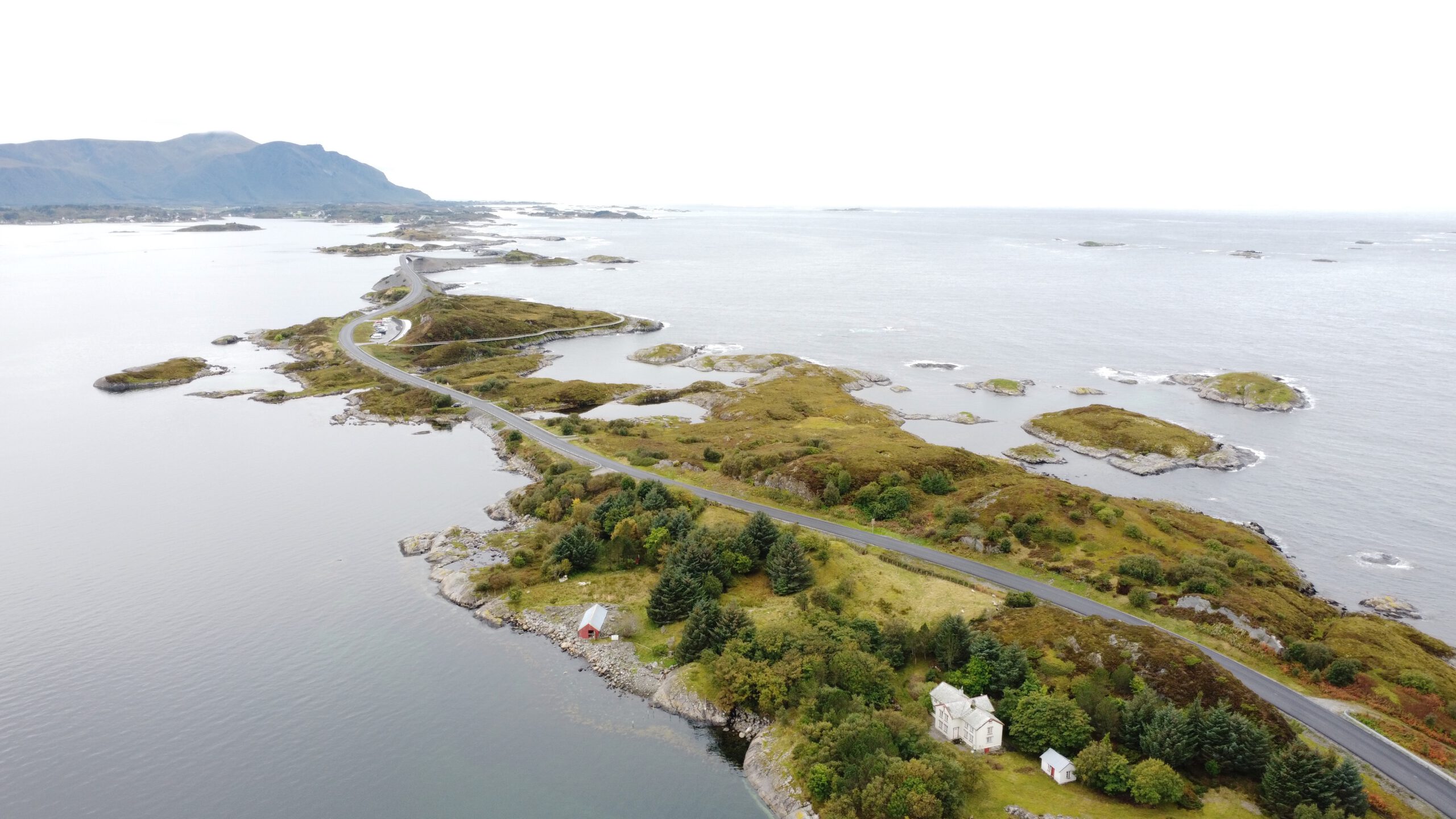
The first thing we did was launch the drone. From above, Atlantic Ocean Road Norway looks unreal. The bridges curve over the water, tiny islands sit between deep blue and emerald tones, and the Atlantic stretches endlessly toward the horizon. From the ground you feel the road. From the air you understand it.
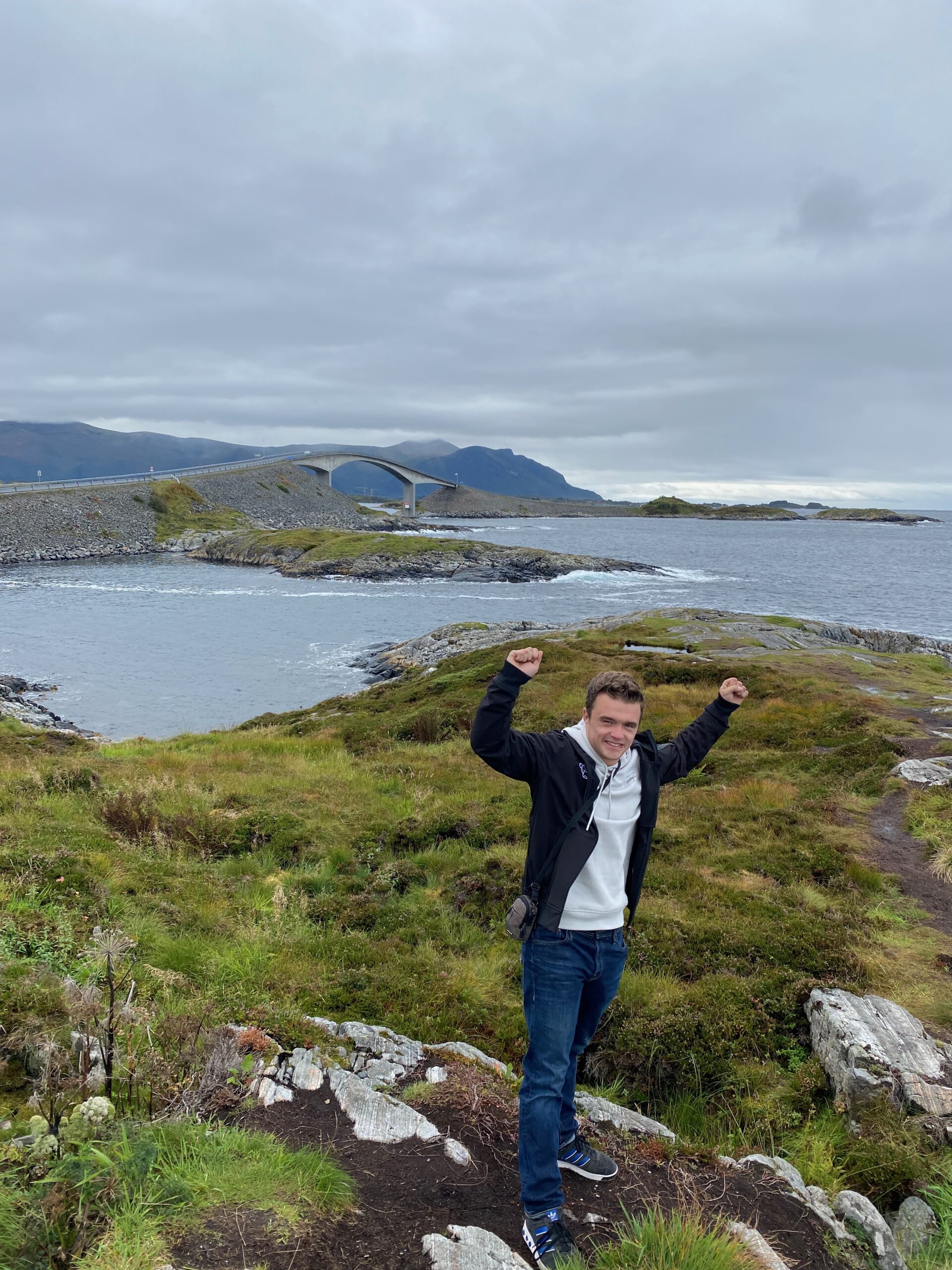
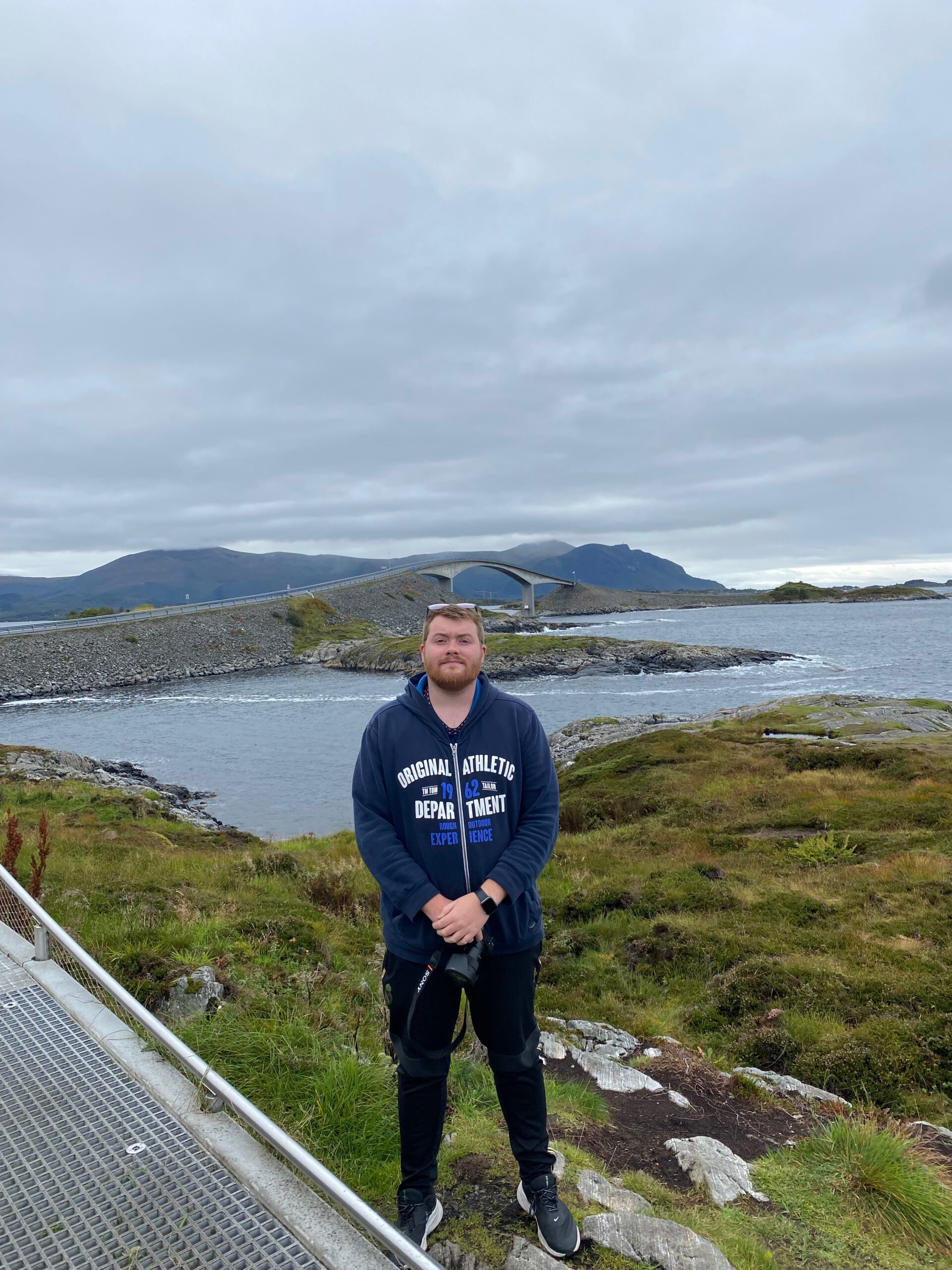
It was busy. Very busy. Atlantic Ocean Road is no secret anymore. Tour buses, campervans, photographers with tripods, and multiple drones buzzing in the air. Still, even with the crowds, the raw coastal atmosphere remains powerful.
When you drive across Atlantic Ocean Road, you feel the engineering. But if you really want to see it, step out of the car or get an elevated angle. Side perspectives and aerial views truly show how the road dances across the sea.
What To Do Along Atlantic Ocean Road Norway
Atlantic Ocean Road Norway is more than a quick drive.
There are walking paths along the coastline and scenic viewpoints with steel and glass platforms designed to shield visitors from wind and sea spray. Fishing spots are scattered along the bridges. In nearby areas like Farstadsanden, you can surf, hike, kayak, or cycle.
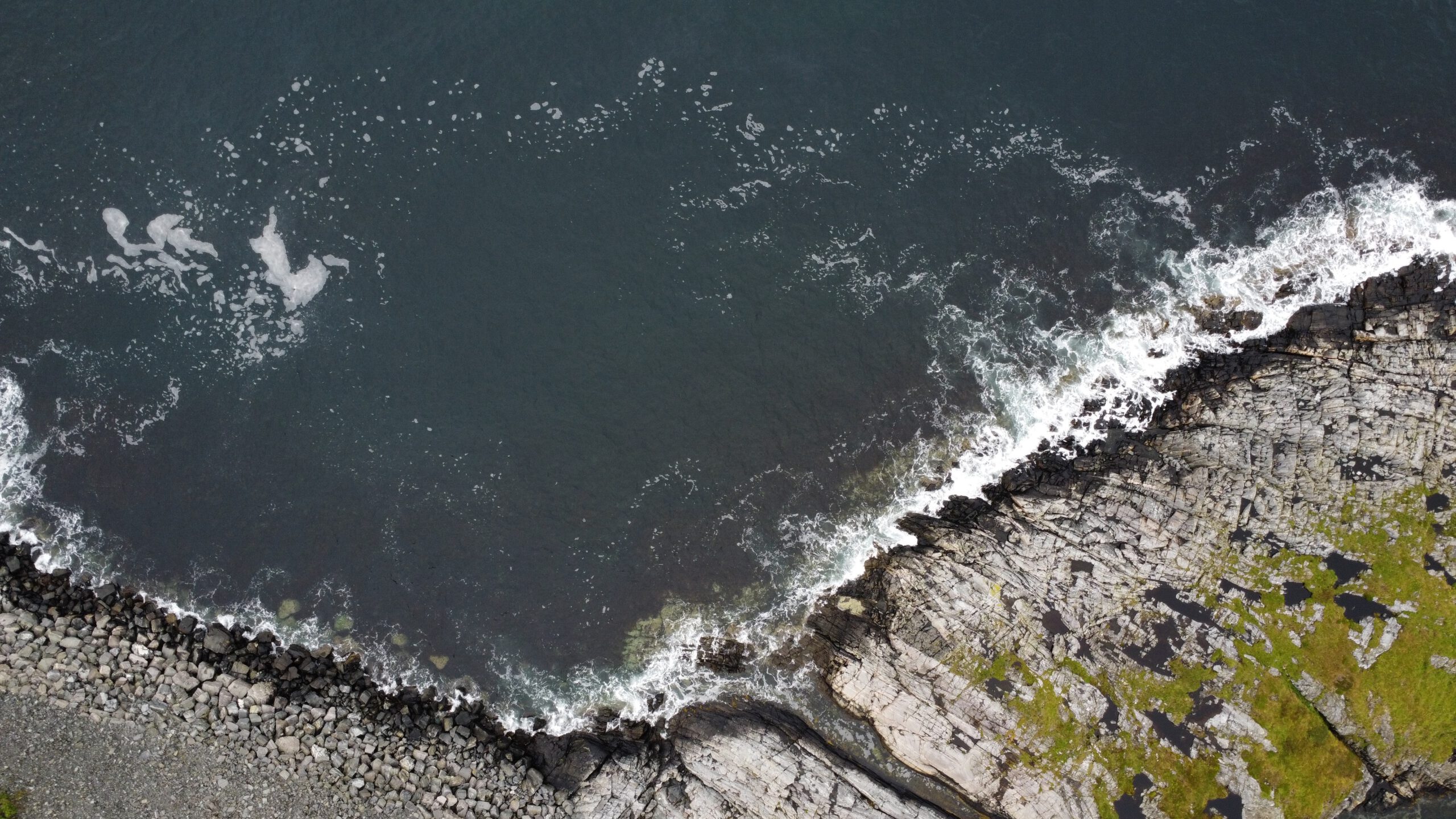
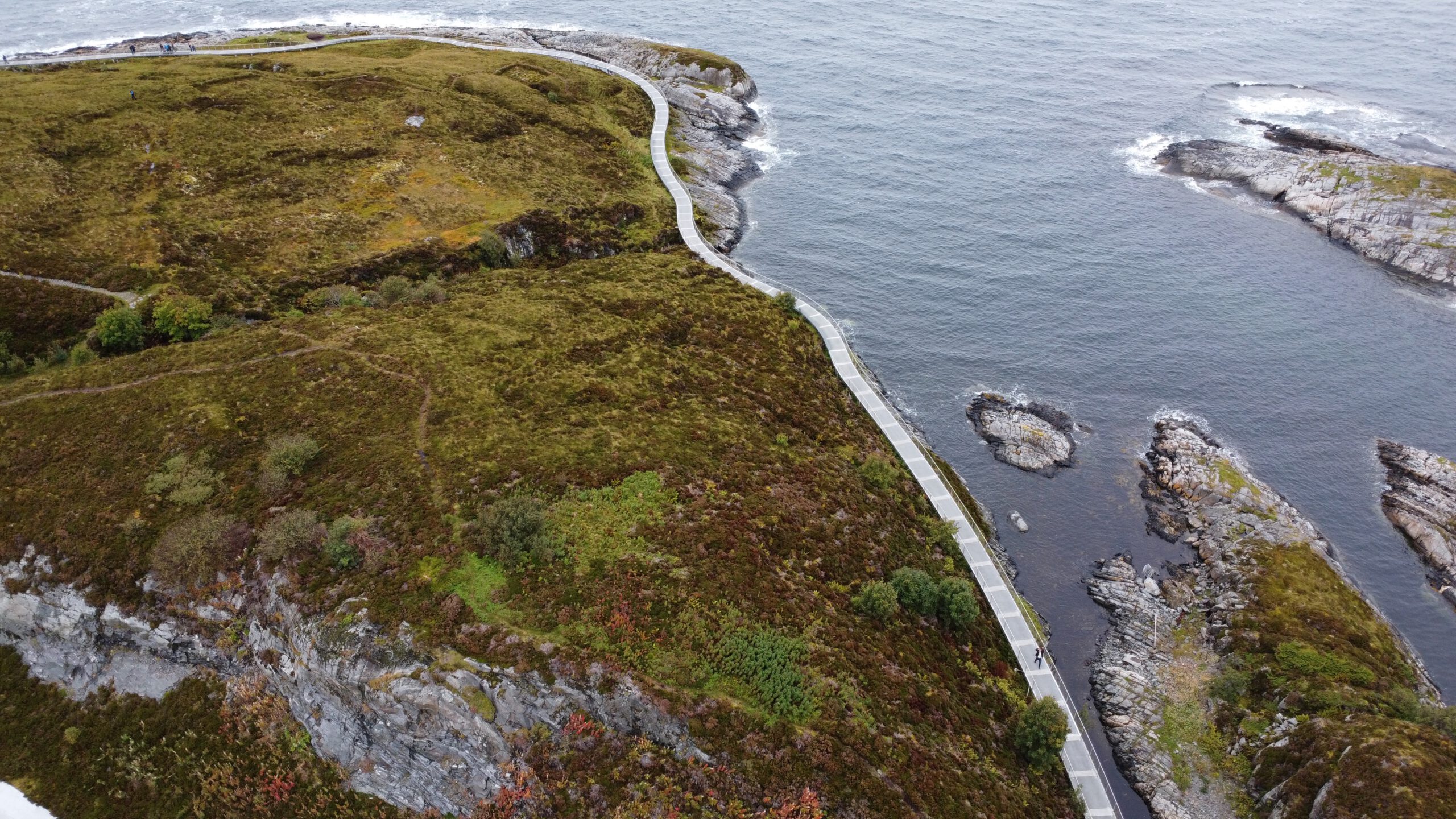
Photography is the main activity. Sunrise light, dramatic clouds, long exposure shots of waves, and drone perspectives all make Atlantic Ocean Road Norway a dream for visual storytelling.
Many travelers combine Atlantic Ocean Road Norway with Trollstigen and Geiranger for a complete Western Norway road trip. That combination delivers fjords, mountains, waterfalls, and open ocean in one continuous journey.
Best Time To Visit Atlantic Ocean Road Norway
Atlantic Ocean Road is open year round, but each season feels different.
Summer, June through August
Long daylight hours, calmer seas, and easier driving conditions. This is peak season and traffic can be heavy.
Autumn, September through October
More dramatic weather, stronger waves, fewer crowds. Possibly the most photogenic time for Atlantic Ocean Road Norway.
Winter, November through March
Harsh and raw. Snow, ice, wind, and occasional closures during extreme storms. However, winter adds a powerful atmosphere and the potential for Northern Lights.
Spring, April through May
Quieter roads, shifting light, and often stable conditions before summer tourism peaks.
If you want dramatic ocean energy, choose autumn. If you prefer accessibility and longer light, summer works best.
Atlantic Ocean Road Norway and the Northern Lights
Atlantic Ocean Road sits at approximately 63 degrees north latitude. That is slightly south of the classic aurora belt found in places like Tromso around 69 degrees north. Because of this, Atlantic Ocean Road Norway is not a guaranteed Northern Lights location.
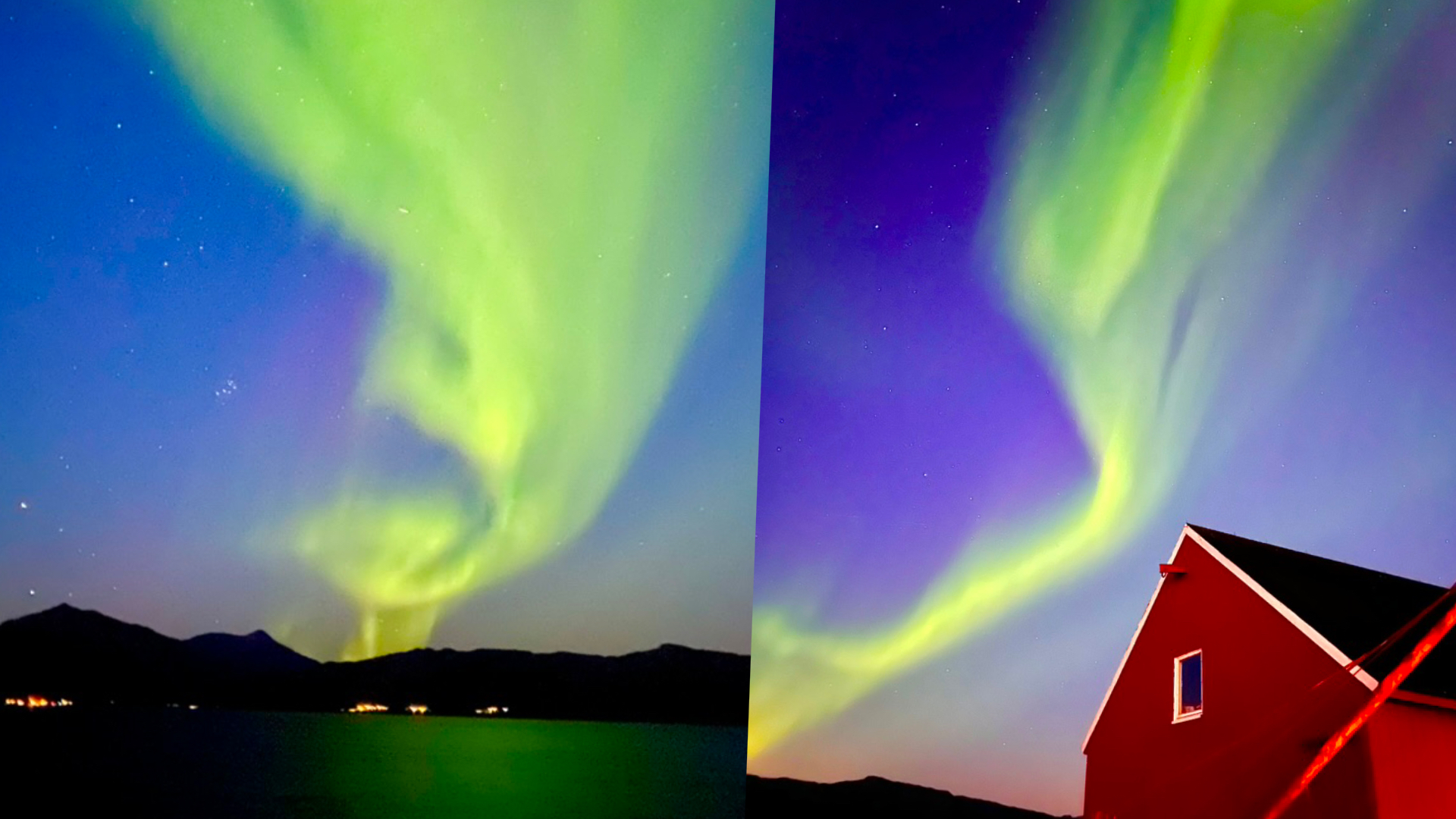
However, during moderate to strong solar activity, especially KP index 3 to 4 and above, aurora can absolutely be visible here. The open ocean horizon actually makes Atlantic Ocean Road Norway an excellent viewing location when skies are clear.
The biggest challenge is cloud cover. Western Norway often experiences frequent clouds and unstable weather. The issue is usually visibility, not latitude.
If you want to try seeing Northern Lights at Atlantic Ocean Road, visit between late September and March, monitor cloud forecasts carefully, and stay flexible. February and March often provide a good balance between darkness and clearer skies.
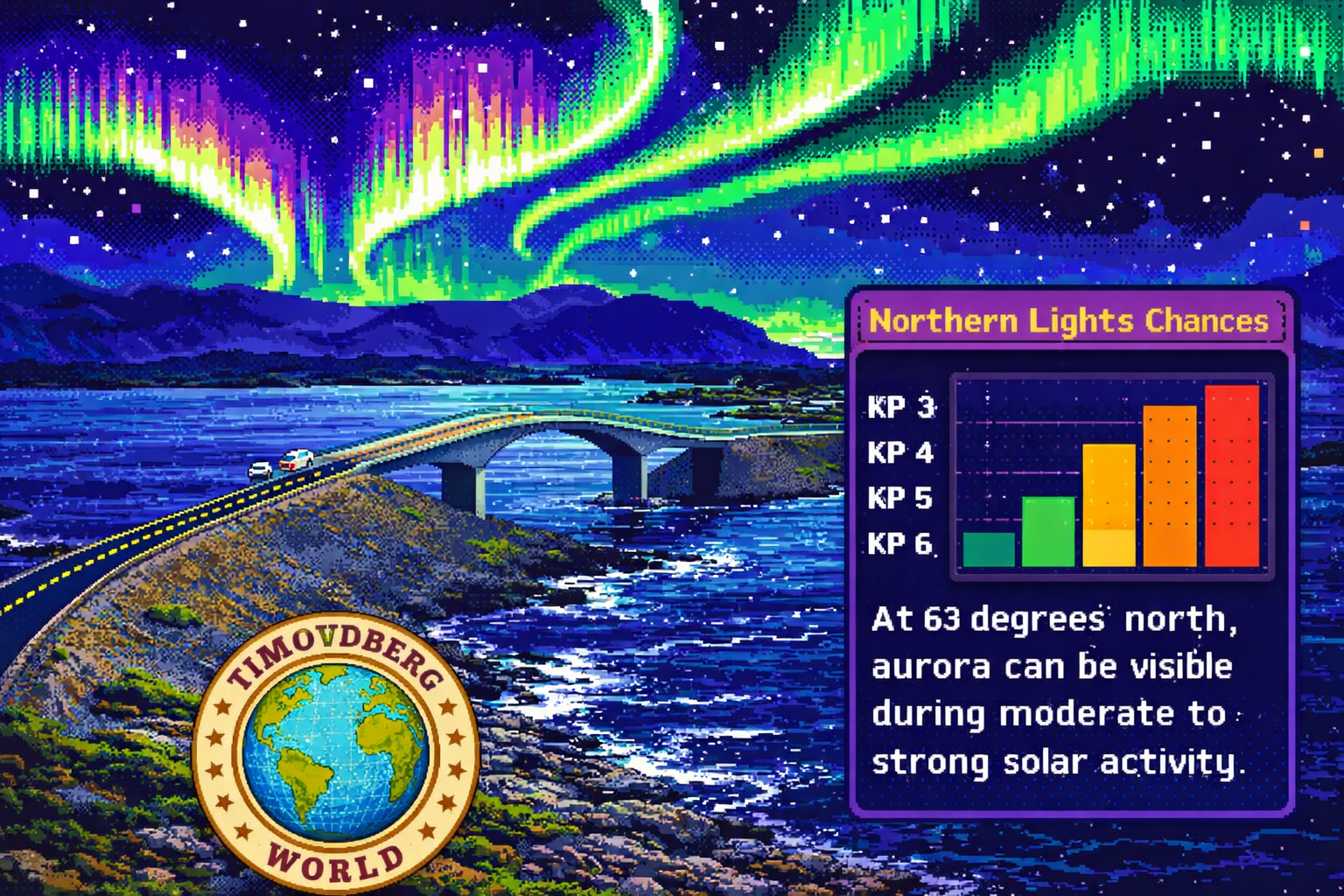
We did not see aurora here ourselves, but knowing it is possible adds another layer of magic to Atlantic Ocean Road Norway.
Why Atlantic Ocean Road Norway Is Worth It
Atlantic Ocean Road Norway is only 8.3 kilometers long. Yet those 8.3 kilometers deliver one of the most unique coastal drives in Europe.
It is exposed, dramatic, and unapologetically open to the Atlantic. You feel small in the best possible way. Whether you are standing on the parking lot launching a drone, walking along the viewpoints, or driving across Storseisundet Bridge, Atlantic Ocean Road Norway leaves a strong impression.
Some places are famous because of marketing. Atlantic Ocean Road Norway is famous because it genuinely earns that status.
And if you are driving through Western Norway anyway, it is a stop you simply cannot skip.
Atlantic Ocean Road Norway is an 8.3 kilometer, 5.2 mile section of County Road 64 in Møre og Romsdal, built between 1983 and 1989 and consisting of eight bridges including Storseisundet Bridge. It is part of Norway’s National Tourist Routes and offers year round access, with autumn and winter providing the most dramatic scenery. Northern Lights are possible during active solar periods, though cloud cover remains the main limiting factor.