
Glomfjord lake and dam adventure is one of those experiences that quietly turns into a core travel memory. What looks like a remote industrial village in Northern Norway suddenly opens up into a dramatic landscape of mountains, water, concrete, gravel roads, and pure adrenaline. This part of Nordland combines raw nature with massive human engineering, and getting there already feels like an adventure on its own.
Discovering Glomfjord
Glomfjord sits just north of the Arctic Circle in Meløy municipality, tucked deep into a fjord landscape shaped by water and power. The village itself is strongly connected to hydropower history, but the real magic starts once you leave the town behind and head into the mountains. This is where lakes, dams, glaciers, and long gravel roads completely take over.
We heard about this area while staying at Gulbrakka Basecamp. Two French travelers tipped us off, casually mentioning a massive dam and a surreal lake high in the mountains. That was enough, the start of our Glomfjord lake and dam adventure. We packed up and went for it, not fully realizing what kind of road adventure was waiting ahead.
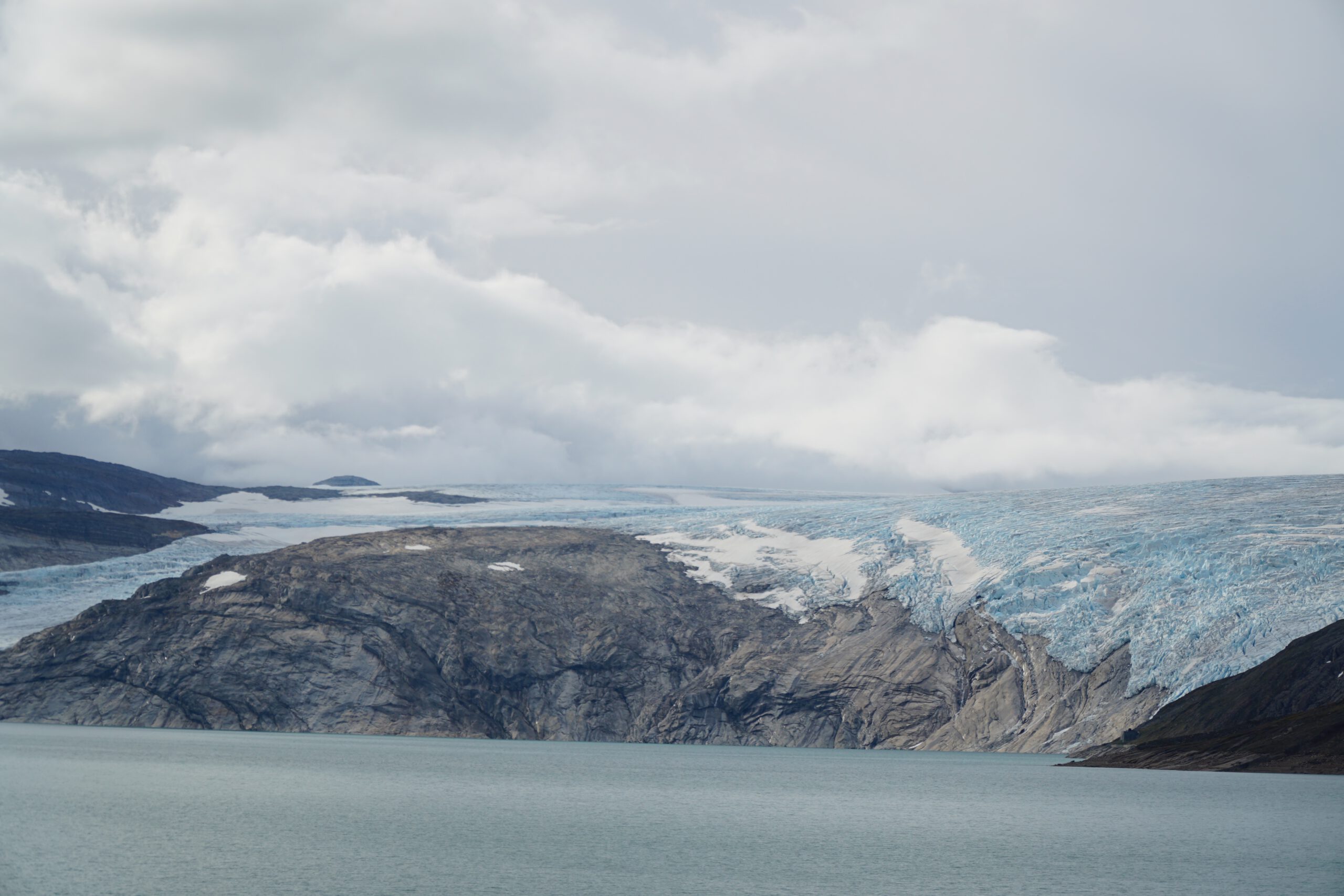
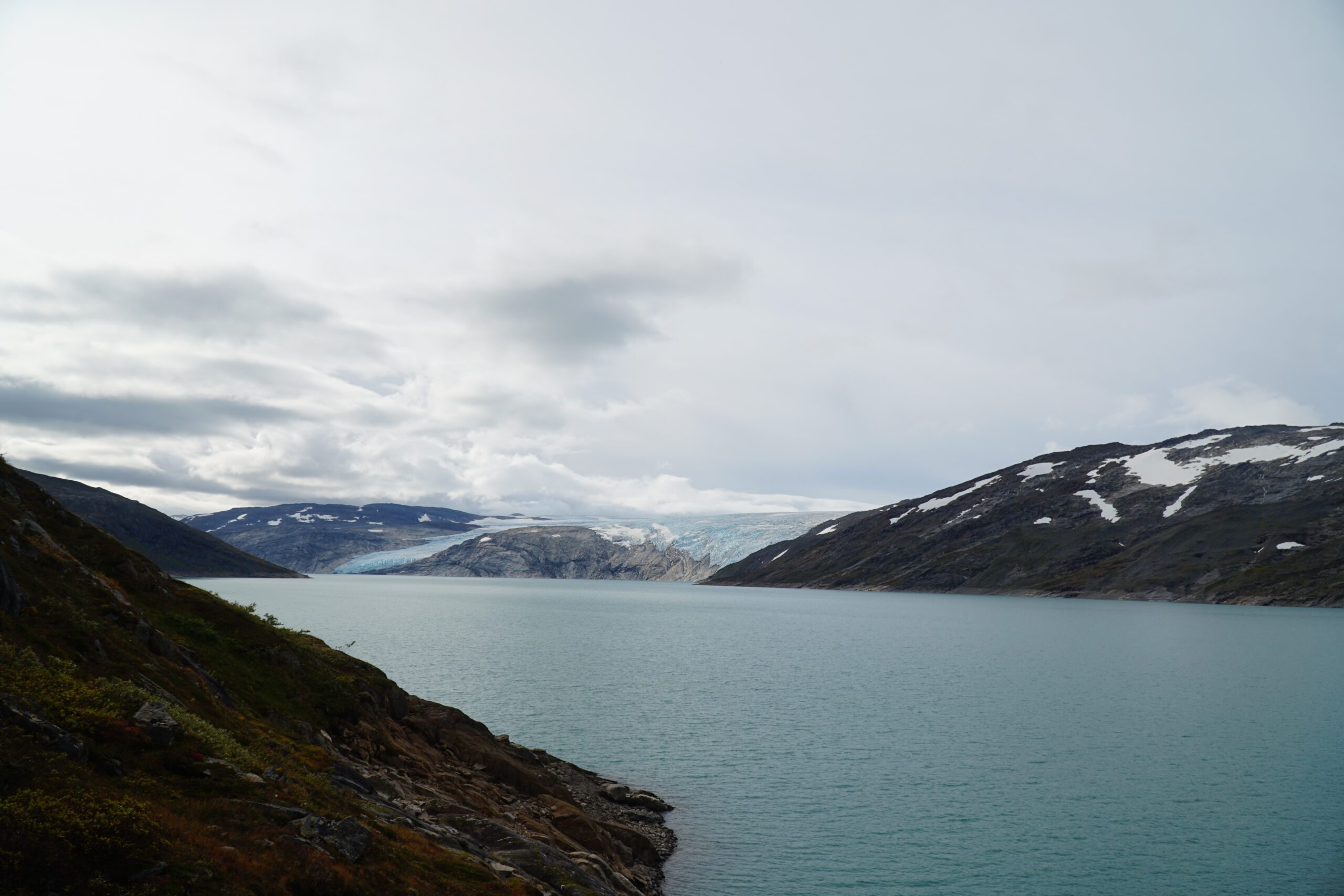
The Drive Up, A Tunnel You Don’t Forget
The road toward the Glomfjord lake and dam adventure, the lake and dam felt unfinished, almost experimental. A tunnel had only recently been built, and it showed. The road was barely wide enough for one car, yet officially two-way. Inside the tunnel, it climbed steeply for nearly 2 kilometers, completely unlit, without asphalt, and covered in loose gravel. There was no shoulder, no space to pull over, and absolutely nowhere to wait.
Driving a Peugeot 208 from 2013 with a 1.0 engine and only 54 horsepower, this was genuinely intense. Going uphill on gravel with limited power means one thing, you cannot stop. If a car came from the other direction, reversing downhill would have been the only option, and braking simply was not an option.
We held our breath the entire way up, hoping nothing would appear ahead or behind us. When we finally exited the tunnel at the top, the relief was massive. Perfect timing too, because almost immediately a camper appeared from the opposite side. If that had happened inside the tunnel, the situation would have been very different.
Arrival at the Plateau Near the Dam
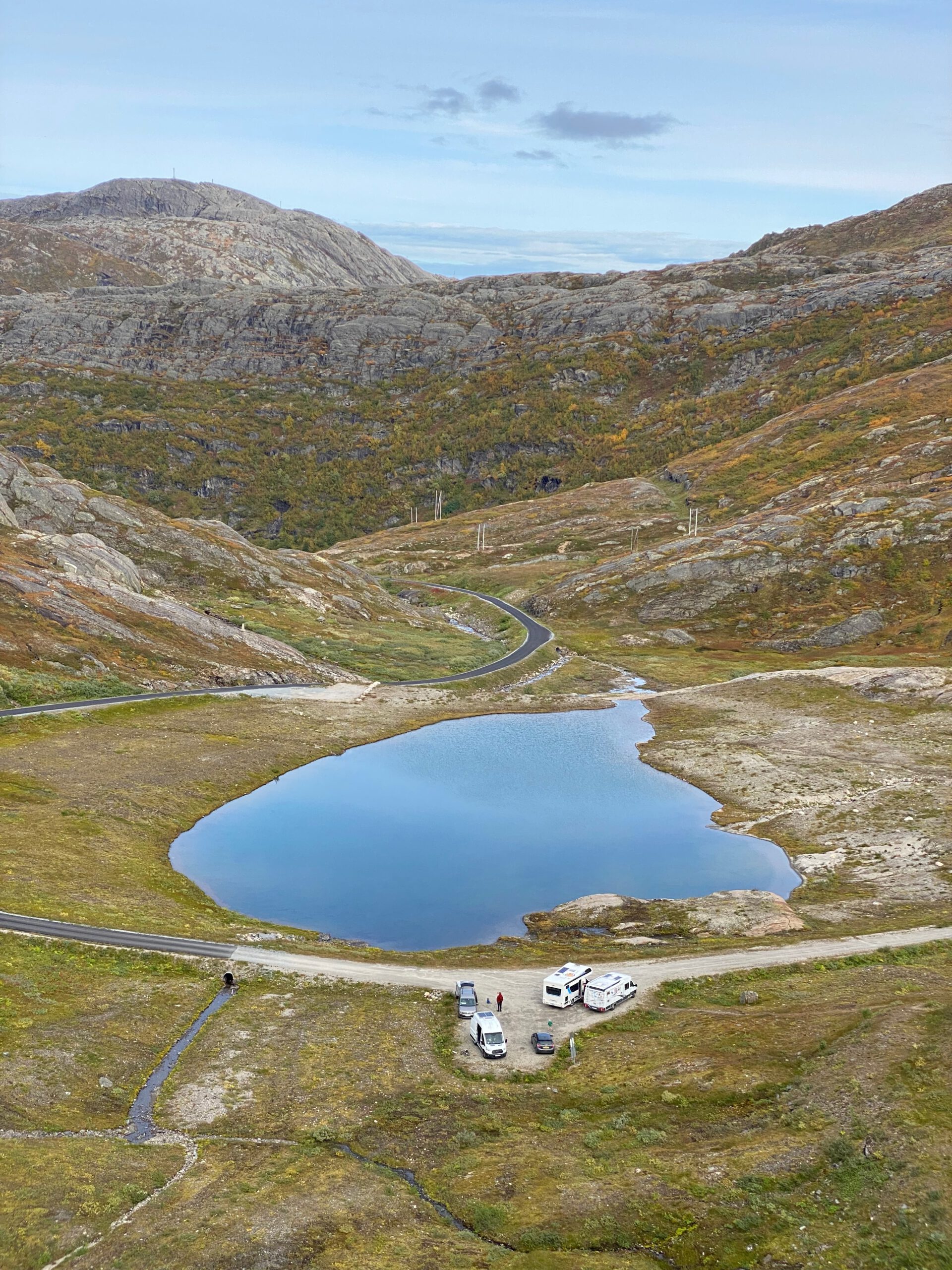
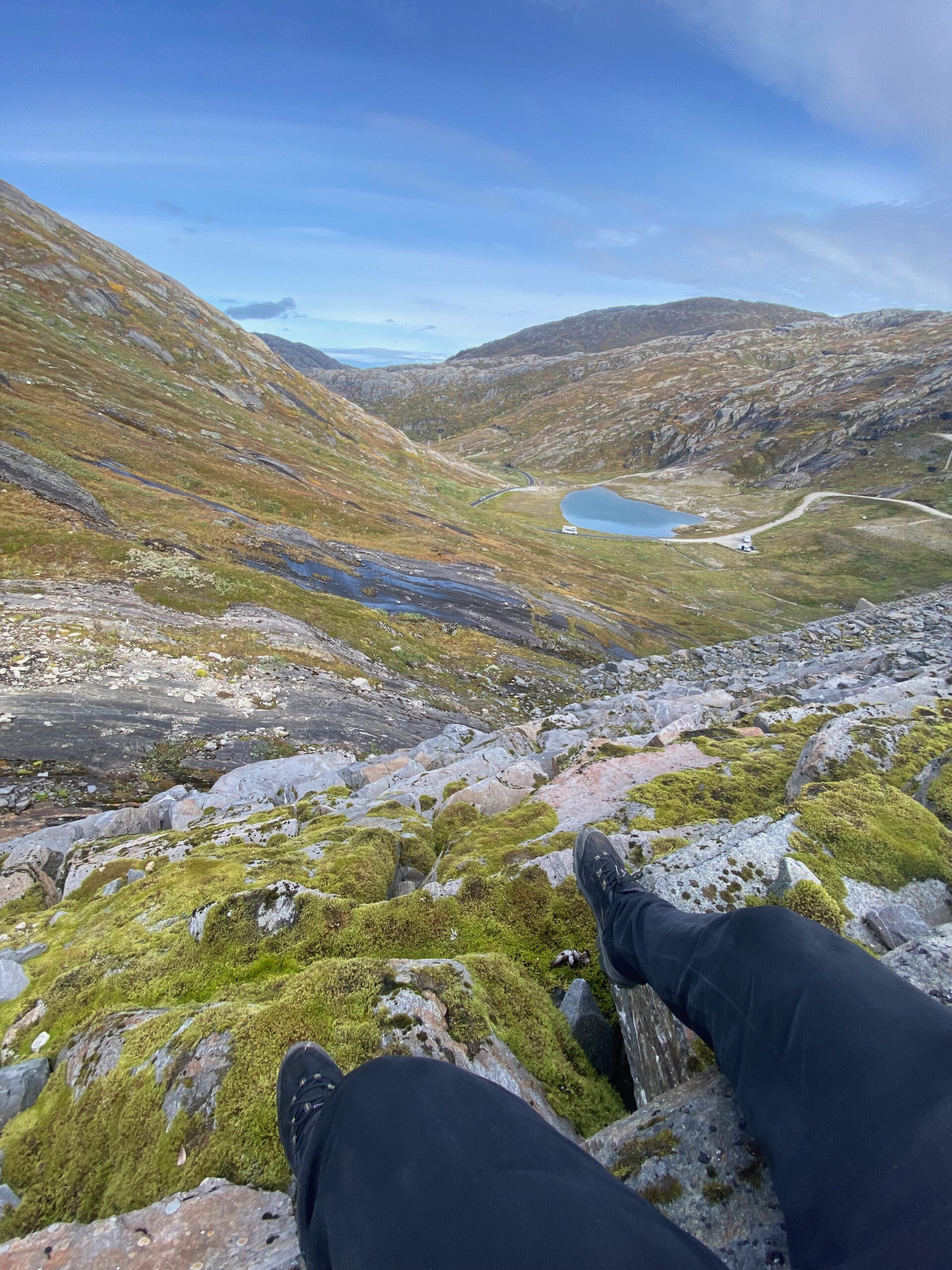
At the top, the road opens up into a wide gravel plateau. Several campers were already parked there, most likely having spent the night with views you simply cannot buy. We parked next to them, grateful we had a hotel to return to later. Sleeping in a compact car would not have been ideal, even though a camper in Scandinavia, especially here, would be ten times cooler.
From this plateau, the scale of the landscape becomes clear. Mountains stretch out in every direction, and the air feels colder, cleaner, and heavier. This is where the Glomfjord lake and dam adventure truly begins.
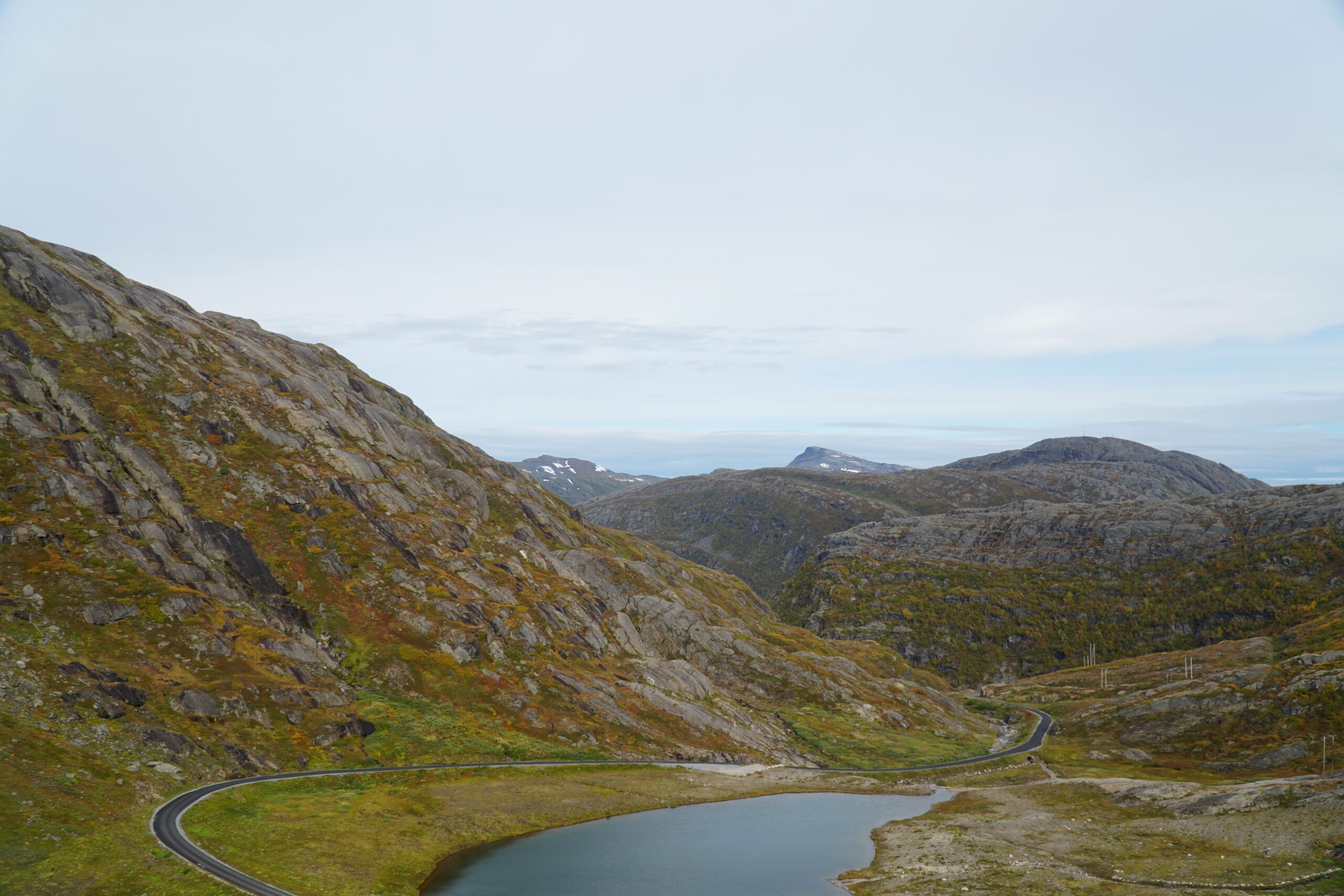
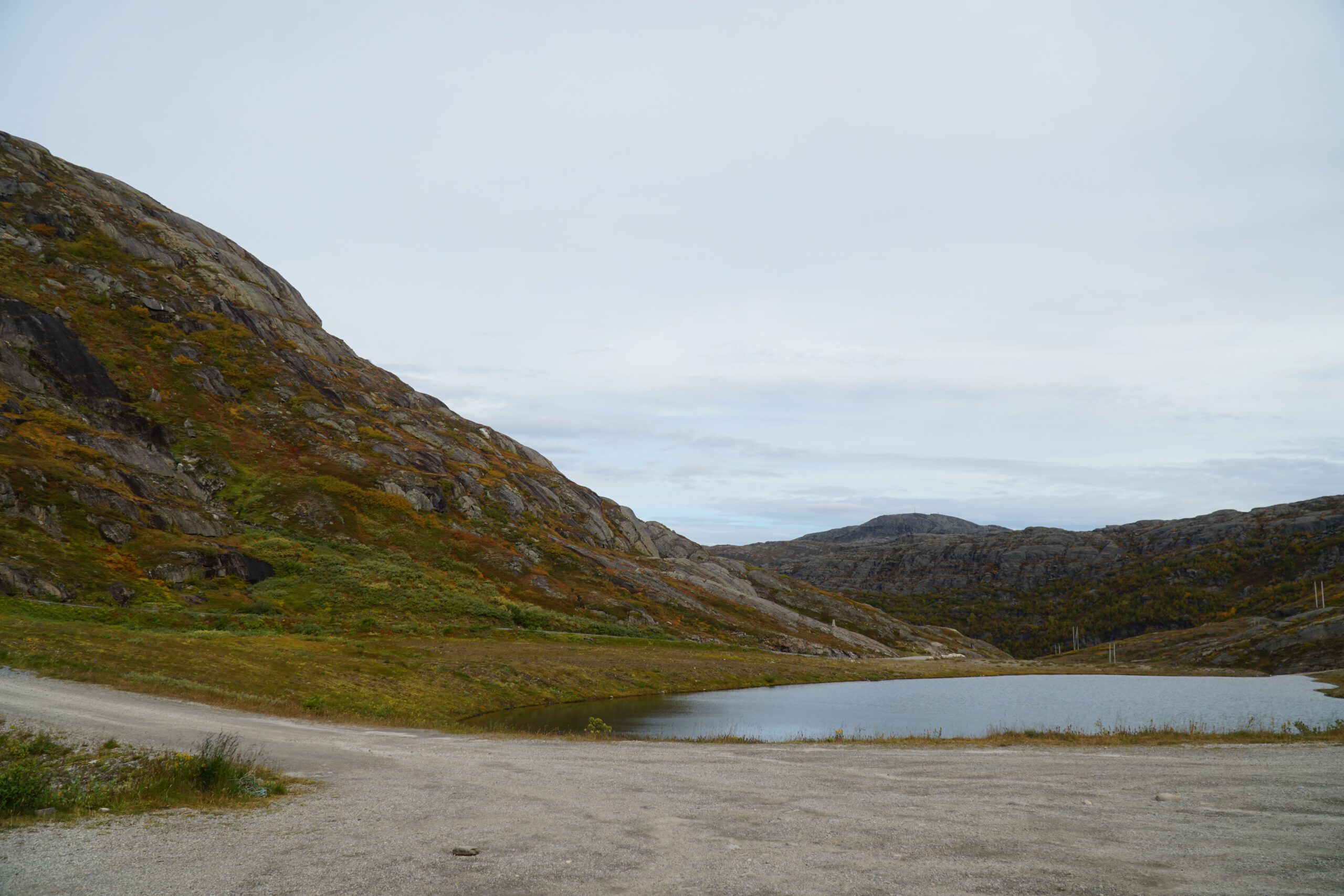
Walking Toward Storglomvassdammen
We started our hike toward the dam using a winding path that slowly gains elevation. It is not a staircase with steps, but a smooth zigzag route that walks comfortably. Soon, the dam comes fully into view, and the sheer size is hard to process.
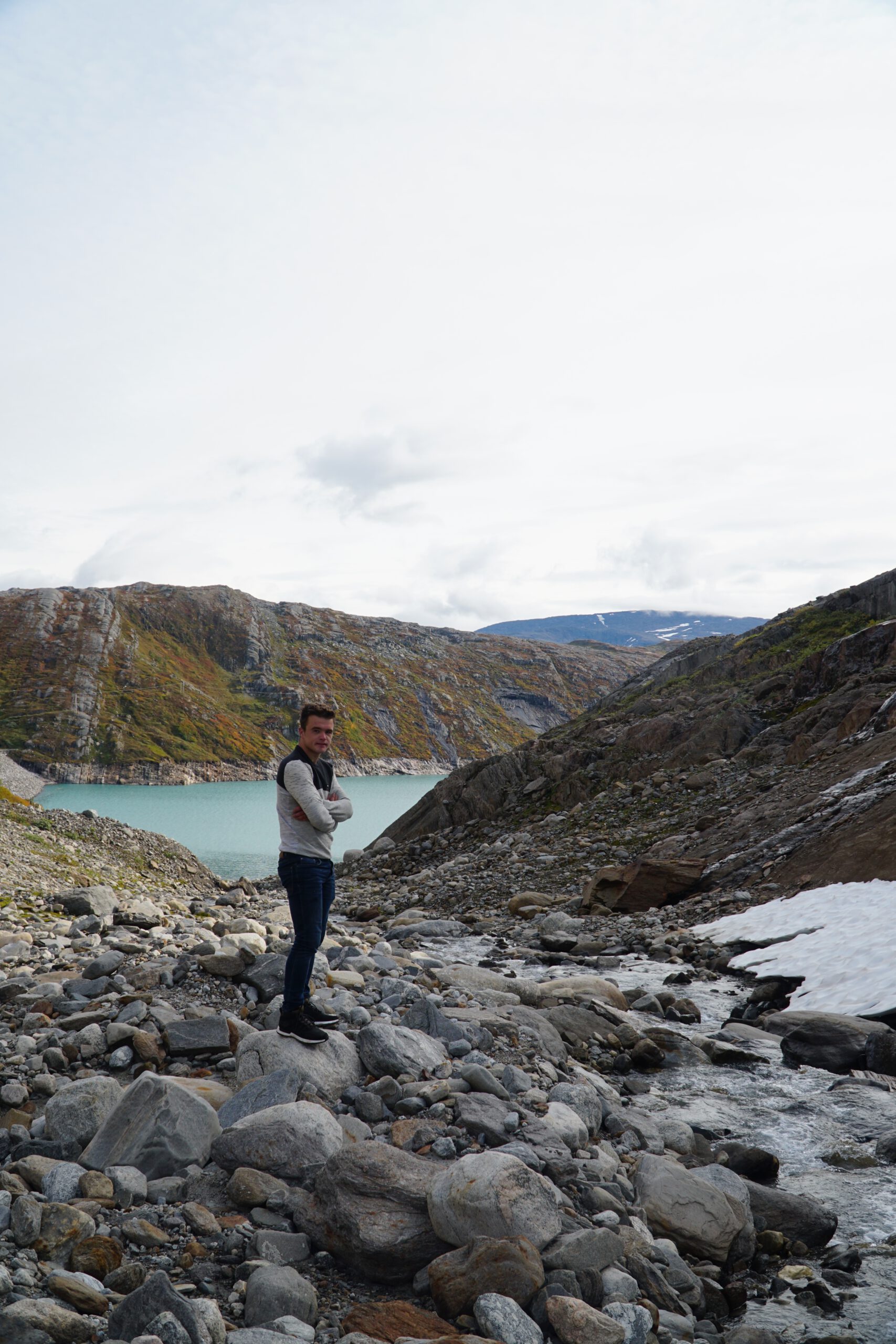
Storglomvassdammen is the largest stone-fill dam in the world. Standing on it feels unreal. Beneath your feet sits billions of cubic meters of water, held back by millions of cubic meters of stone and gravel. The lake behind it stretches endlessly into the mountains.
Crossing the dam is quiet, windy, and oddly calming. There is nothing flashy here, just raw scale and function, surrounded by Arctic wilderness.
Storglomvatnet and the Hike Above
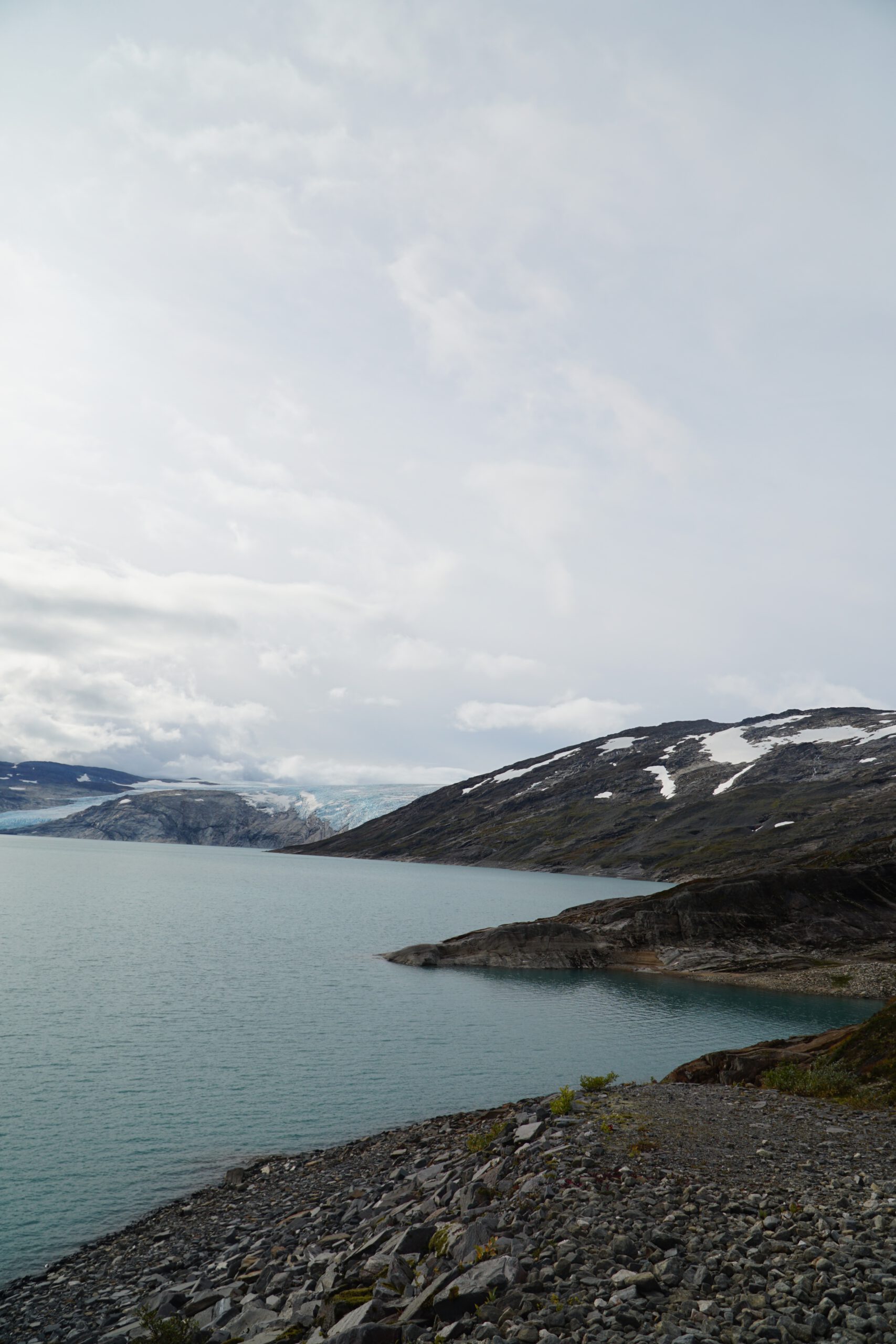
On the other side lies Storglomvatnet, a massive reservoir sitting high above sea level. The water is calm, cold, and framed by rocky slopes and lingering snowfields. From here, several hiking options branch out into the surrounding terrain.
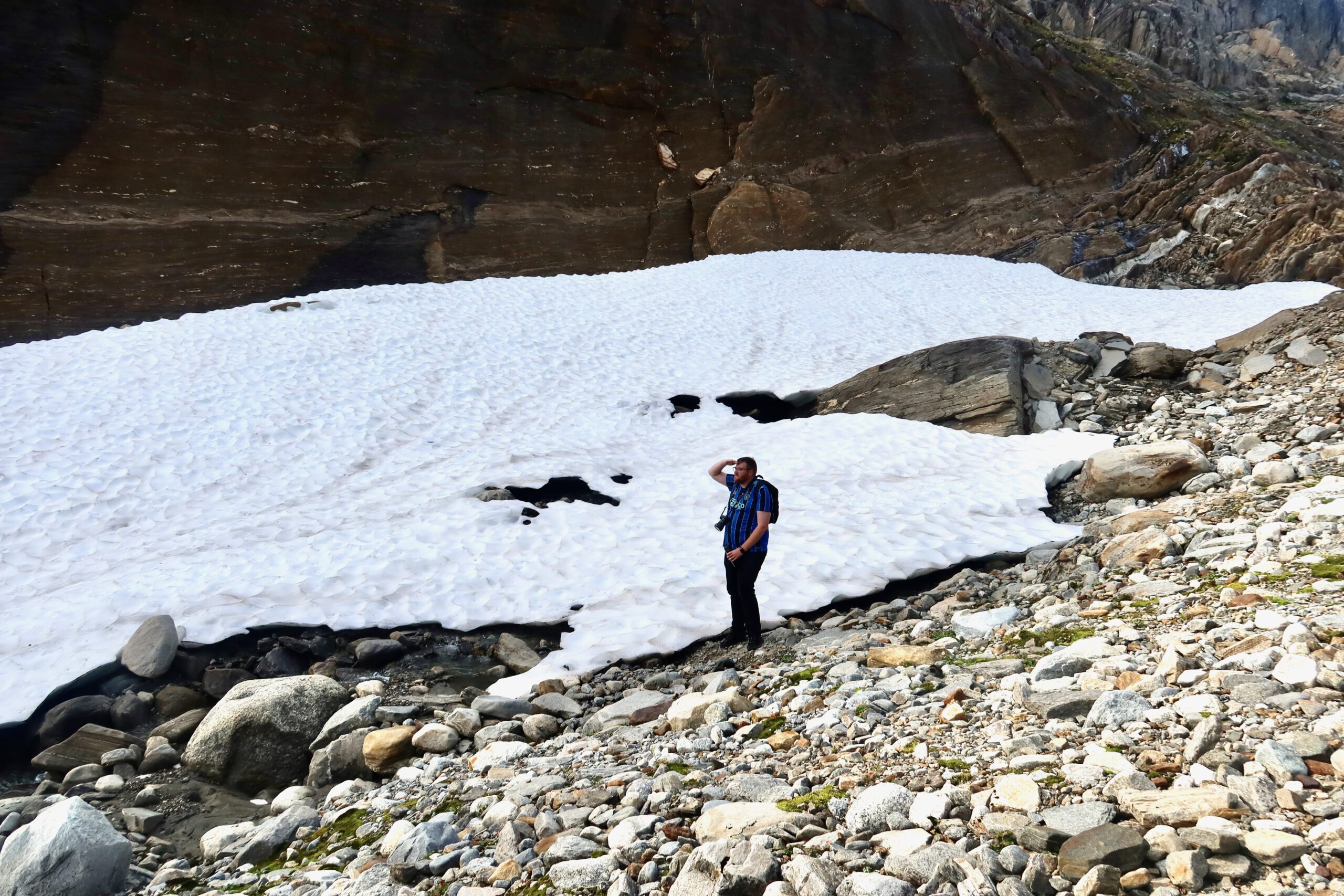
We chose a route that climbed higher toward a viewpoint that appeared to lead toward a glacier. The hike quickly rewarded us with wide panoramic views over the lake, the dam, and the surrounding mountains. The higher we climbed, the steeper it became. Snow patches appeared, the ground got unstable, and the trail began to feel less responsible.
At a certain point, common sense kicked in. The slope was steep, snow was covering the rocks, and one slip would not end well. We turned back, fully satisfied with how far we had gone and grateful for the views we had already earned.
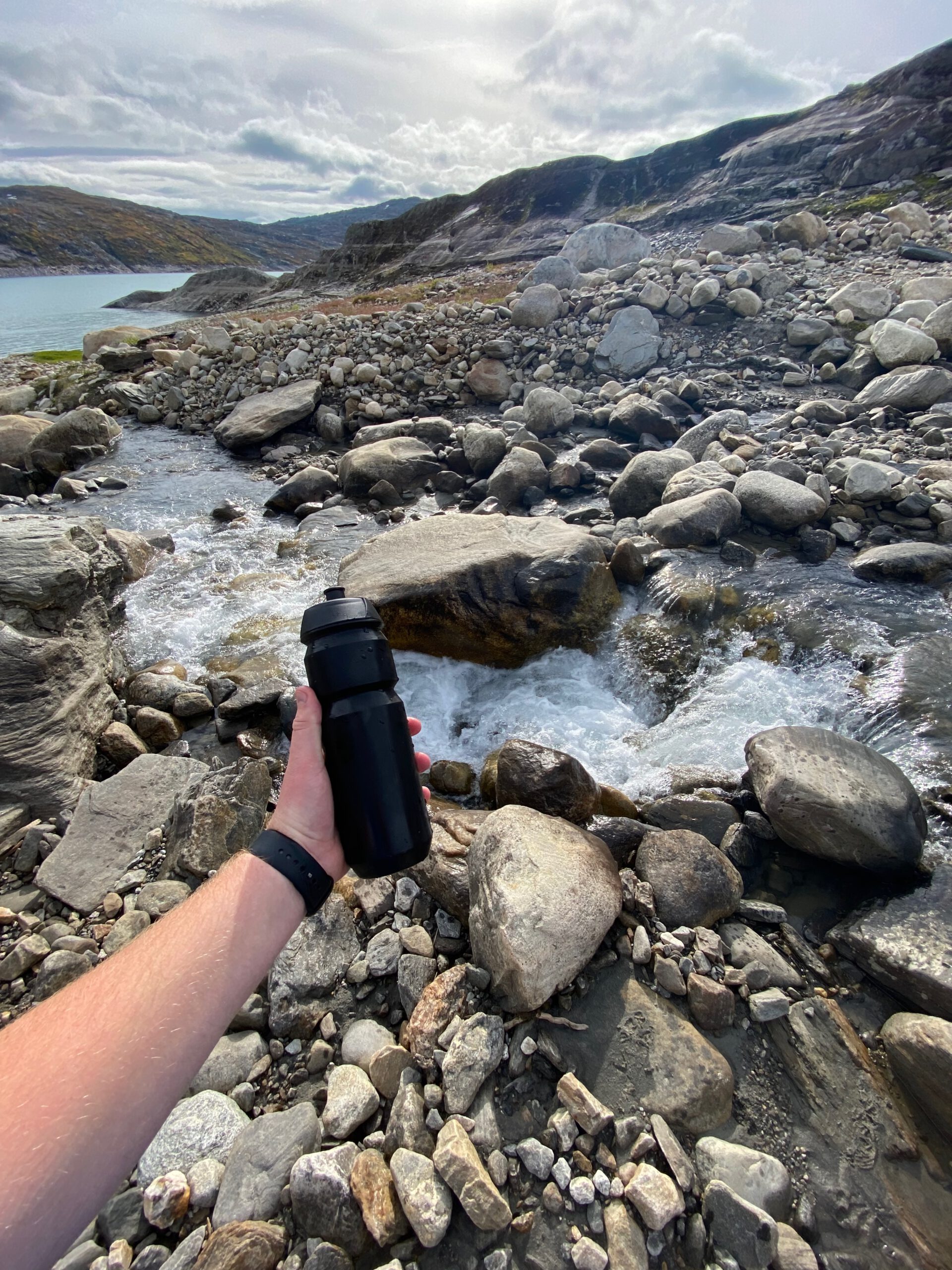
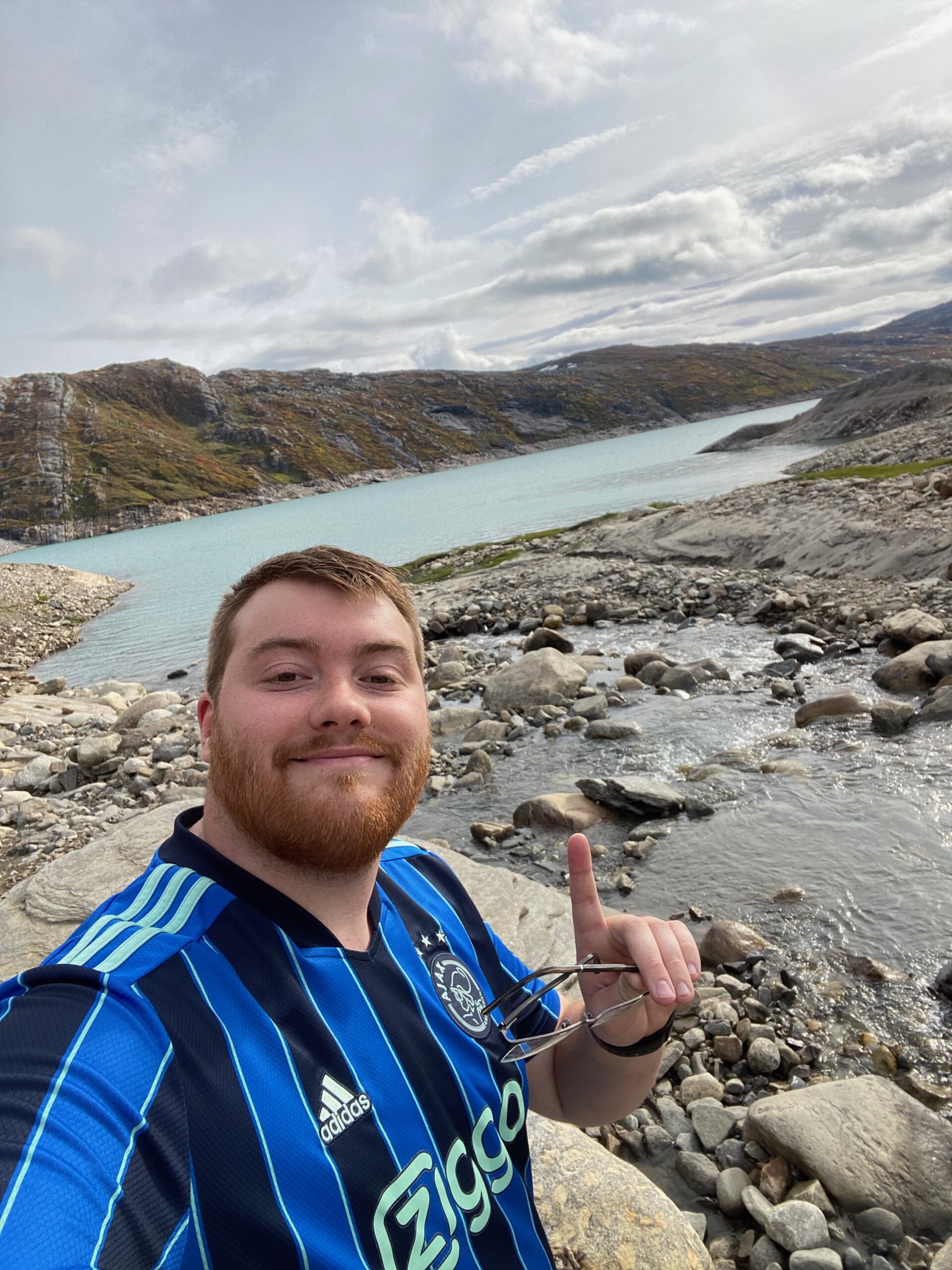
Water Stream & Drinking Water
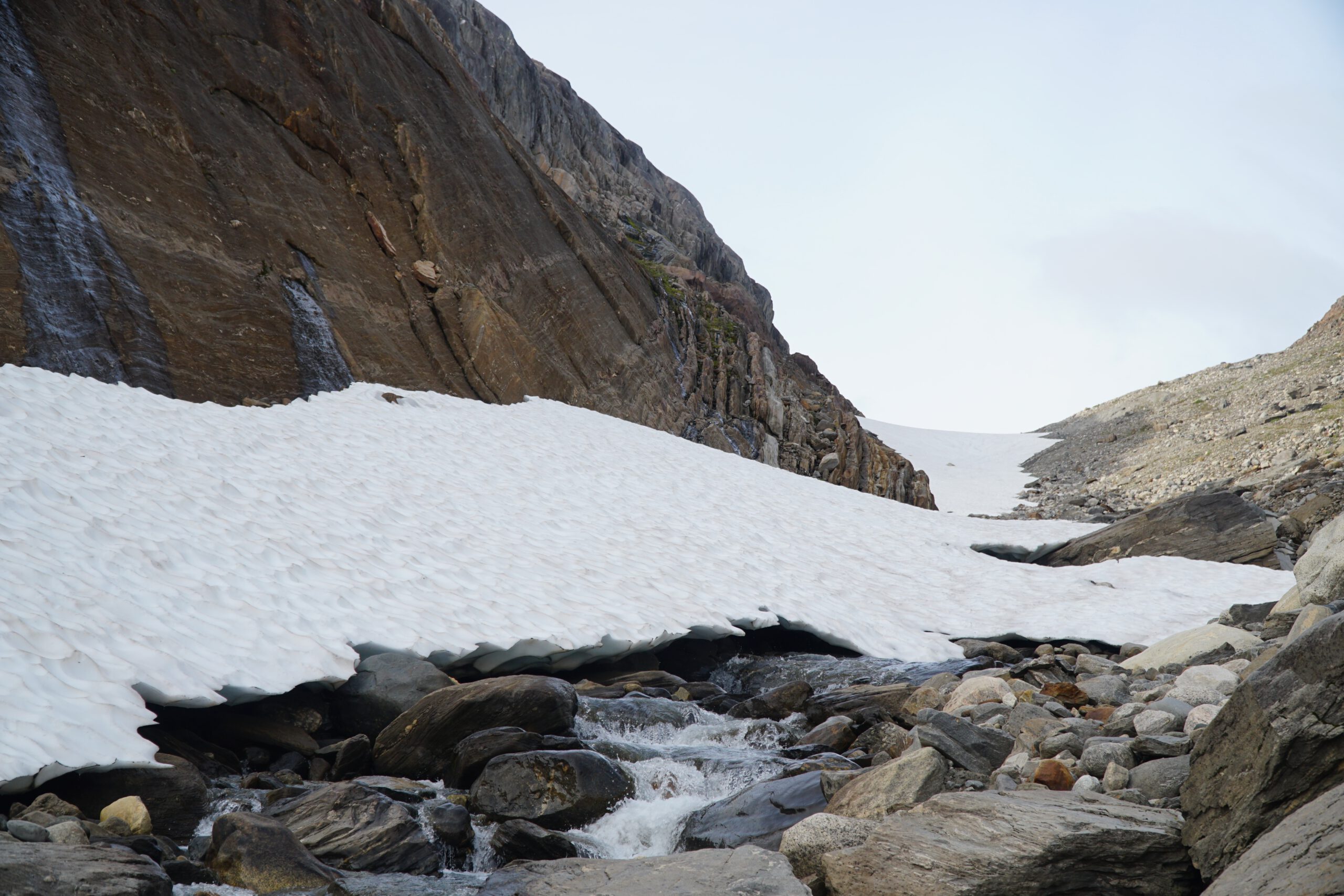
During the hike upward from the dam, we followed a narrow stream flowing down from higher snowfields and glacier-fed terrain. This small waterfall and meltwater stream looked incredibly clear and fresh, exactly what you would expect this high in the mountains. While glacier water is often very clean, it is important to know that it is not automatically safe to drink straight from the source. Even in remote Arctic areas, meltwater can carry bacteria or parasites picked up along the way. The safest approach is to collect water as close to the source as possible, where the flow is fast and cold, and always use a water filter, purification tablets, or boil the water if conditions allow.
A lightweight hiking filter or UV purifier works perfectly here and barely adds weight to your pack. When treated properly, this glacier-fed water becomes one of the freshest and best-tasting drinking waters you can find during a hike in Northern Norway.
A Risky Exit and an Unfinished Tunnel
Heading back down, we approached the tunnel again. This time, two bright lights appeared deep inside, shining straight toward us. We signaled that we were waiting, expecting the other vehicle to pass. After five to seven minutes, nothing happened.
With no clear option and knowing uphill traffic technically has priority, we made the call to continue. It was tense. There was no room to evade, and reversing uphill on gravel was impossible.
Once we reached the lower end, the truth became clear. The lights were not a vehicle at all, but construction lamps. The tunnel was still actively under construction. After waiting again, we were eventually guided through the work zone.
Driving through a tunnel that is actively being built, without signage or warnings, is not something you expect in Norway. It was confusing, poorly communicated, and honestly quite scary.
Walking Routes Around the Lake and Dam
Several established hiking routes start near the dam area. Information about these routes comes from Komoot and the Norwegian hiking associations operating in the Glomfjord mountains.
| Route Area | Difficulty | Distance | Highlights | Source |
|---|---|---|---|---|
| Dam Plateau Loop | Easy | Short | Views over dam and lake | Komoot |
| Storglomvatnet Shore Walk | Easy | Medium | Water views, open landscape | Komoot |
| Glomfjord Mountains Trails | Moderate | Long | Cabins, alpine terrain | Norwegian Trekking Association |
| Holmvassdammen Side Walk | Easy to Moderate | Short | Glacier views, valley scenery | Local trail info |
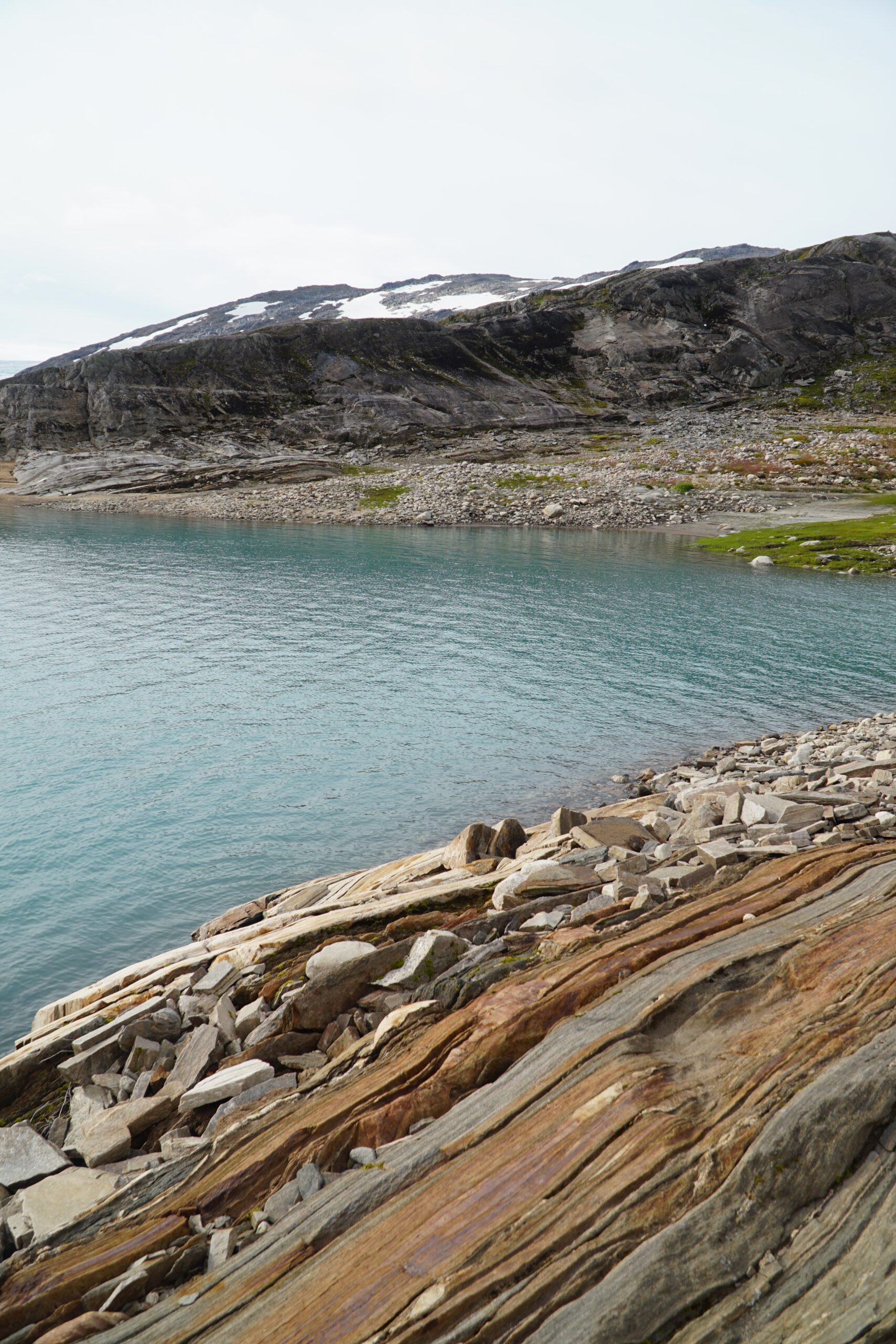
These routes are best done in summer or early fall, when snow coverage is limited and visibility is good.
Why This Place Stays With You
The Glomfjord lake and dam adventure is not just about scenery. It is about contrast. Fragile compact cars versus brutal gravel roads. Silent lakes versus roaring construction tunnels. Human engineering placed right in the middle of untamed Arctic nature.
It is raw, imperfect, and unforgettable. Exactly the kind of place that makes Northern Norway feel so real.
Your next stay
Gulbrakka Basecamp
Gulbrakka Basecamp Glomfjord was our final stop after one of the longest and most chaotic travel days of our entire Norway trip. We arrived in Glomfjord after roughly 12 hours and 20 minutes of driving from Å in Lofoten, simply because we missed the ferry to Bodø. What followed was an almost surreal navigation route through areas that felt barely existent on the map, narrow roads, endless detours, and a growing sense of fatigue that only a long Scandinavian road trip can give you.