

Park Snapshot
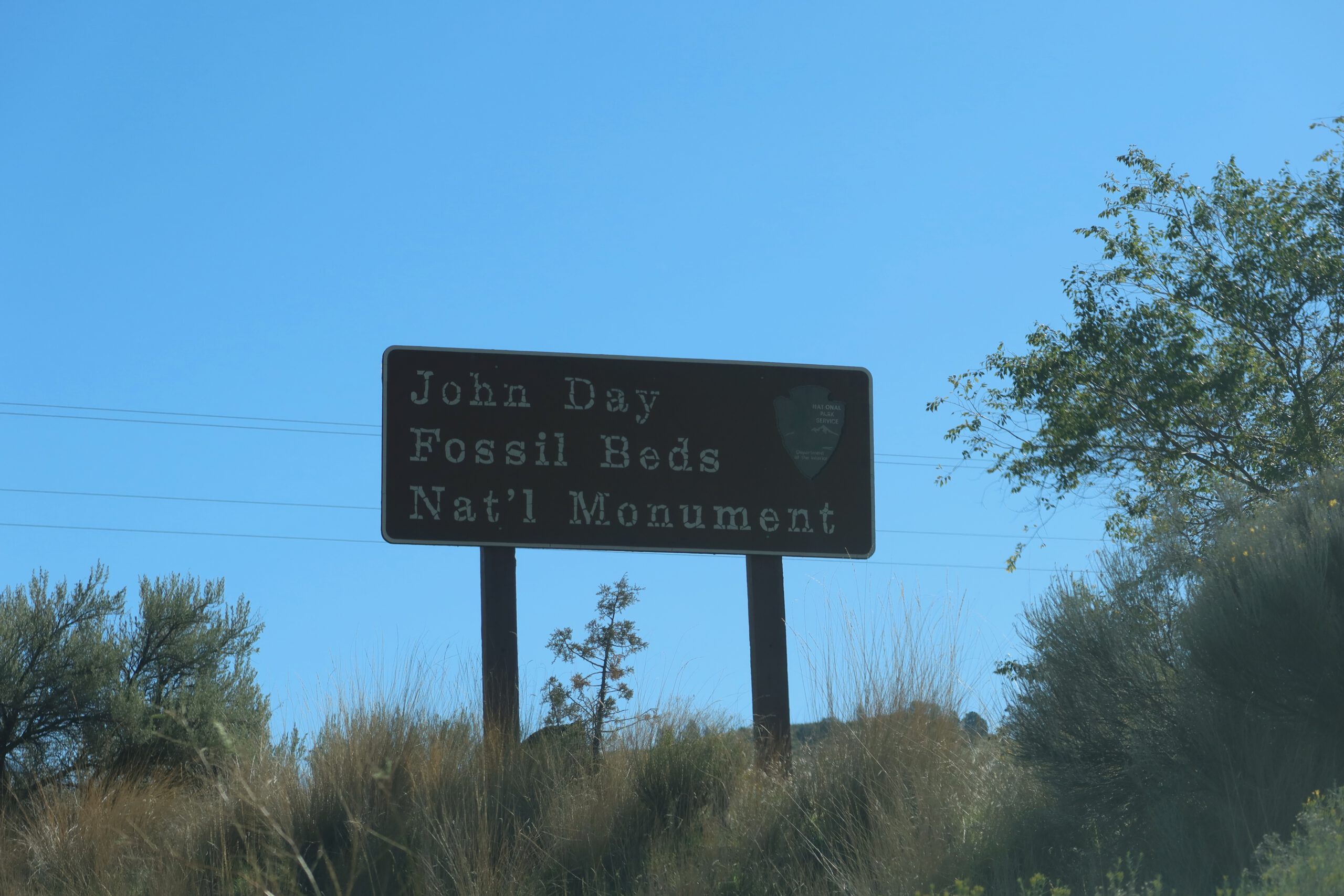
John Day Fossil Beds National Monument
32651 HWY 19 Kimberly, OR 97848
My review 5 out of 5 stars
Admission
Website
Accessibility
Best for
Parking
John Day Fossil Beds National Monument is not loud, not crowded, and not built for quick dopamine hits. John Day Fossil Beds National Monument is a place that works slowly. It asks you to stop, look, read, walk, and think. And once it clicks, it becomes one of the most fascinating natural areas in Oregon.
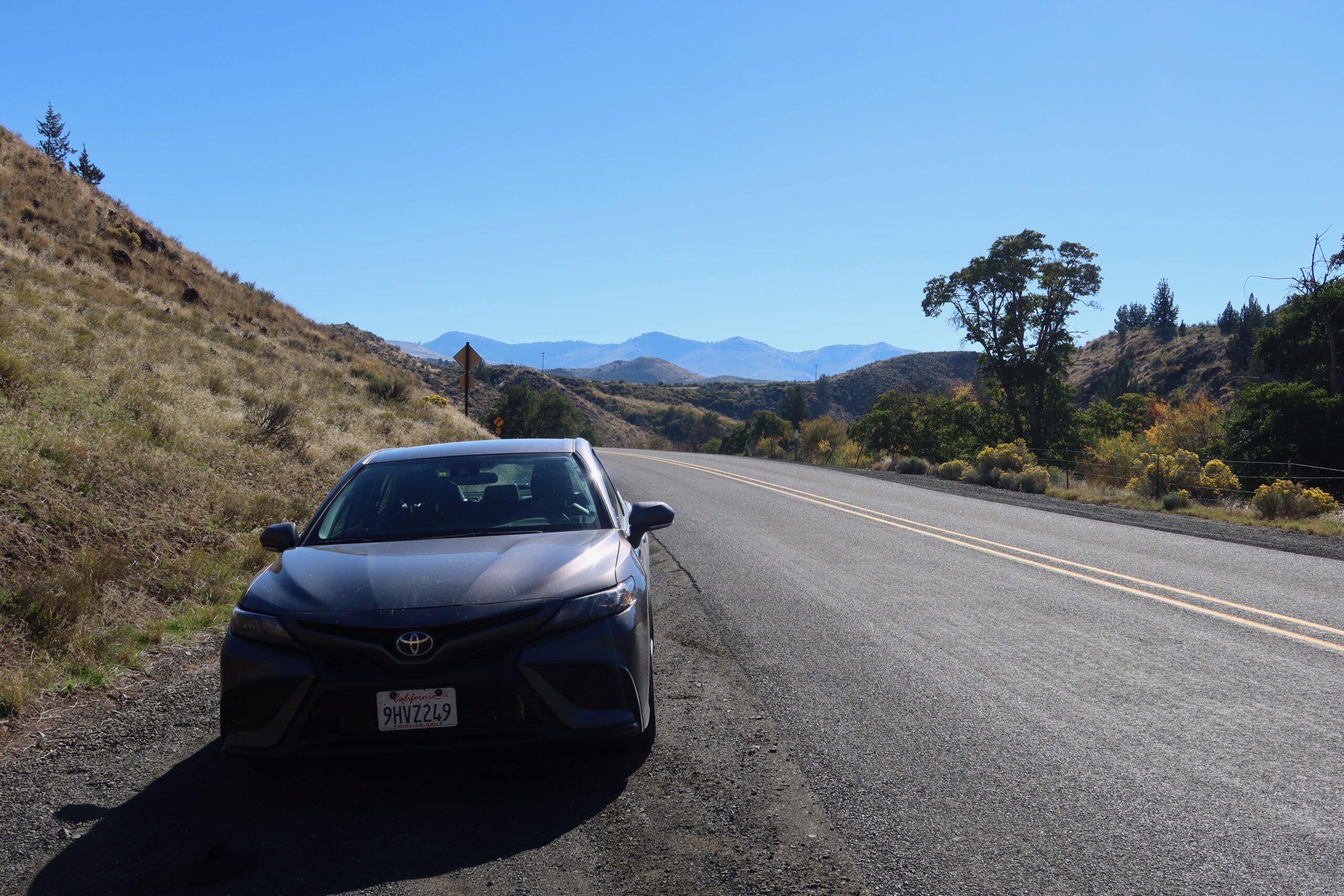
We left our Airbnb in John Day early in the morning, passed by Chester’s Market, grabbed what we needed for the day, and hit the road toward John Day Fossil Beds National Monument. The drive itself already sets the tone. Open landscapes, long roads, barely any traffic, and that typical Eastern Oregon feeling where distance suddenly means something again.
Arrival at the Visitor Center
A calm start to John Day Fossil Beds National Monument
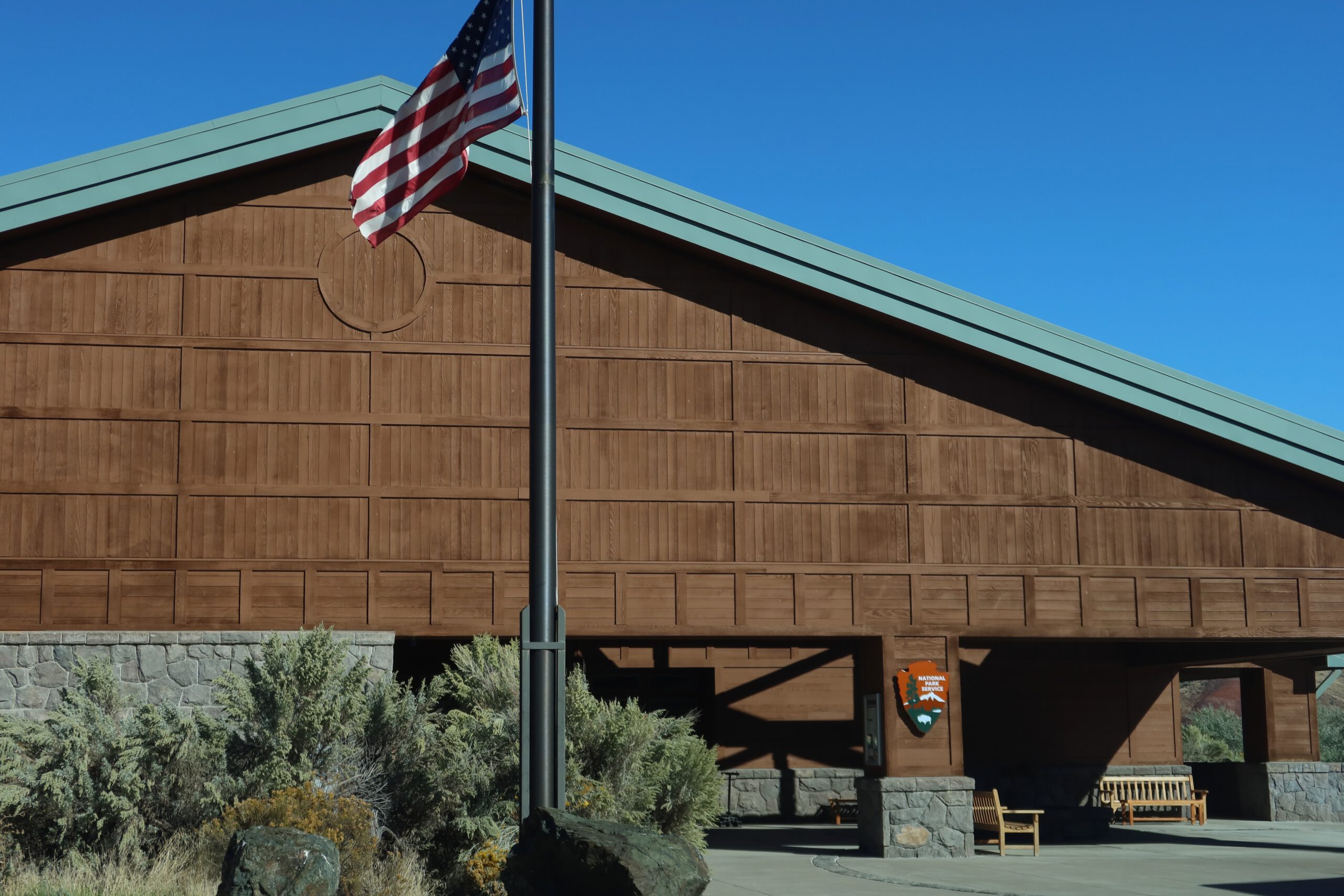
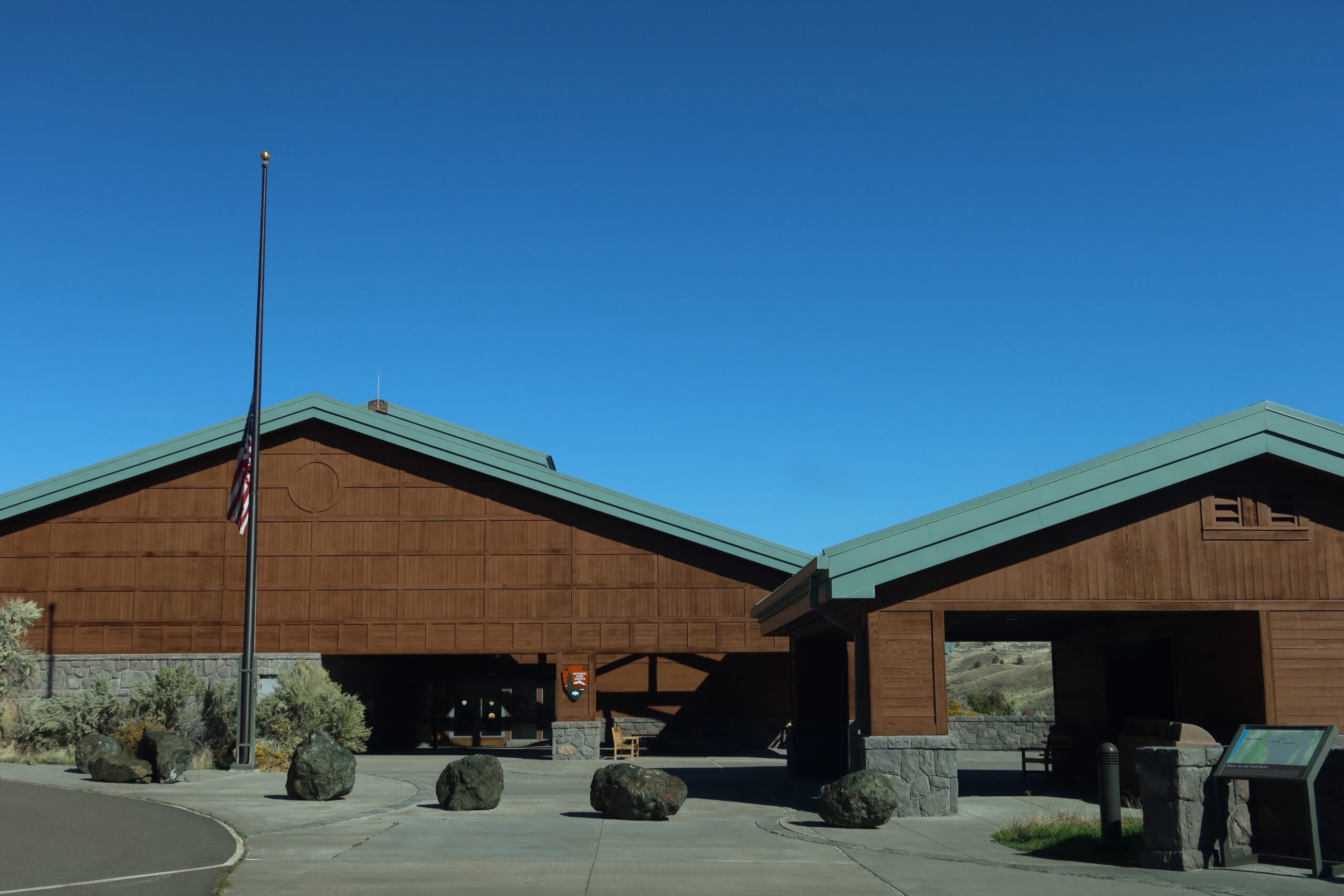
The first stop at John Day Fossil Beds National Monument is the Thomas Condon Paleontology Center. Parking is easy and relaxed. There were other visitors around, but it never felt busy or overwhelming. This is not a place where buses unload crowds. This is a place where people quietly arrive.
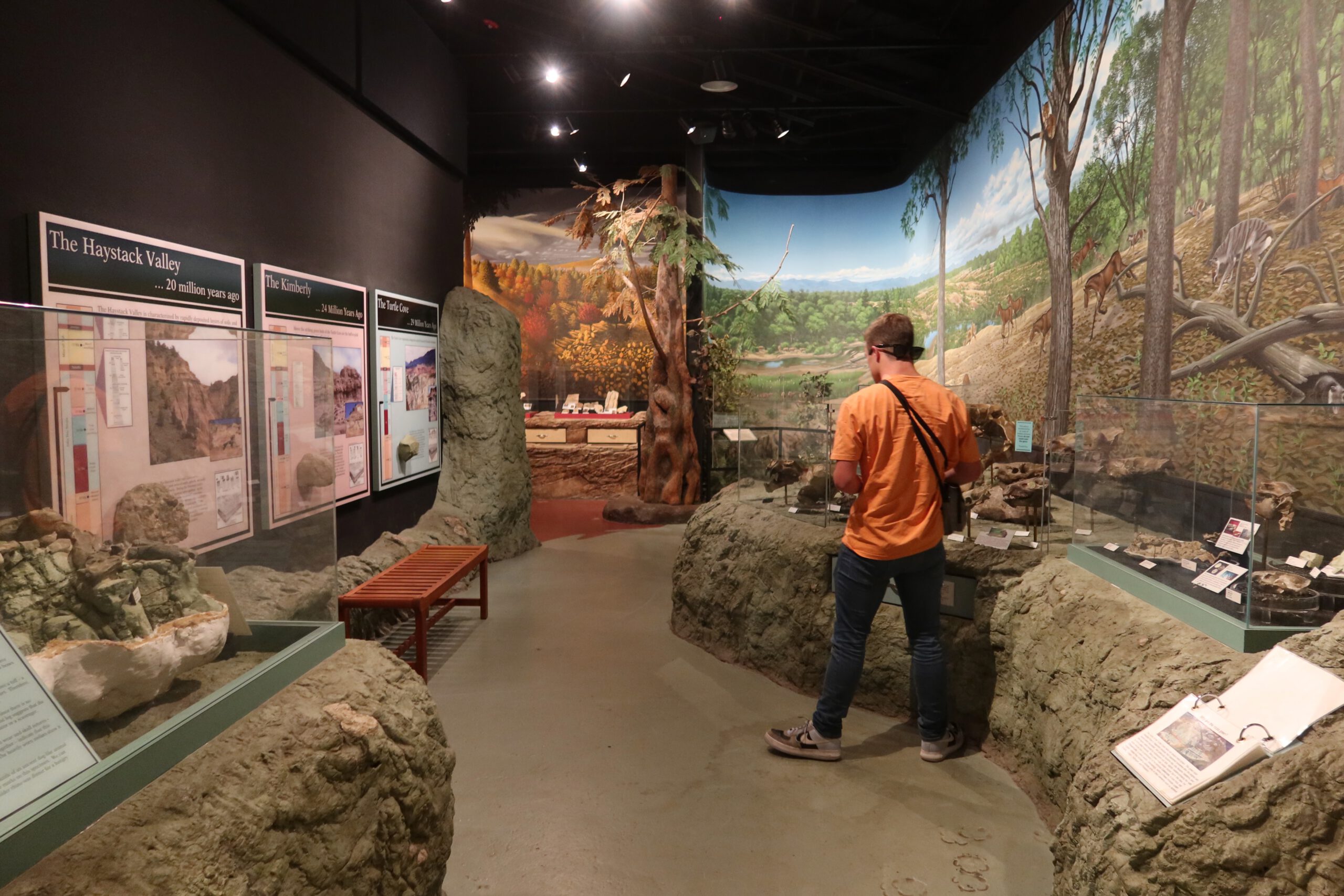
Inside the visitor center, John Day Fossil Beds National Monument starts to explain itself. The exhibition focuses on geology, fossils, volcanic ash layers, and the long natural processes that shaped this landscape. You see how clay layers formed, how ancient forests were buried, and how erosion slowly exposed what we see today.
Everything is presented clearly, without being overcomplicated. You don’t need a geology degree to understand what makes John Day Fossil Beds National Monument special.
The orientation film
One of the most valuable things you can do at John Day Fossil Beds National Monument is watch the short film in the visitor center. It lasts around 20 minutes, and it adds an extra layer of understanding.
The film visually connects everything you just read about. Landscapes, timelines, fossil layers, and climate changes suddenly make more sense once you see them in motion. After watching it, you walk outside with a much sharper eye. You don’t just see hills anymore, you see history.
History of John Day Fossil Beds National Monument
Human history and discovery
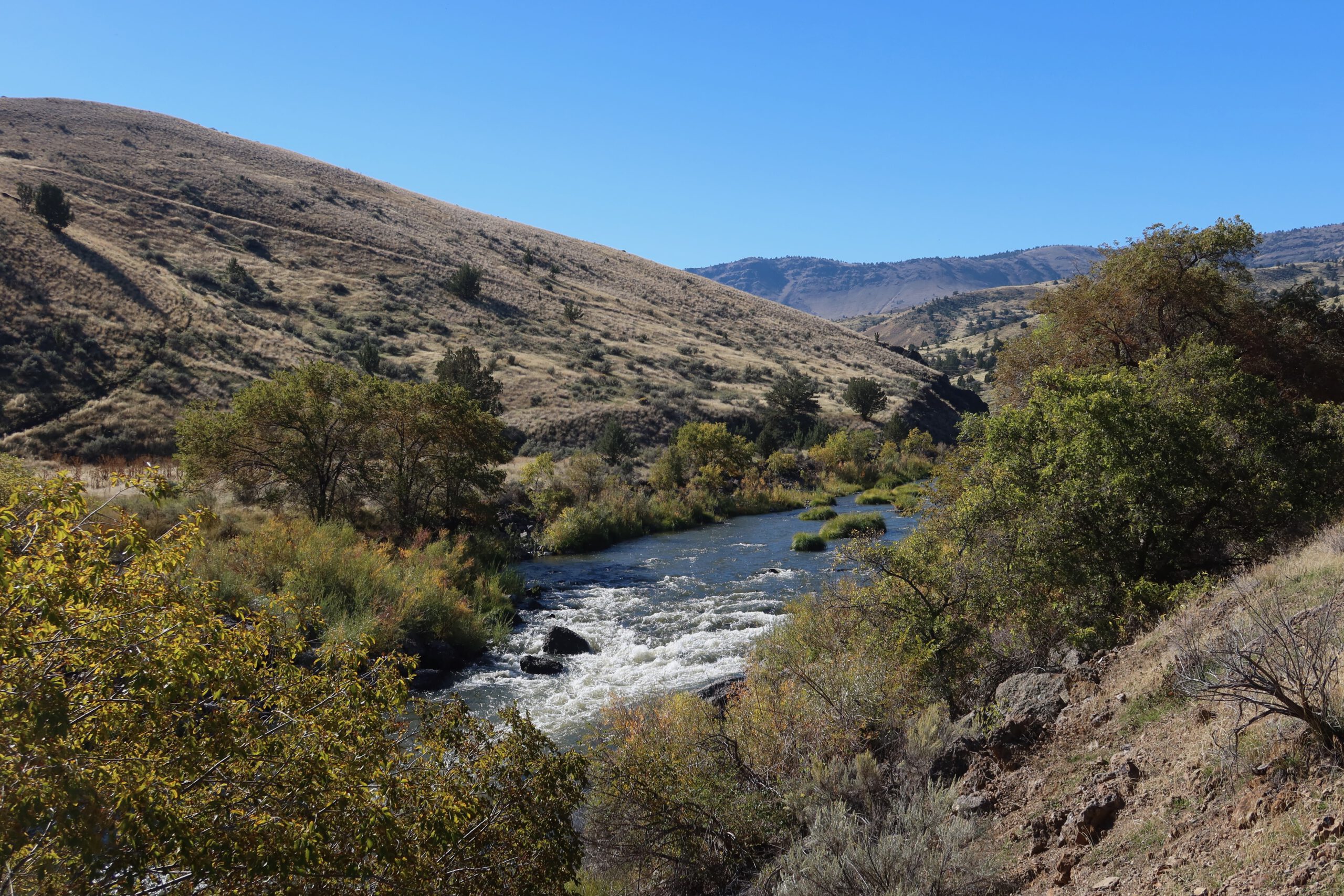
Long before scientists arrived, Indigenous peoples lived and traveled through this region, using the John Day River as a vital resource. Much later, in the mid 1800s, fossils were formally recognized by Thomas Condon, a missionary and amateur geologist.
Condon understood the scientific importance of what he was seeing. His work brought global attention to John Day Fossil Beds National Monument, eventually leading to protection and official designation in 1975.
Since then, John Day Fossil Beds National Monument has become one of the most important fossil records in North America.
Geography and Location
Three separate units, one monument
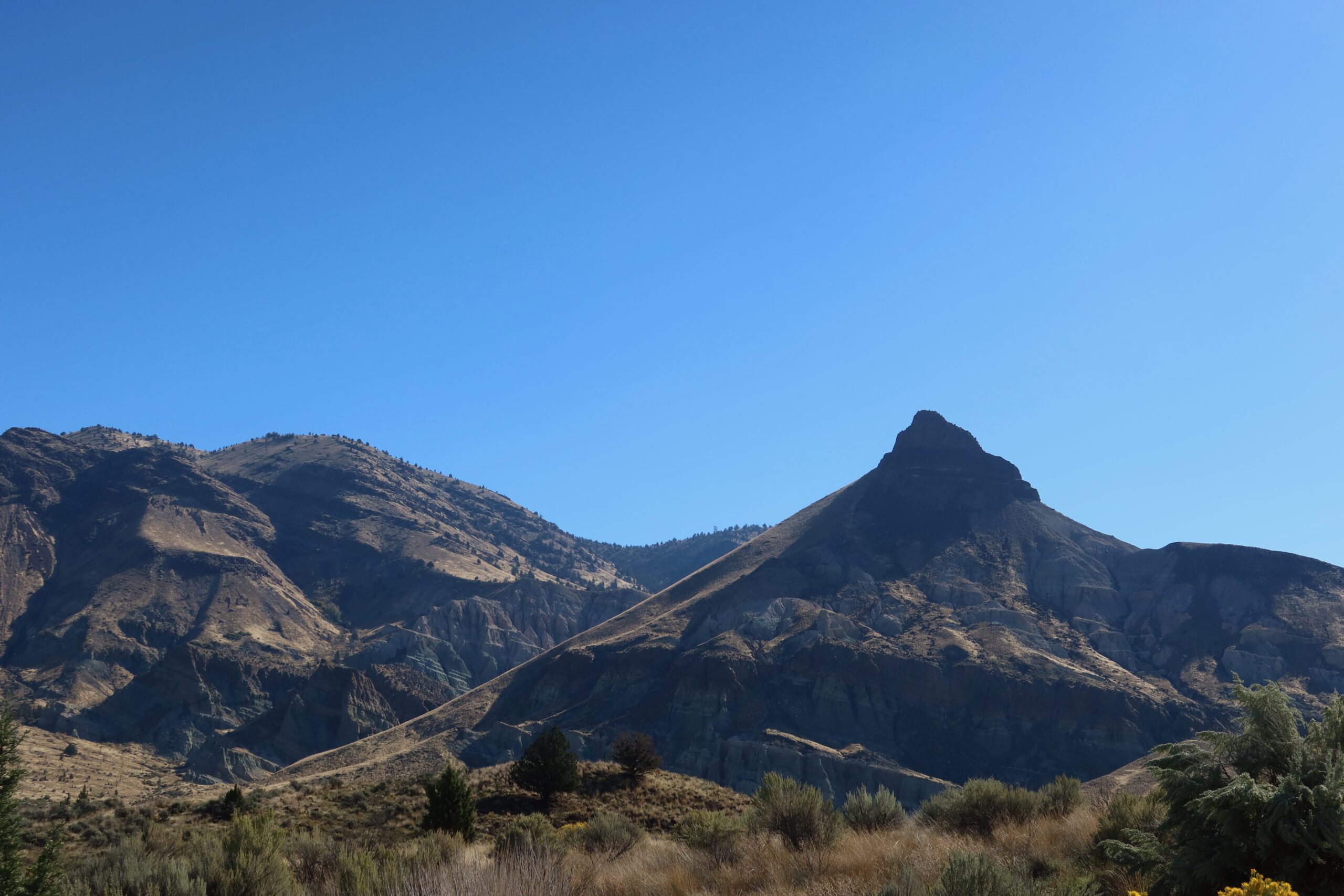
John Day Fossil Beds National Monument is unique because it consists of three separate units spread across Eastern Oregon.
- Sheep Rock Unit
- Painted Hills Unit
- Clarno Unit
Each unit looks different, feels different, and tells a different chapter of the story. You cannot walk between them. Driving is part of the experience, and distances are real here.
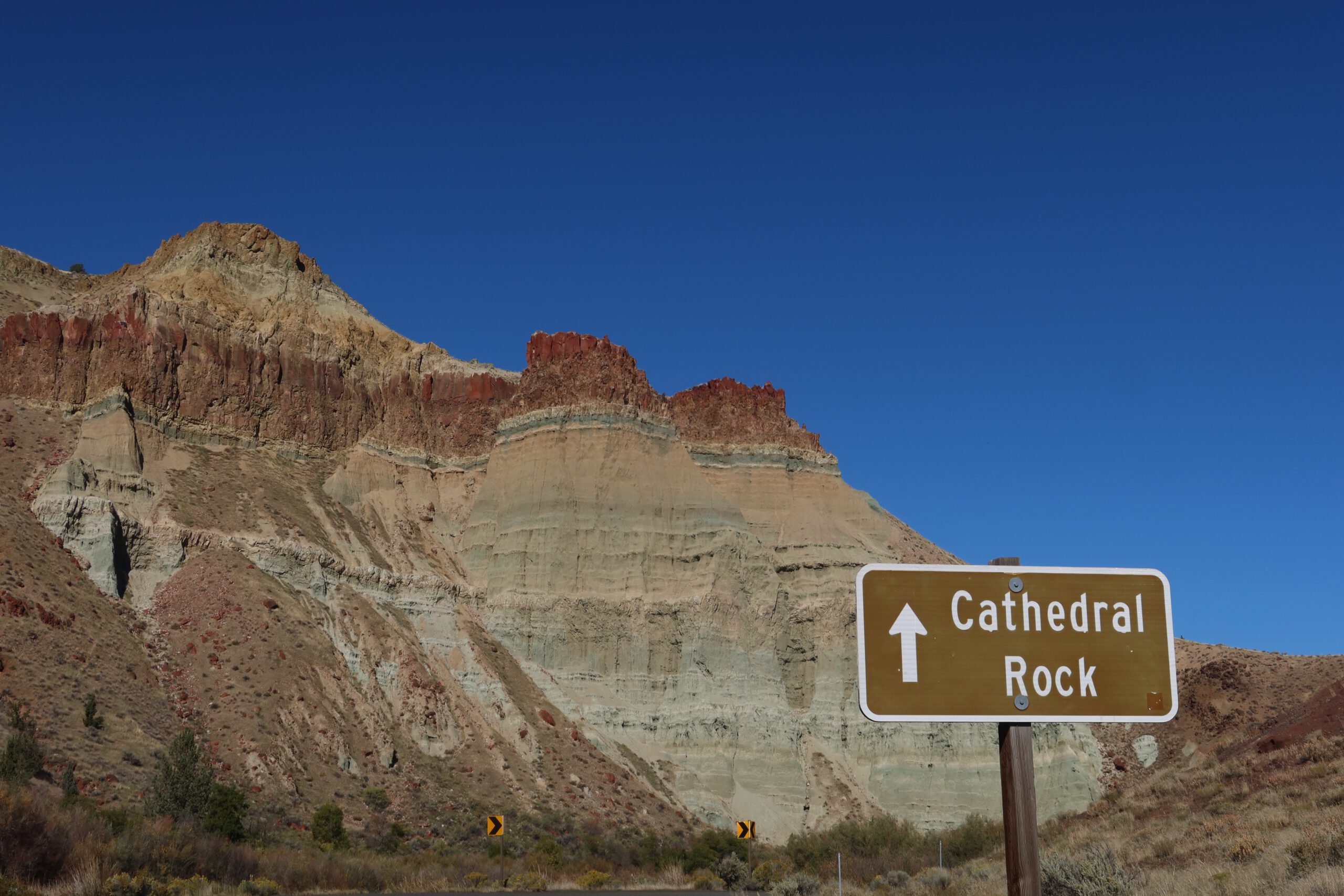
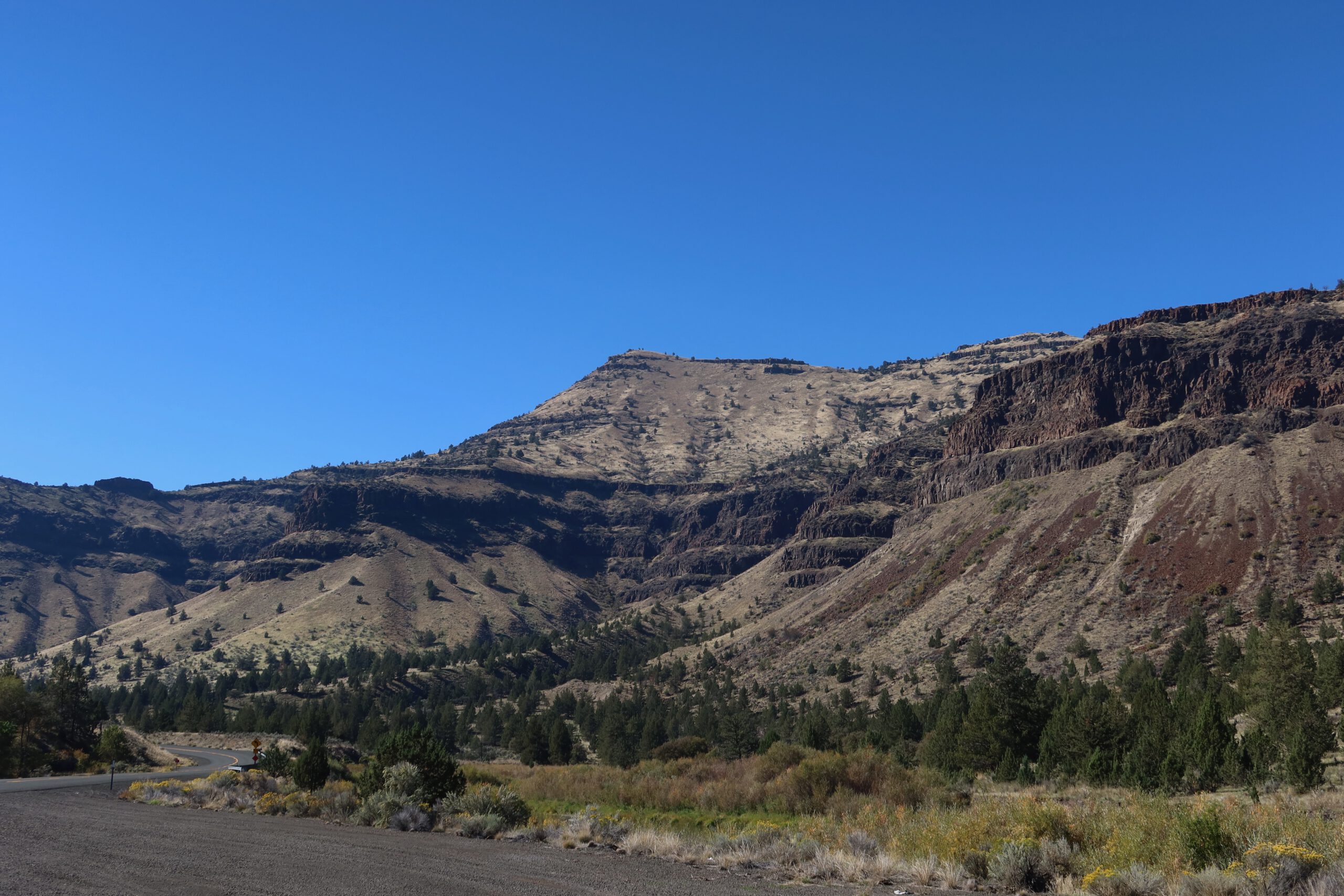
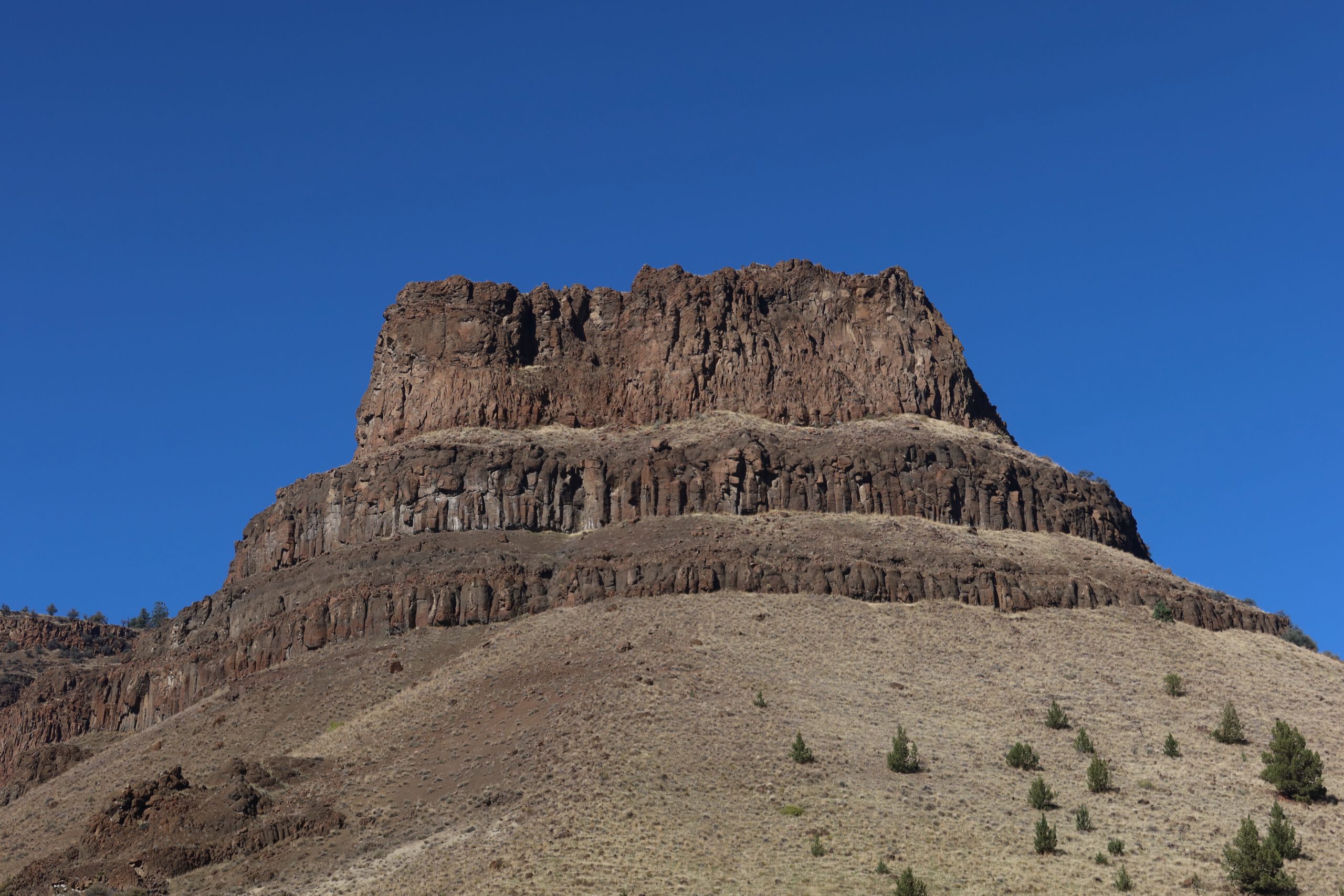
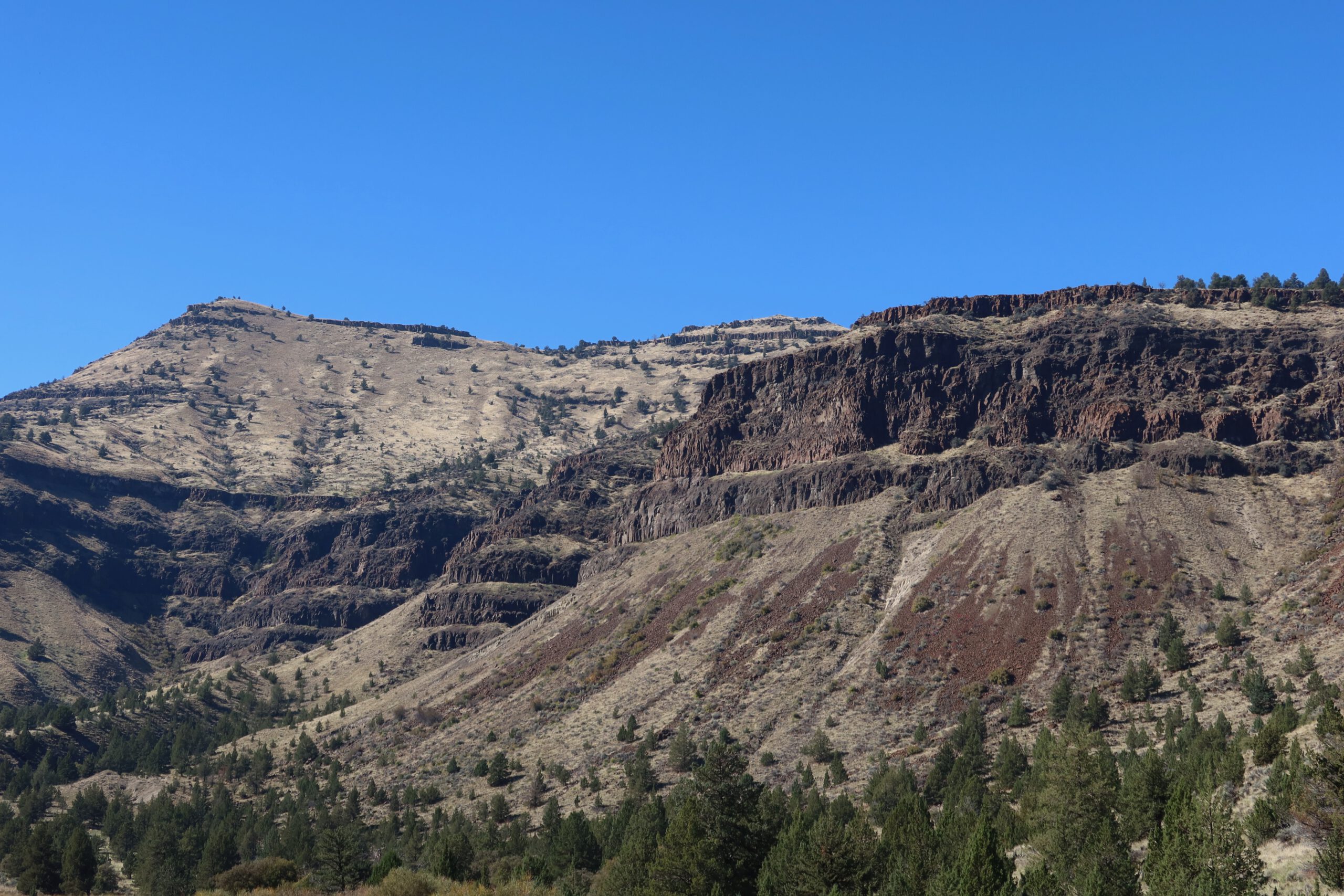
Cathedral Rock is one of those places where the geology of John Day Fossil Beds becomes instantly readable. The sharply defined layers in the cliffs reveal millions of years of volcanic ash deposits, erosion, and changing environments. Even without hiking, this roadside viewpoint offers a clear look at how the monument was formed over time and why this area is so important for understanding Oregon’s prehistoric past.
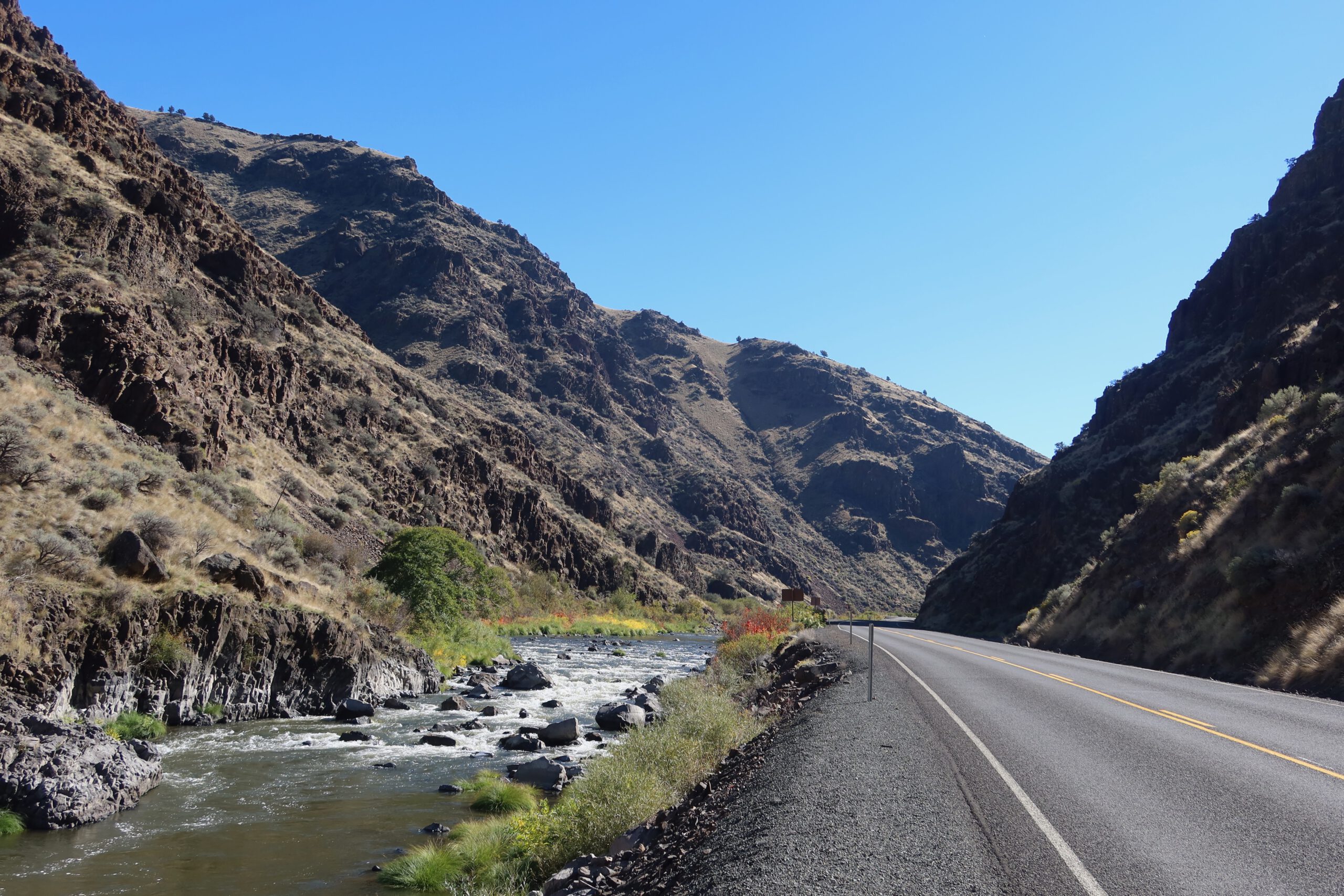
This spread-out layout keeps John Day Fossil Beds National Monument quiet and uncrowded, even during busier travel seasons.
Geology and Paleontology
50 million years preserved in stone
The real power of John Day Fossil Beds National Monument lies in its geology. The fossil layers here span roughly 50 million years, from the late Eocene to the late Miocene.
Volcanic eruptions covered ancient landscapes with ash. Forests, plants, and animals were buried quickly, preserving them in incredible detail. Over millions of years, erosion exposed these layers again.
At John Day Fossil Beds National Monument, fossils include:
- Ancient horses
- Camels
- Rhinos
- Saber toothed cats
- Trees, leaves, and seeds from extinct forests
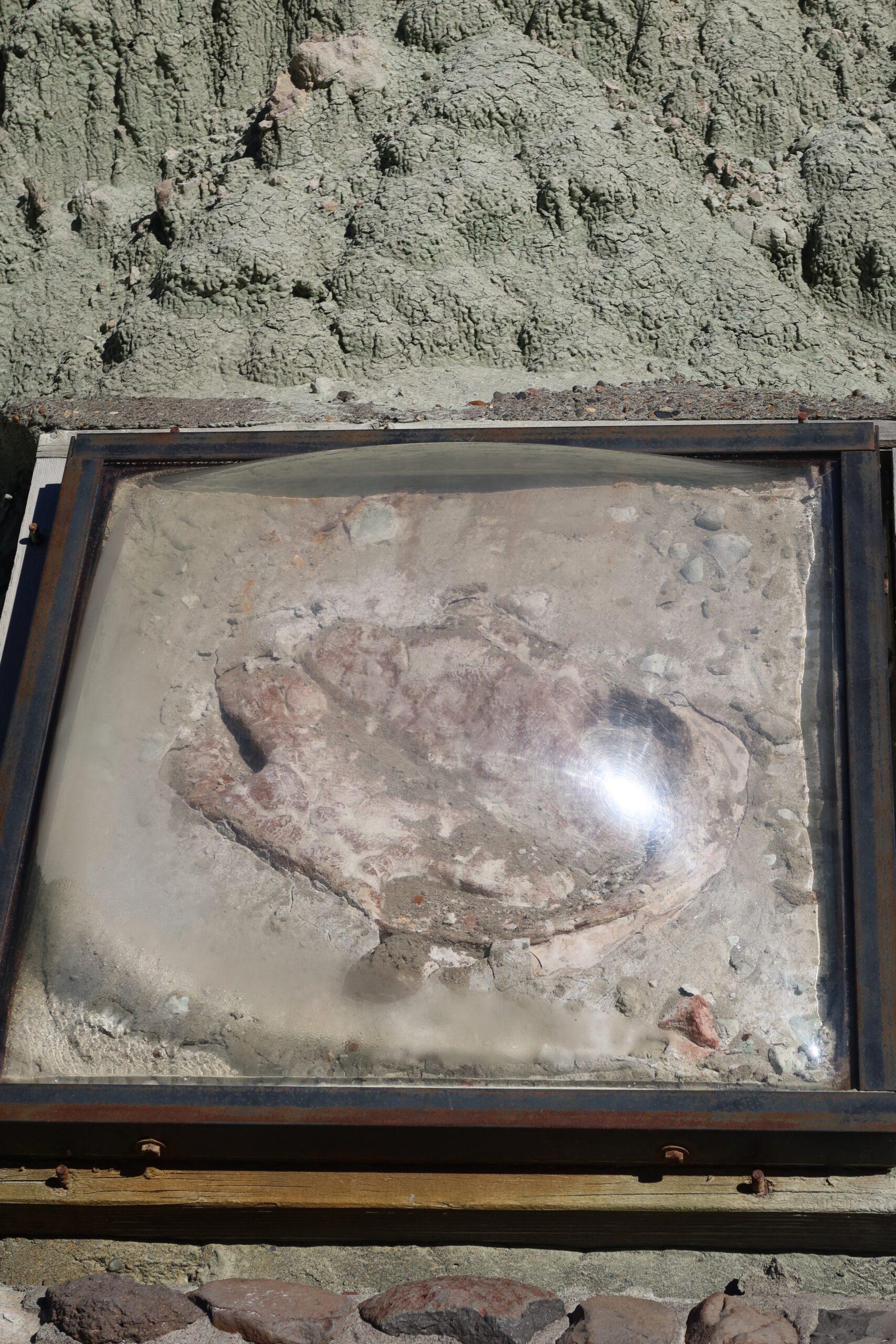
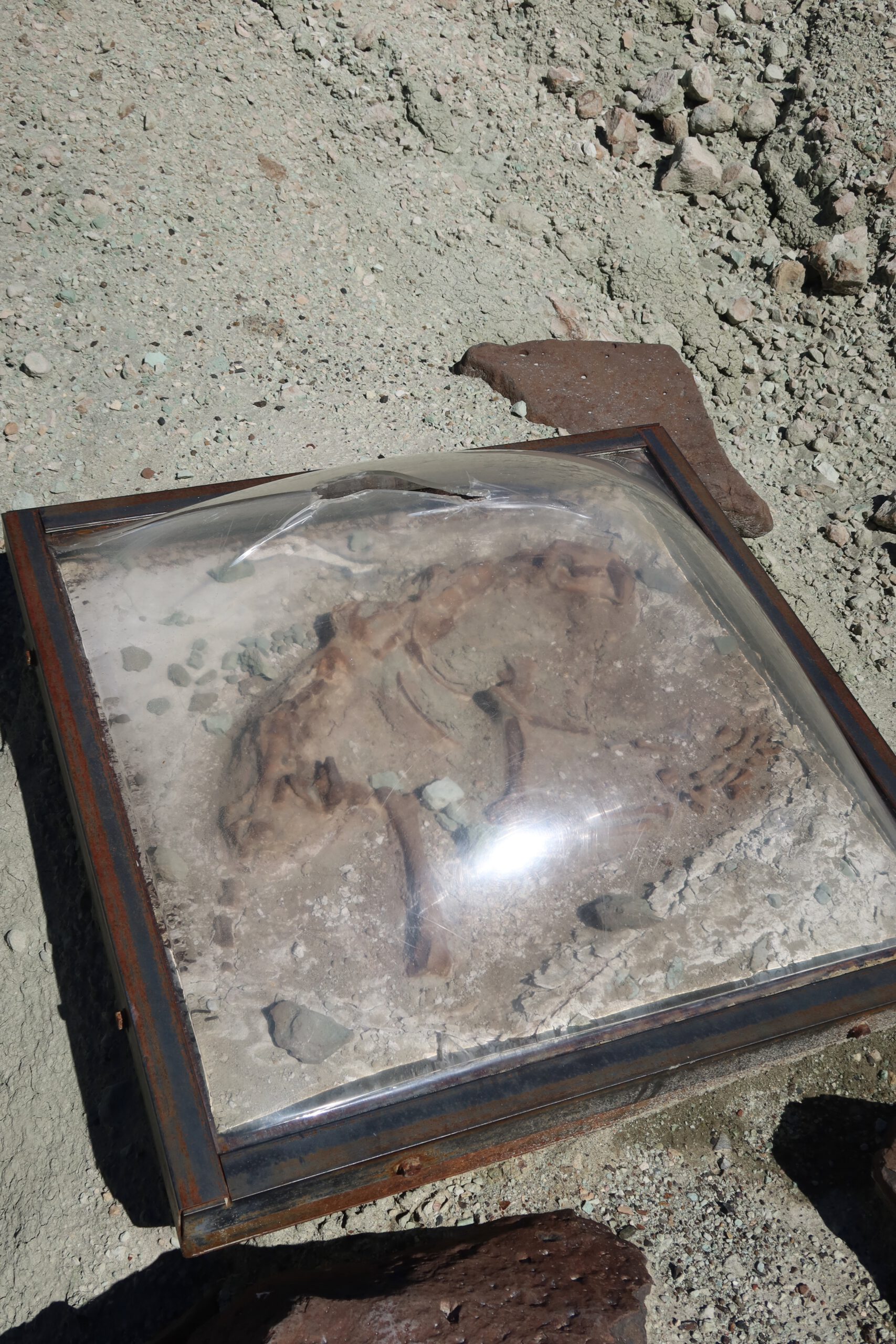
Few places on Earth show such a continuous and readable fossil timeline.
Exploring the Trails
Hiking at John Day Fossil Beds National Monument
After the visitor center, we headed out to explore the trails of John Day Fossil Beds National Monument. Trails are well maintained, clearly marked, and generally accessible.
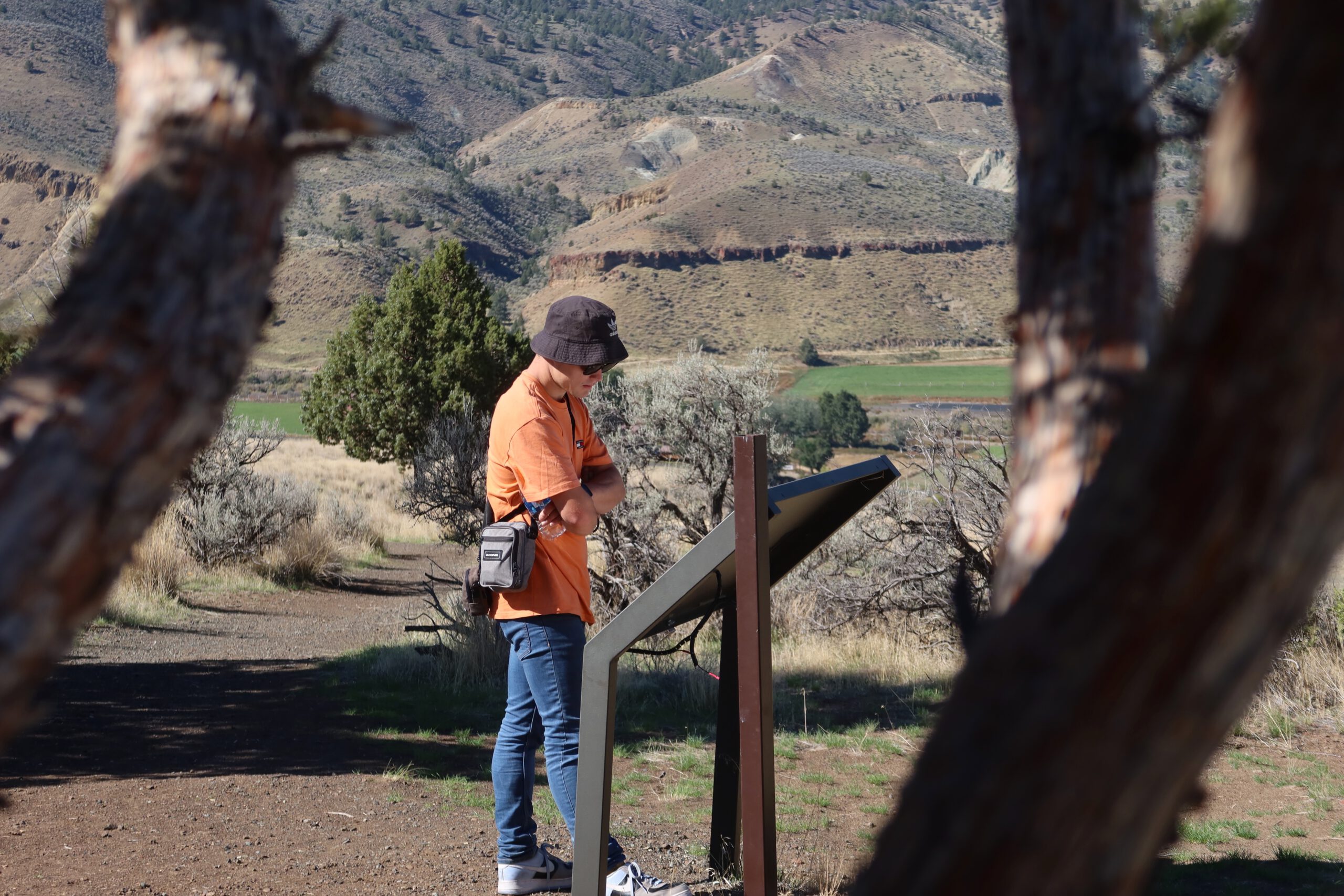
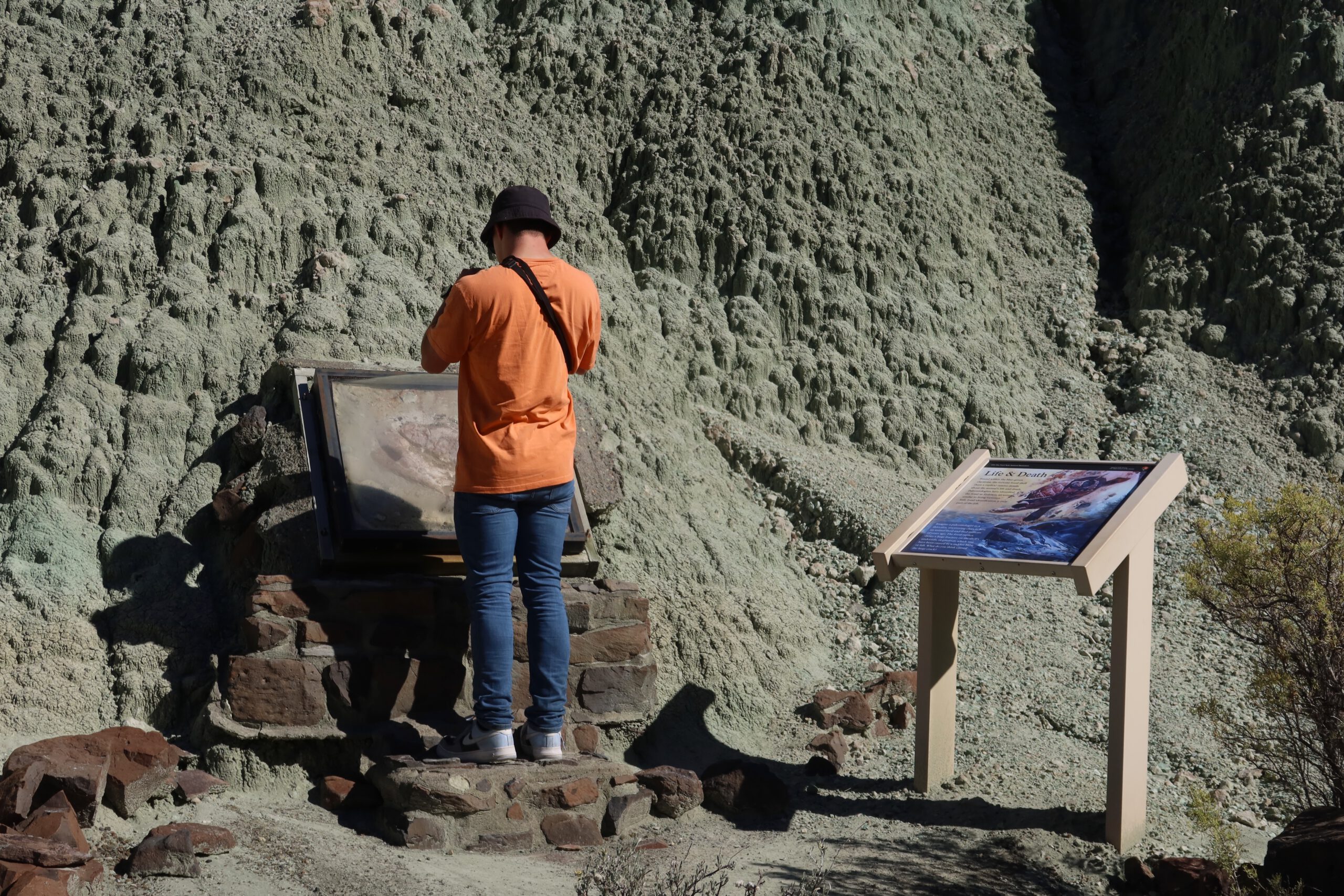
Most trails are short, but they are designed to educate rather than exhaust. Interpretive signs along the way explain what you’re seeing under your feet.
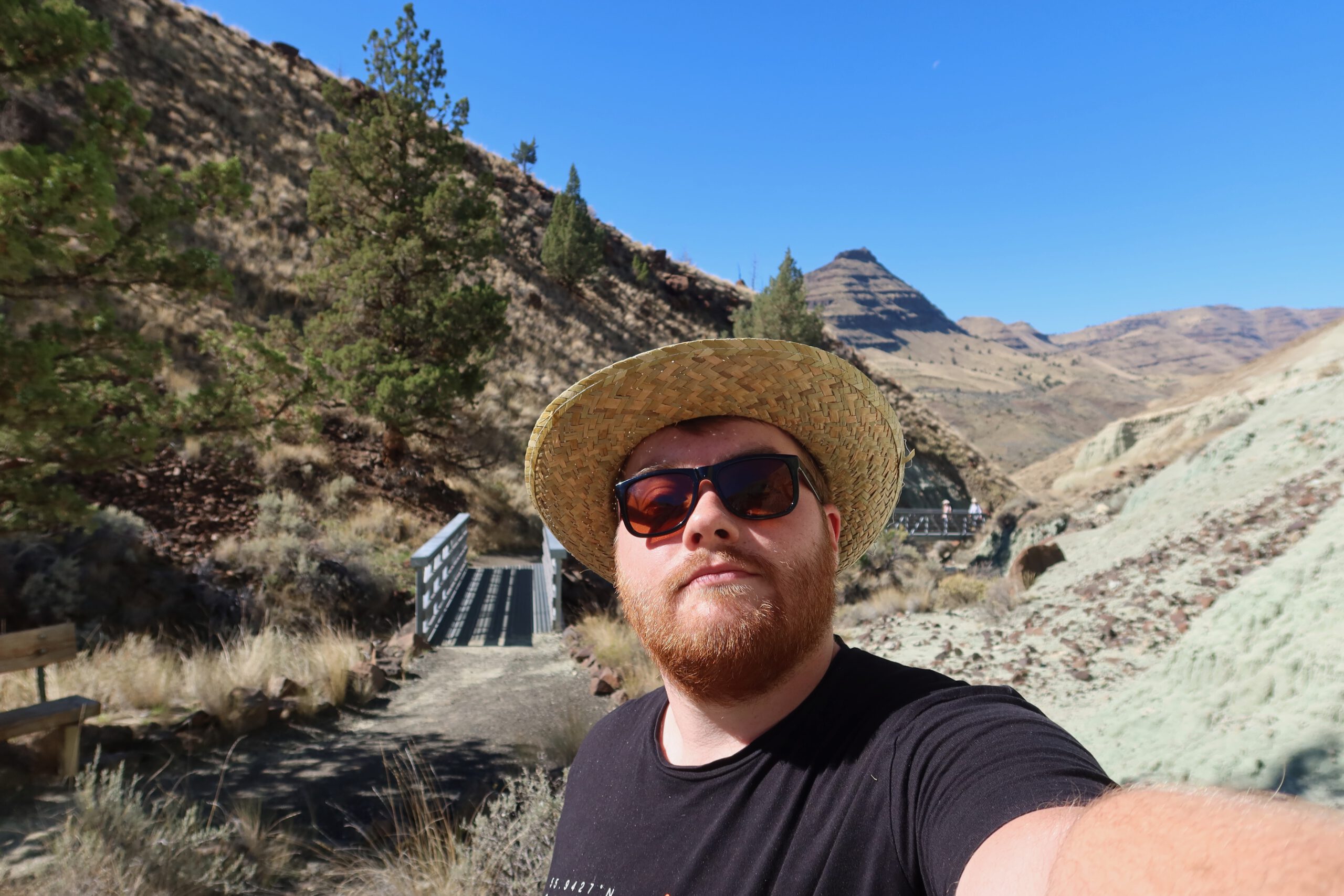
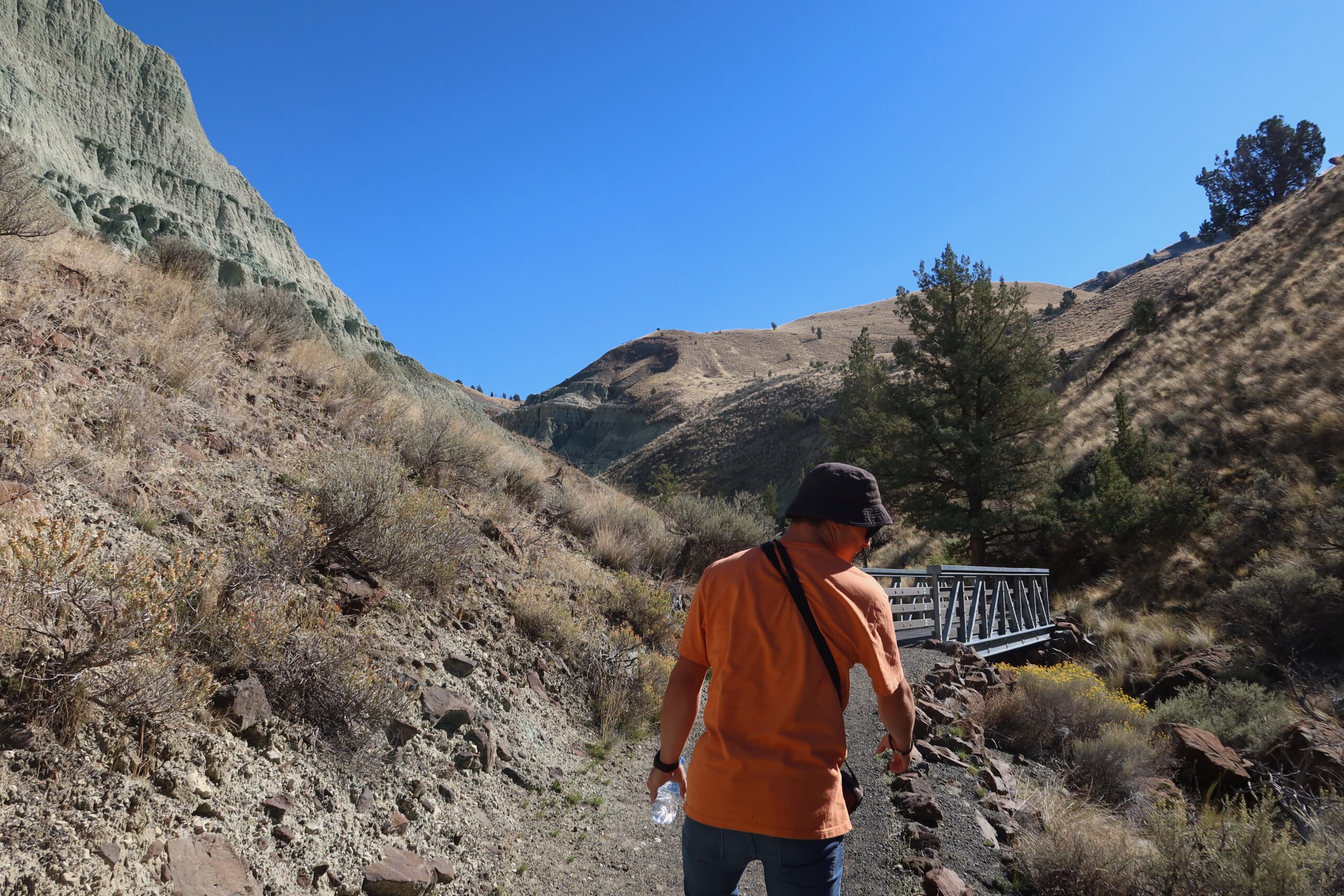
Island in Time Trail – Sheep Rock Unit (John Day Fossil Beds)
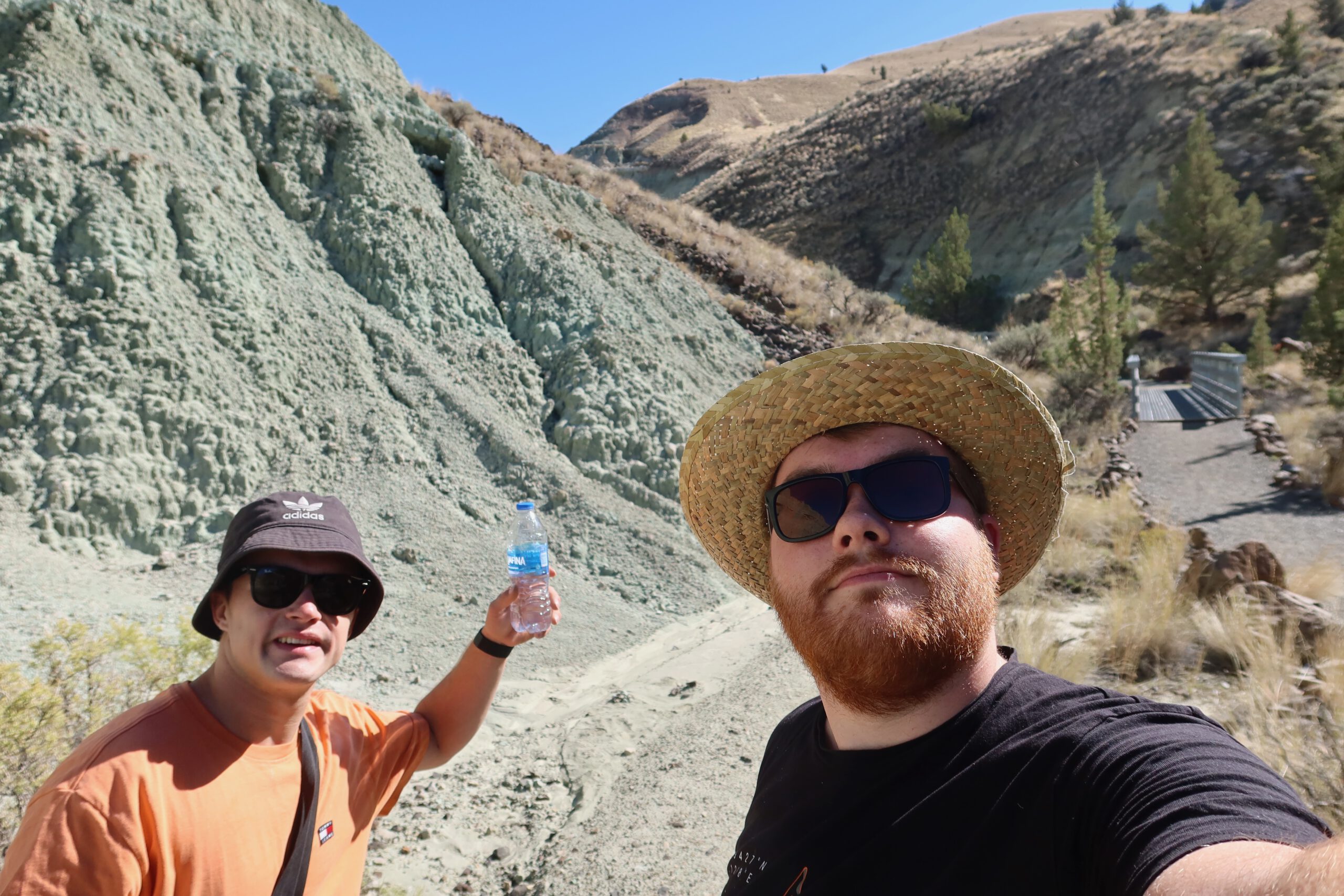
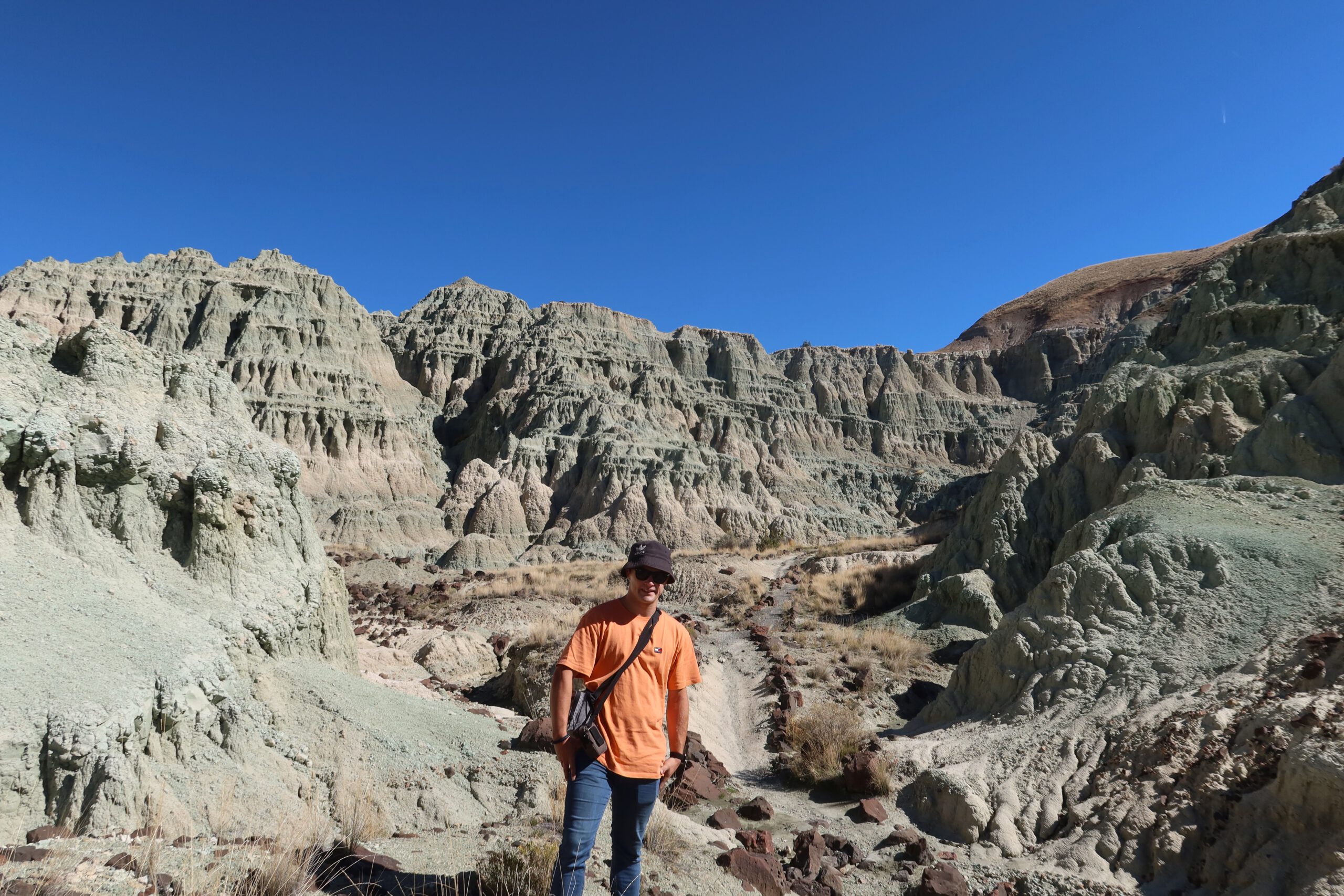
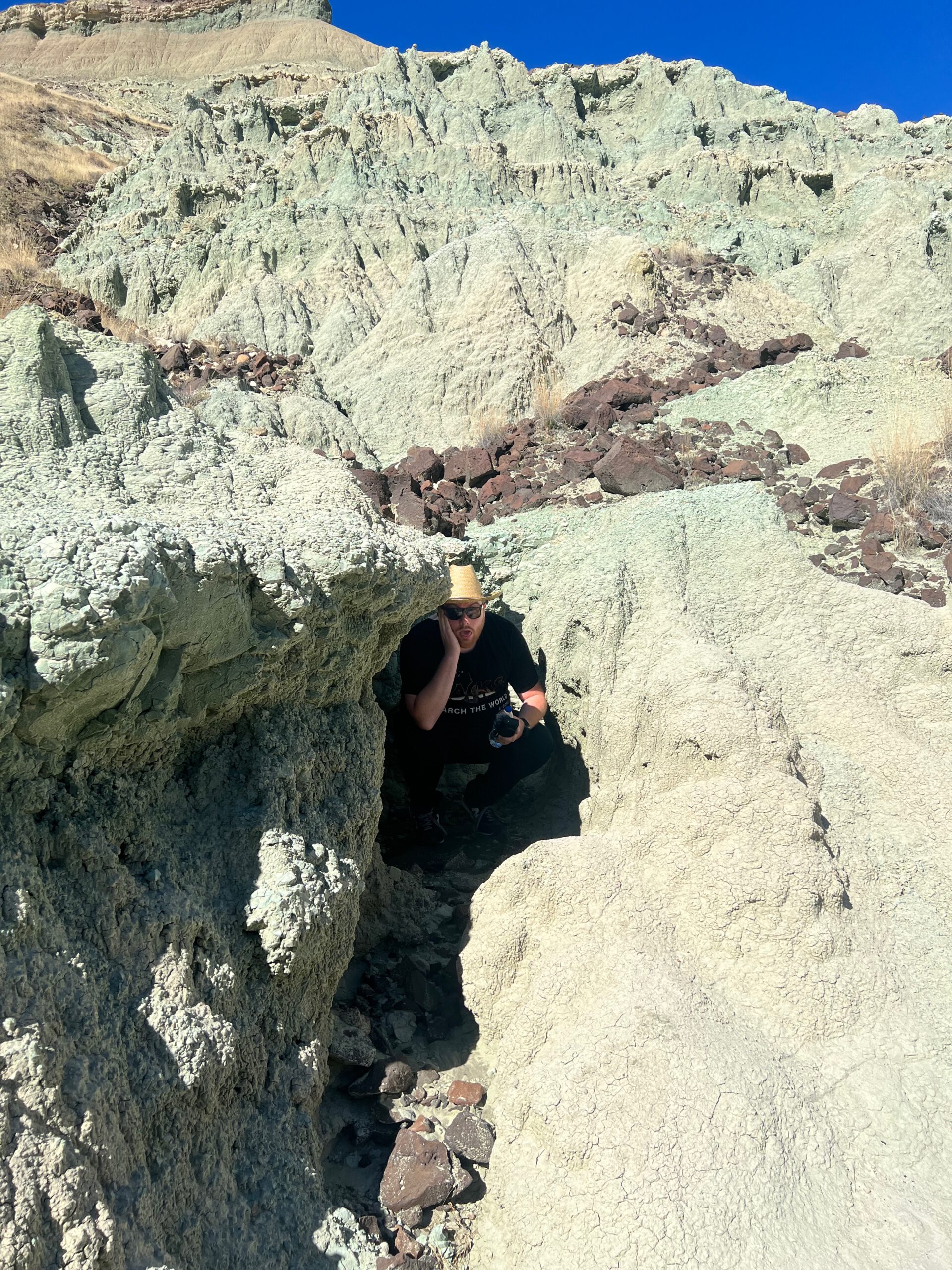
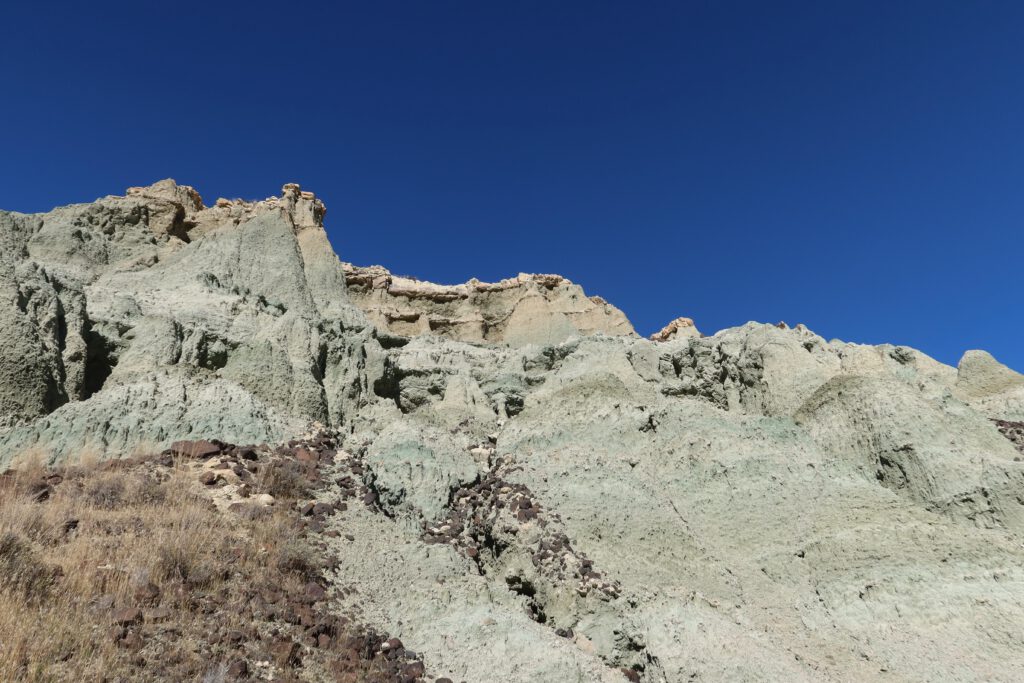
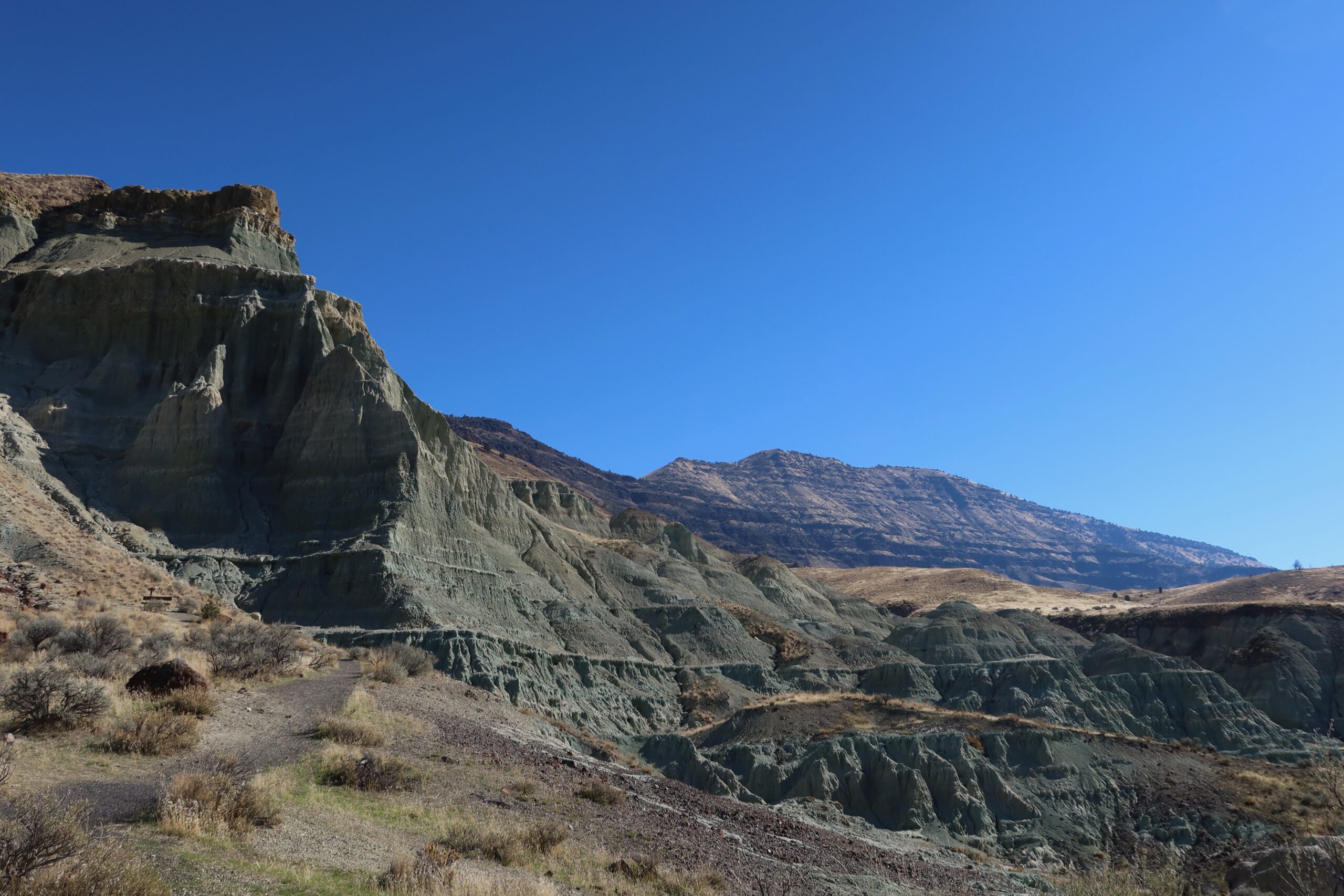
The Island in Time Trail is a short but impressive out-and-back hike through the Sheep Rock Unit of John Day Fossil Beds National Monument. At just 2.1 km (1.3 miles) with about 77 m (250 ft) of elevation gain, it’s an accessible trail that packs in a lot of scenery. The route winds through striking green and tan badlands, crosses small bridges over a dry creek bed, and features several interpretive signs explaining the area’s geological layers and fossil history. It’s an easy trail to combine with other stops in the park and gives a great first impression of how unique and ancient this landscape really is.
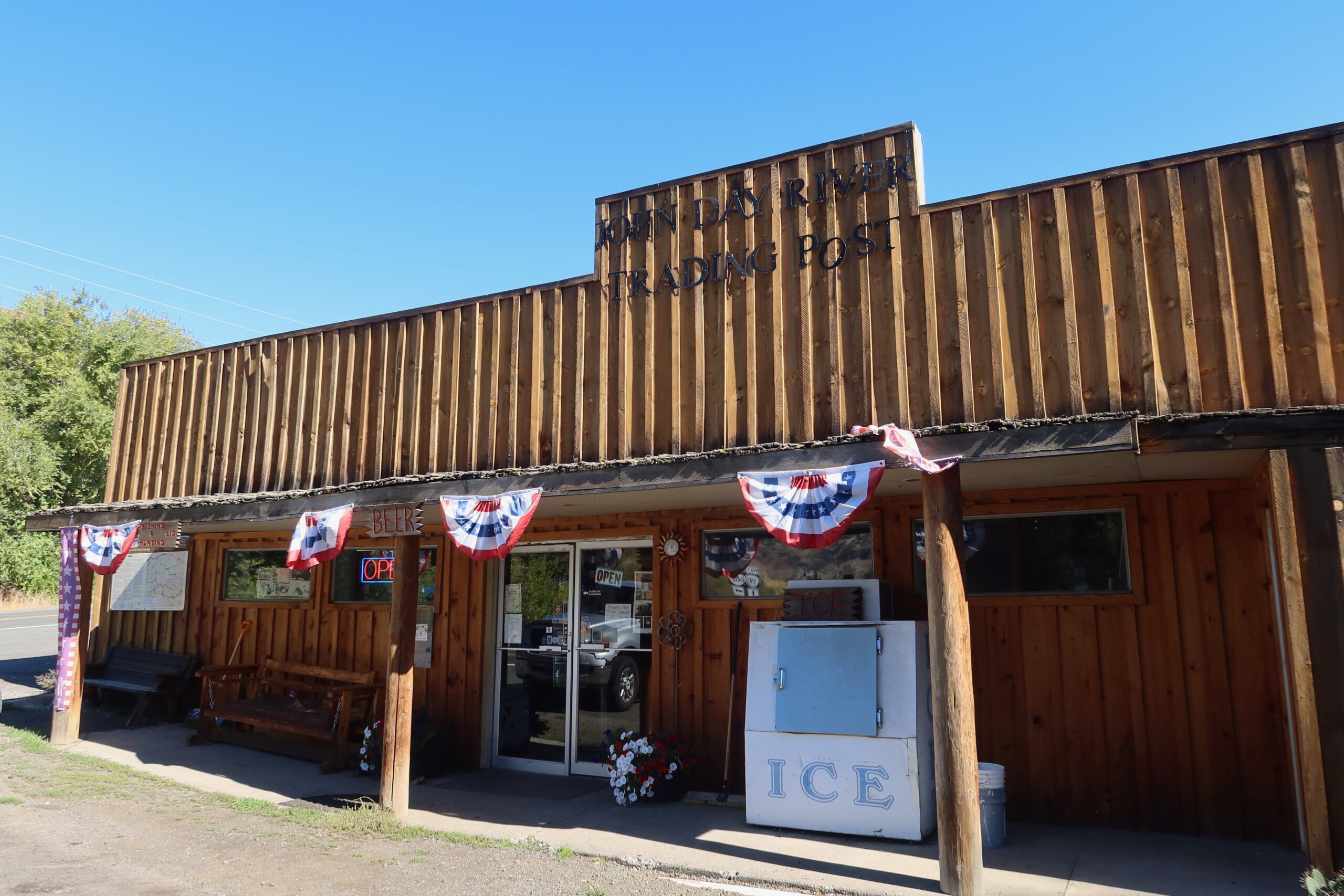
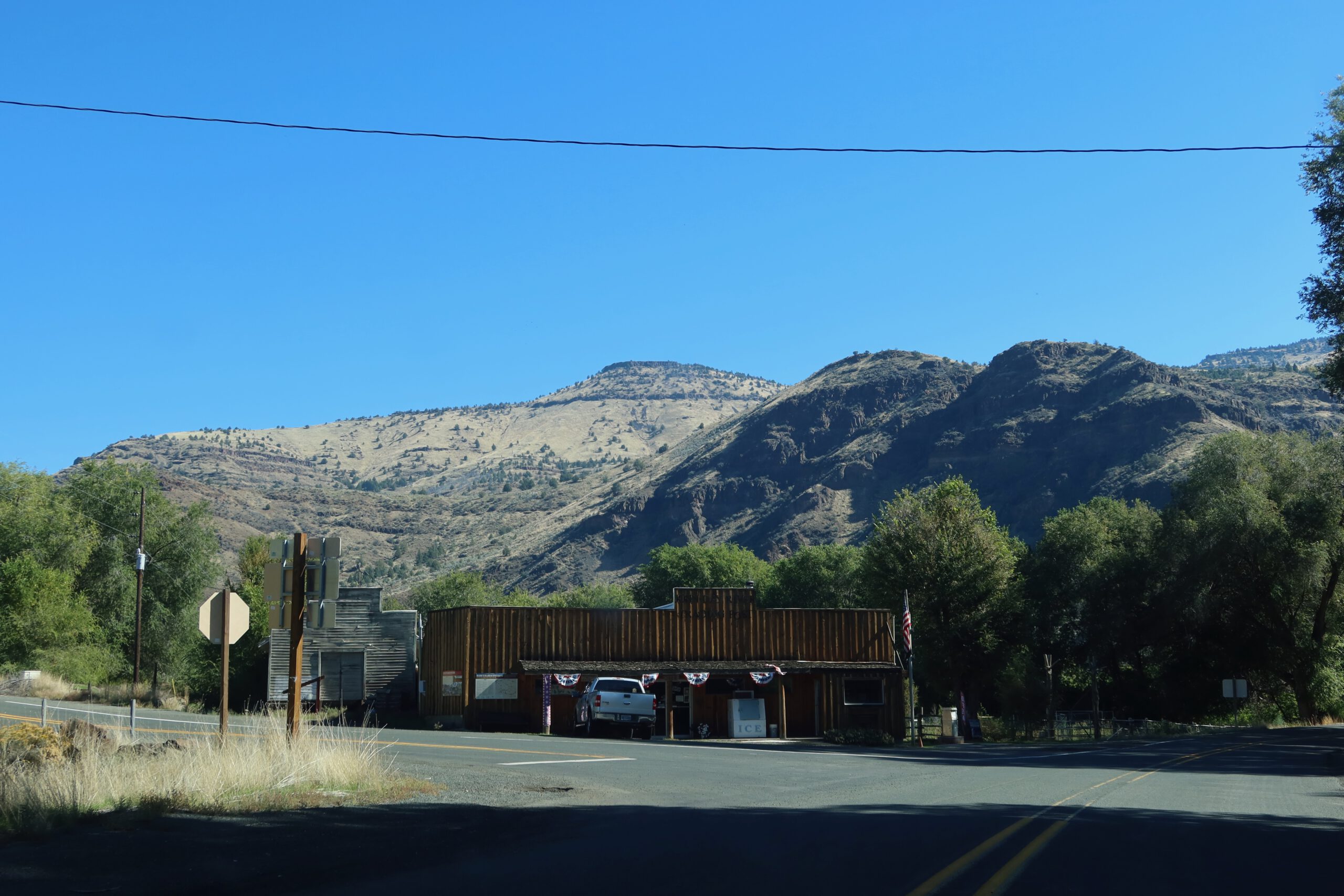
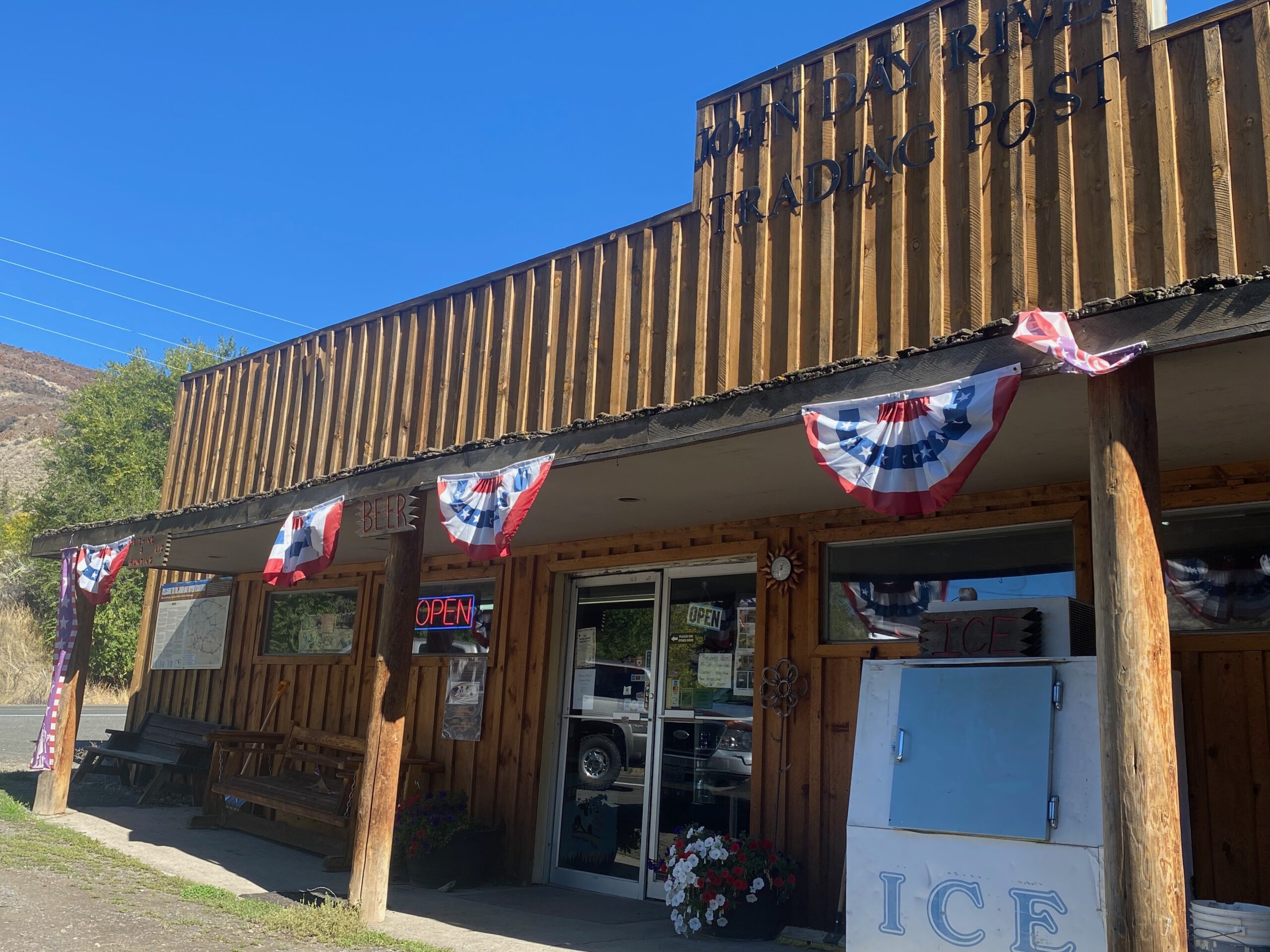
Water is essential. There are no shops or services inside John Day Fossil Beds National Monument. The only nearby option is the small trading post in Kimberly, which is compact but surprisingly well stocked.
Painted Hills trails
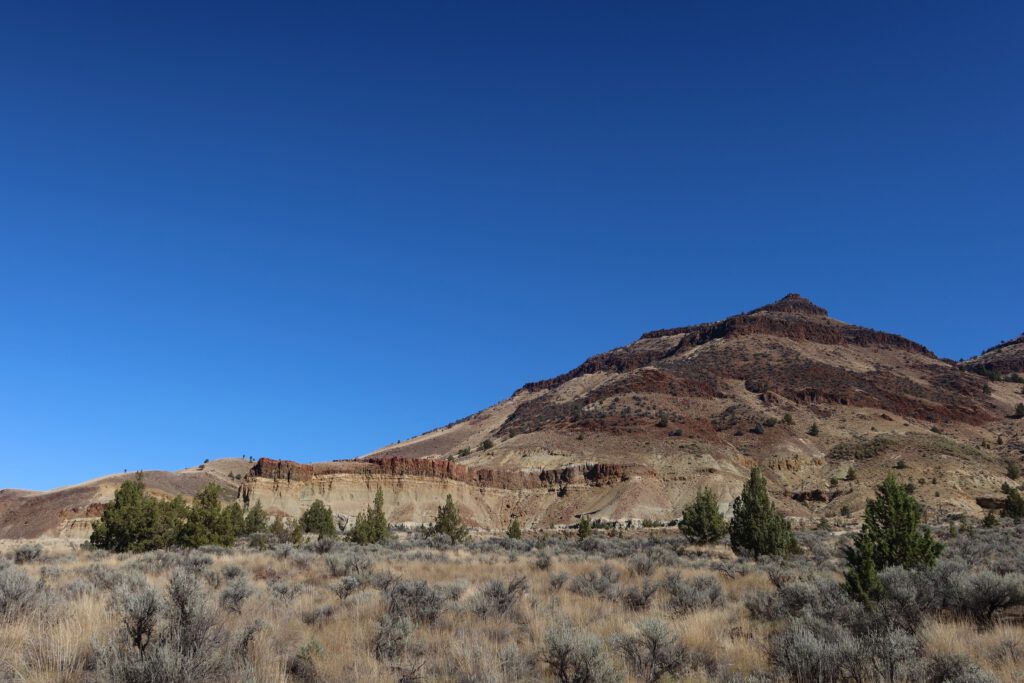
The Painted Hills Unit is the most visually striking part of John Day Fossil Beds National Monument. The colors change constantly depending on light and weather.
Trails like:
- Painted Cove Trail
- Painted Hills Overlook Trail
- Carroll Rim Trail
allow you to experience the hills from different perspectives. Walking on the hills themselves is strictly forbidden, and for good reason. The soil is fragile and easily damaged.
Wildlife awareness on the trails
The trails at John Day Fossil Beds National Monument are easy to walk, but this is still wild land. Insects are common, especially in warmer months. Snakes, including rattlesnakes, are present and not hiding from visitors.
They are usually calm and avoid contact, but awareness matters. Watching where you step is part of the experience here.
Flora and Fauna, Past and Present
Life today
Modern John Day Fossil Beds National Monument supports desert adapted plants, grasses, shrubs, and river vegetation. Wildlife includes birds, deer, small mammals, reptiles, and insects.
Birdwatching is especially rewarding, with hawks, owls, and migratory species regularly spotted.
Life millions of years ago
What makes John Day Fossil Beds National Monument extraordinary is how clearly it shows how life changed over time. Fossils reveal shifts from tropical forests to cooler, drier landscapes.
This place is not just scenic. It is educational at a deep, evolutionary level.
Living Wildlife at John Day Fossil Beds National Monument
Although John Day Fossil Beds National Monument is best known for its fossils and ancient landscapes, the area is far from lifeless today. The monument and its surrounding environment support a surprisingly diverse range of modern wildlife, adapted to the semi arid climate, open grasslands, river corridors, and rocky hillsides.
The National Park Service maintains an official inventory of mammals currently living in and around the monument. This list includes familiar species such as mule deer, coyotes, raccoons, porcupines, and various ground squirrels, alongside more elusive animals like bobcats, river otters, and even extremely rare sightings of gray wolves. Many of these species remain unseen by most visitors, but their presence shapes the ecosystem in subtle ways.
A large portion of the wildlife at John Day is nocturnal. Bats, rodents, and small predators become active after sunset, which explains why the monument often feels remarkably quiet during the day. As darkness falls, the landscape changes character, with movement and sound returning to areas that appeared almost empty just hours earlier.
Visitors on the trails should also be aware that reptiles and insects are a natural part of the environment. Snakes, including rattlesnakes, are present and do not actively avoid human paths. While encounters are rare, staying alert and watching where you step is strongly recommended. This living layer of wildlife adds another dimension to John Day Fossil Beds, connecting the ancient past preserved in stone with a functioning ecosystem that still exists today
Activities Beyond Hiking
More than just walking
Besides hiking, John Day Fossil Beds National Monument offers:
- Scenic driving routes
- Ranger programs when available
- Educational exhibits
- Photography opportunities
- Quiet observation
There is no camping inside the monument, no restaurants, and no gift shop overload. That simplicity is part of the charm.
Why John Day Fossil Beds National Monument is Special
John Day Fossil Beds National Monument does not try to impress you loudly. It earns your respect slowly.
It is perfect for travelers who enjoy:
- Learning while traveling
- Quiet landscapes
- Geological storytelling
- Slow exploration
If you give it time, John Day Fossil Beds National Monument becomes one of those places that stays with you long after you leave.
Fossils & found
Clarno Nut Beds, a Window Into a Tropical Oregon
The Clarno Nut Beds represent one of the most surprising chapters in the history of John Day Fossil Beds. Around 44 million years ago, central Oregon looked nothing like the dry high desert seen today. Instead, the region was covered by a hot, wet, semitropical forest with dense vegetation, high rainfall, and warm temperatures. Fossil evidence suggests annual rainfall close to 3 meters, comparable to modern tropical rainforests.
What makes the Clarno Nut Beds truly special is the extraordinary diversity of fossilized plants. More than 175 species of fruits and nuts have been identified, including early relatives of walnuts, chestnuts, magnolias, bananas, palms, and grapevines. In fact, the site preserves over 66 genera and 77 species of fossil wood, making it the most species rich fossil wood locality on Earth for any geological age.
This lush forest also supported a wide range of animals. Crocodiles hunted along rivers, tortoises moved through undergrowth, and early mammals such as primitive horses, tapir relatives, and large rhino like brontotheres browsed among the trees. The Clarno Nut Beds show that Oregon once hosted ecosystems more similar to today’s Southeast Asia than the American West.
Hancock Mammal Quarry, Life Along an Ancient River
The Hancock Mammal Quarry preserves a snapshot of life along a river bend roughly 40 million years ago. The site formed as sediments like sand, clay, and gravel accumulated in a point bar created by a slow moving stream. Seasonal flooding repeatedly washed plant material and animal remains into this natural trap, creating an unusually dense fossil record.
This quarry is famous for its strange and unfamiliar mammals. Small three toed horses such as Haplohippus lived alongside massive brontotheres, animals that looked like rhinos but were more closely related to horses. Pig like mammals such as Acheanodon and bear sized carnivores like Hemipsalodon hunted or scavenged along the riverbanks, creating a complex food web.
The Hancock Mammal Quarry helps scientists understand how early mammals adapted to forested environments. Many species show features for browsing, climbing, or moving through dense vegetation, rather than open grasslands. This assemblage captures a world in transition, long before modern ecosystems began to emerge.
Turtle Cove Assemblage, A Landscape in Transition
The Turtle Cove Assemblage is one of the most important fossil layers within John Day Fossil Beds. These distinctive blue green claystone layers contain the majority of mammal fossils found in the entire basin. They represent a long time span of roughly five million years, during which the climate slowly cooled and dried.
During this period, forests began to open up as volcanic ash periodically blanketed the land. Early grasses appeared but had not yet taken over the landscape. Animals such as three toed horses, beavers, oreodonts, and mouse deer browsed among trees and shrubs, while predators like bear dogs, false saber toothed cats, and giant pig like entelodonts hunted them.
What makes Turtle Cove unique is the diversity of lifestyles preserved in the fossils. Tree climbing mammals, burrowing animals, and fast running species all lived side by side. This mix shows how ecosystems responded dynamically to changing climate, creating a mosaic of habitats rather than a single uniform environment.
Upper John Day Assemblage, The Rise of Open Landscapes
The Upper John Day Assemblage records a clear shift toward more open environments between 25 and 24 million years ago. Volcanic sediments and river deposited sandstones show that forests were gradually replaced by grasslands, shrublands, and open woodlands. This marks a critical moment in the ecological evolution of the region.
As habitats opened up, animals adapted accordingly. Burrowing mammals such as gophers and beaver relatives became common, while running adapted herbivores like early camels and long legged horses appeared. Predators also evolved, including Daphoenodon, the first running adapted carnivore known from Oregon.
This assemblage explains why many modern animals are built for speed and endurance. The spread of grasslands favored long legs, high crowned teeth, and efficient movement, setting the stage for ecosystems that more closely resemble today’s American West.
Mascall Assemblage, Forests Return to Oregon
The Mascall Assemblage, dating from 16 to 13 million years ago, captures a surprising reversal in climate trends. During the mid Miocene climatic optimum, temperatures rose and forests returned to the region, replacing much of the earlier sagebrush steppe. Fossil soils show long lasting, stable landscapes rather than rapid environmental change.
These environments closely resembled modern temperate forests of the eastern United States. Swamp cypress lined waterways, deciduous forests filled valleys, and coniferous forests covered higher ground. Alongside forests, short grasslands still existed, supporting both browsing and grazing animals.
The Mascall fauna includes an impressive lineup of animals, from early horses and camels to four tusked elephant relatives, rhinos, bear dogs, and tree climbing cats. This assemblage shows that climate change does not always move in one direction, and that ecosystems can recover and transform multiple times over millions of years.
Final Thoughts
Our visit to John Day Fossil Beds National Monument was calm, educational, and surprisingly impactful. It is not a place you rush through. It is a place that rewards curiosity and patience.
If you are road tripping through Oregon, skipping John Day Fossil Beds National Monument would be a mistake. It is one of the most honest and underrated natural experiences in the state.