

Mojave Desert California: A Vast Desert That Defines the American West
Mojave Desert California is one of the most striking and expansive desert regions in the United States. Covering a large part of southeastern California and stretching into Nevada, Arizona, and Utah, this desert plays a key role in shaping the landscape, climate, and road trip culture of the American Southwest. With an estimated surface area of 124,000 km² (about 47,900 sq mi), the Mojave Desert California is not just a place you pass through — it’s a region that defines distance, silence, and scale. We just left the Airbnb in Joshua Tree National Park, and drove on to Las Vegas, via this desert.
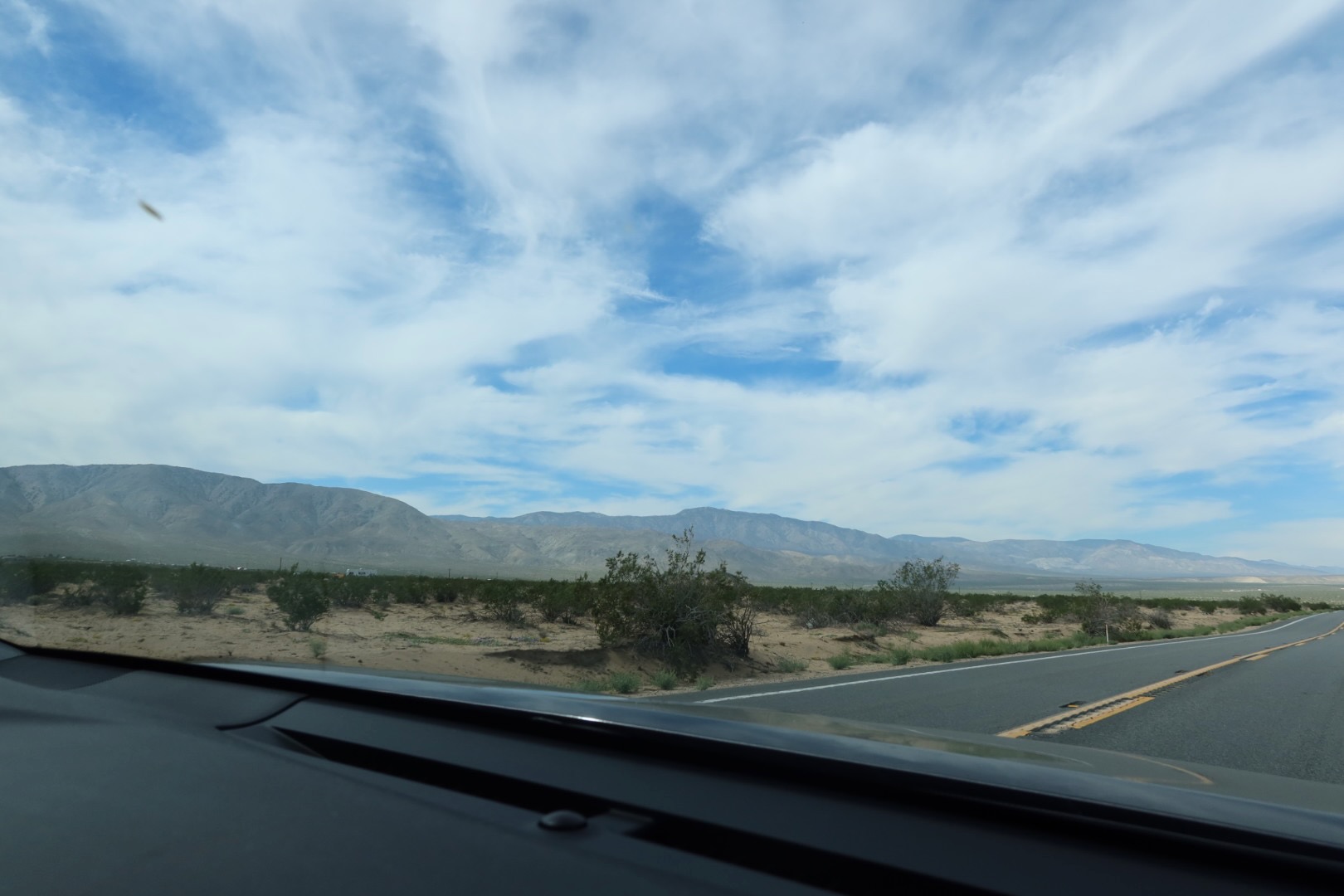
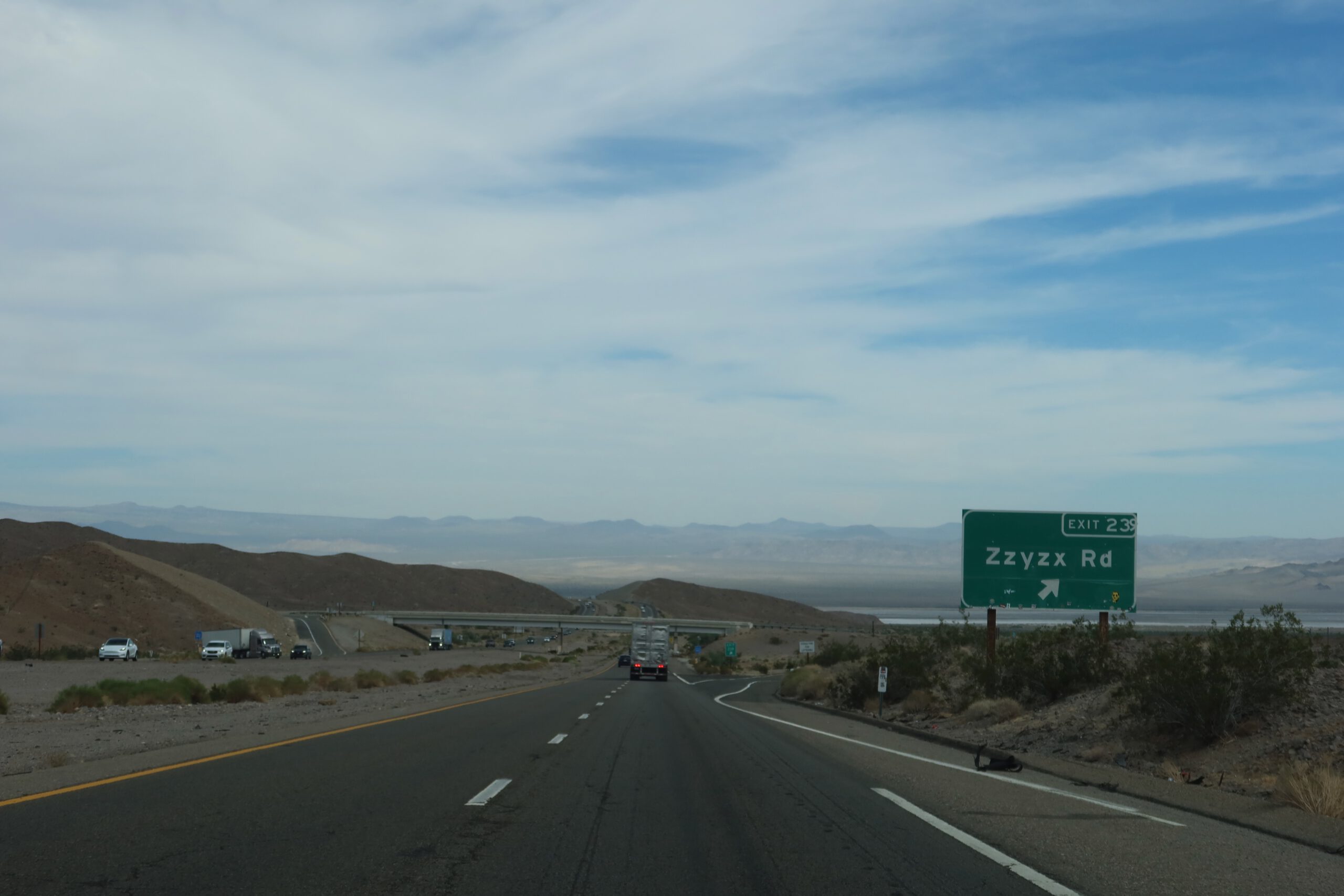
The Mojave Desert is best known for its extreme dryness, wide-open spaces, and dramatic contrasts. Despite its reputation as a harsh environment, the desert supports a diverse ecosystem and some of the most recognizable natural landmarks in North America. Joshua trees, salt flats, volcanic fields, and rugged mountain ranges all coexist within this vast desert system.
Geographically, the Mojave Desert sits at an average elevation of around 1,500 meters (about 4,920 ft). This relatively high elevation explains why the desert shows both hot desert and cold desert climate characteristics. Summers are intensely hot, while winters can bring freezing nights and occasional frost. Large daily temperature swings are common, making the Mojave Desert California one of the most dynamic desert climates in the country.
Mojave Desert Landscape: Mountains, Valleys, and Endless Horizons
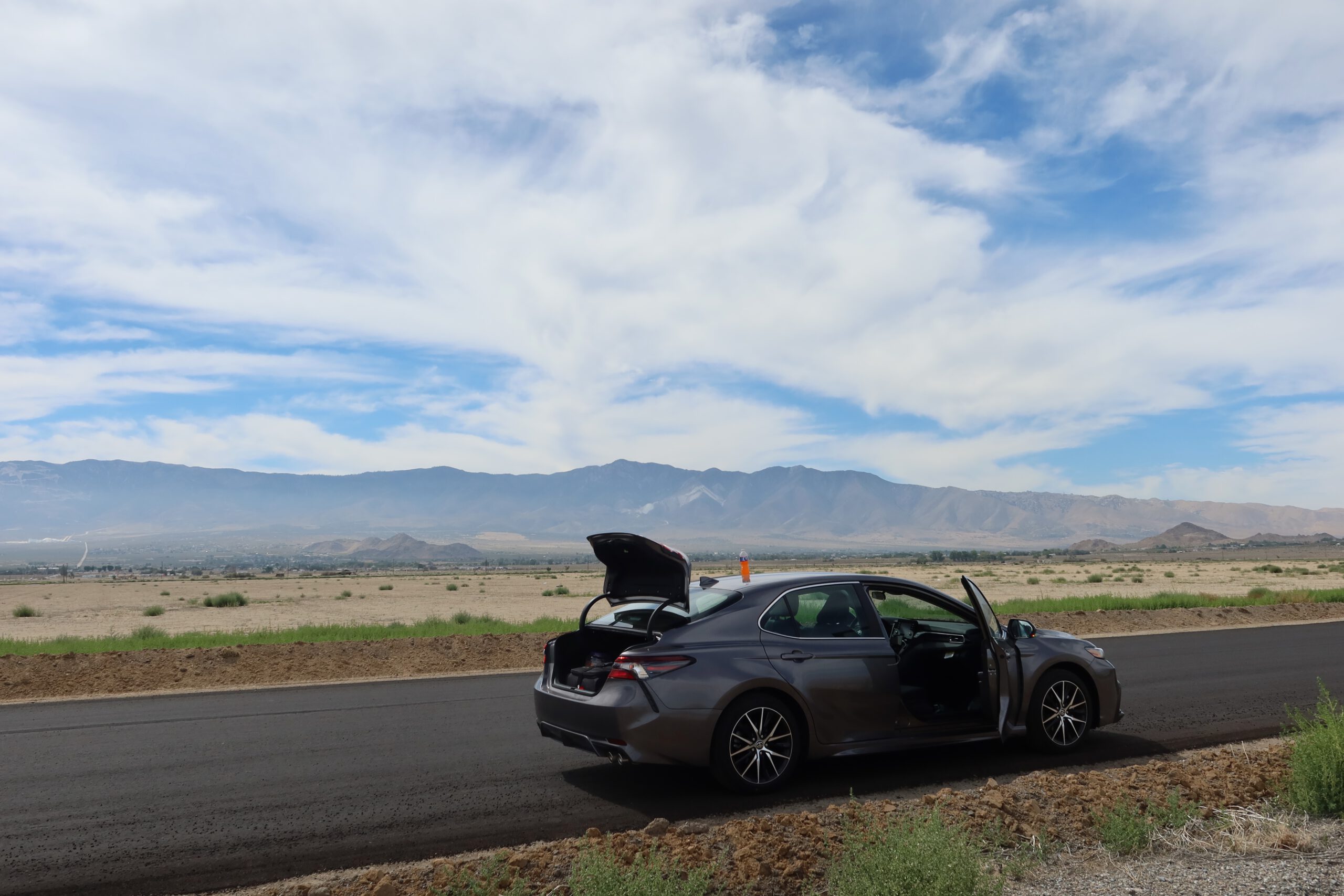
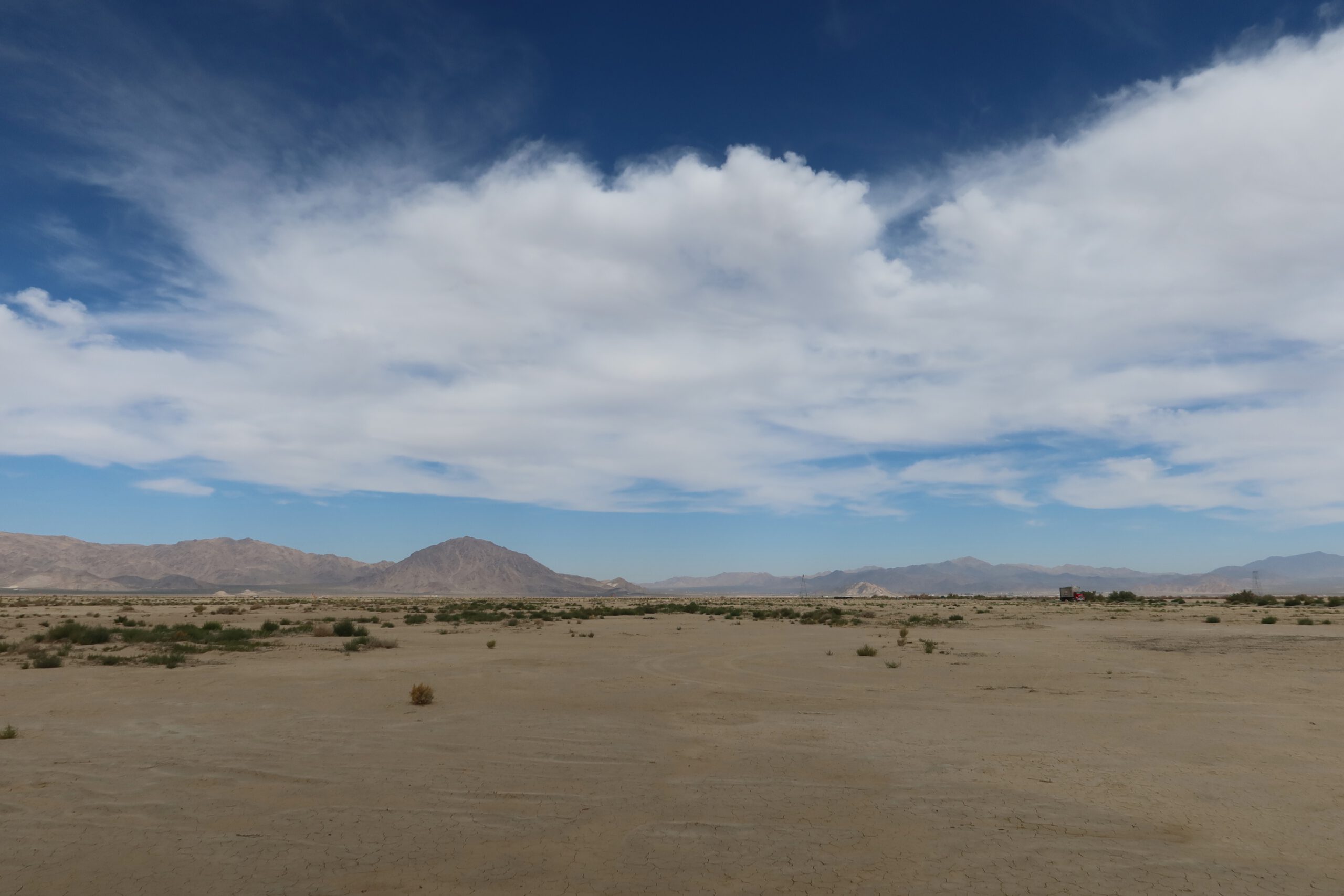
The Mojave Desert landscape is defined by a classic mountain-and-basin structure. Long valleys stretch between isolated mountain ranges, creating vast open plains broken only by rocky ridges or distant silhouettes. Dry lakebeds, lava fields, and sand deposits add to the raw and almost alien appearance of the region.
One of the most iconic elements of the Mojave Desert landscape is the Joshua tree (Yucca brevifolia). These uniquely shaped trees grow naturally only within the Mojave and are especially prominent at higher elevations. Alongside Joshua trees, the desert supports creosote bushes, salt-tolerant plants, and various cactus species — all adapted to survive with minimal water and extreme sunlight.
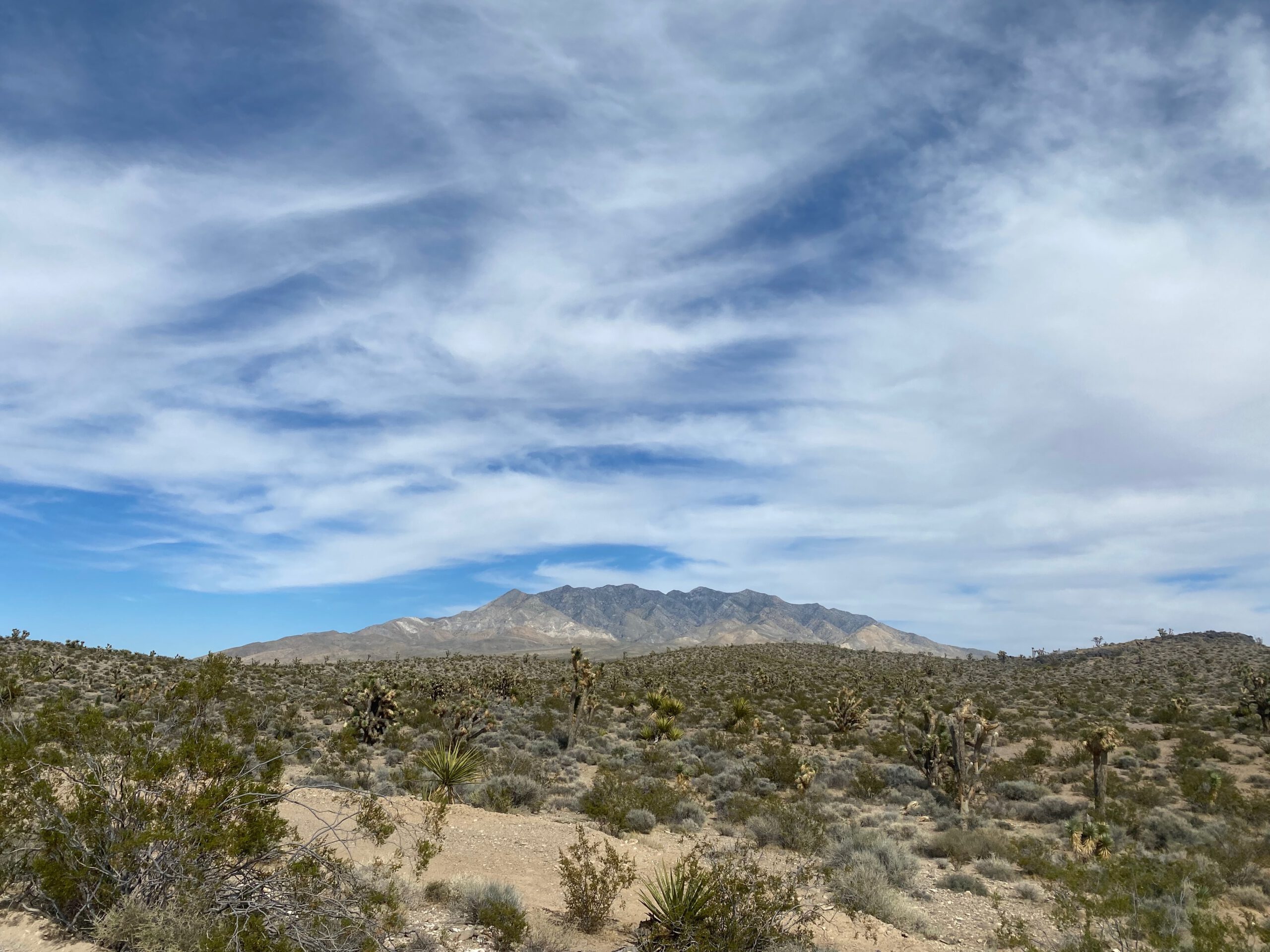
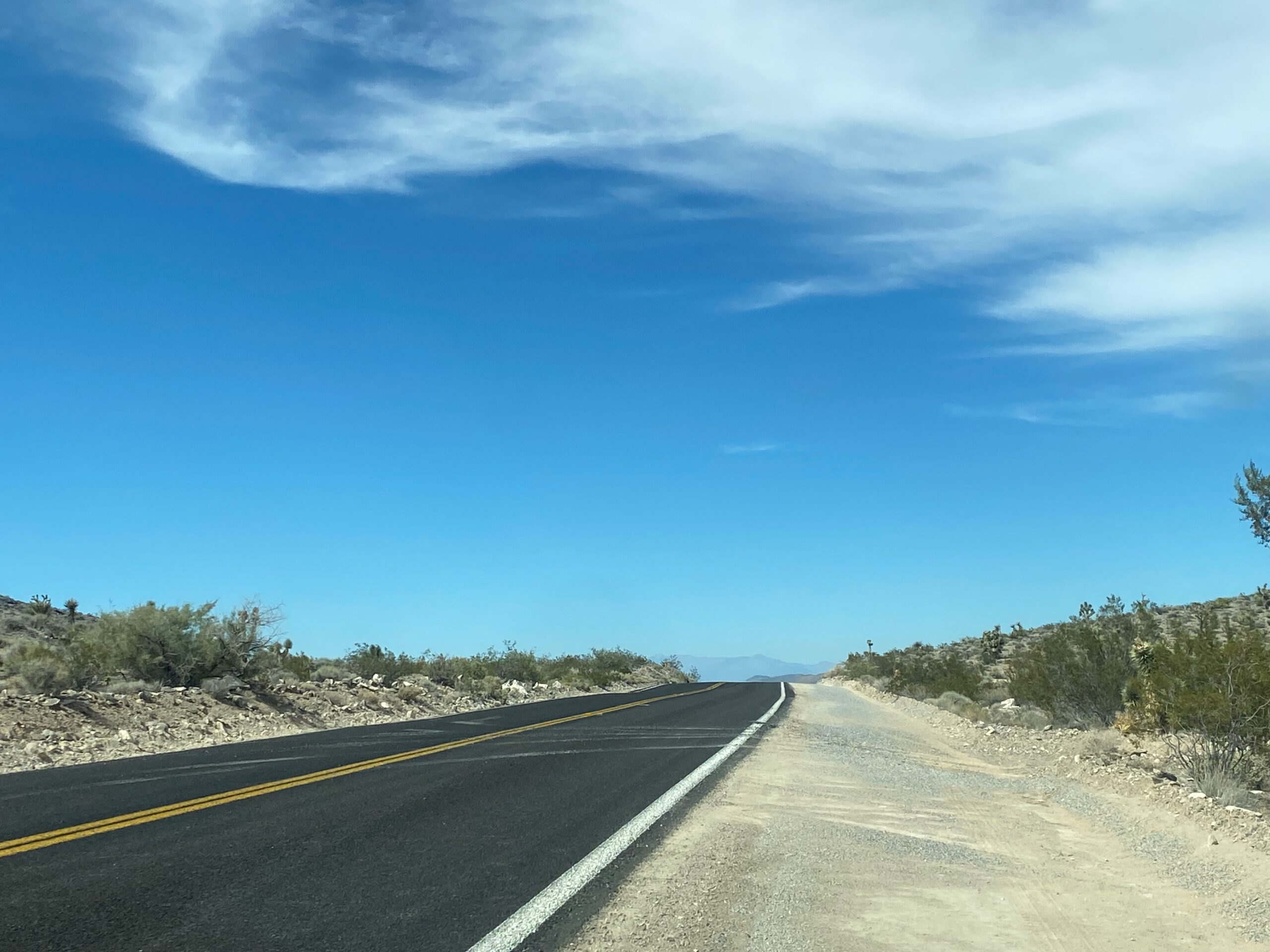
Despite its barren look, the Mojave Desert landscape is far from lifeless. Reptiles, small mammals, birds of prey, and nocturnal species thrive here. Life in the Mojave Desert California has adapted to heat, scarcity, and distance — a pattern that mirrors how humans have historically interacted with this environment as well.
Driving Through the Mojave Desert: Infrastructure Meets Isolation
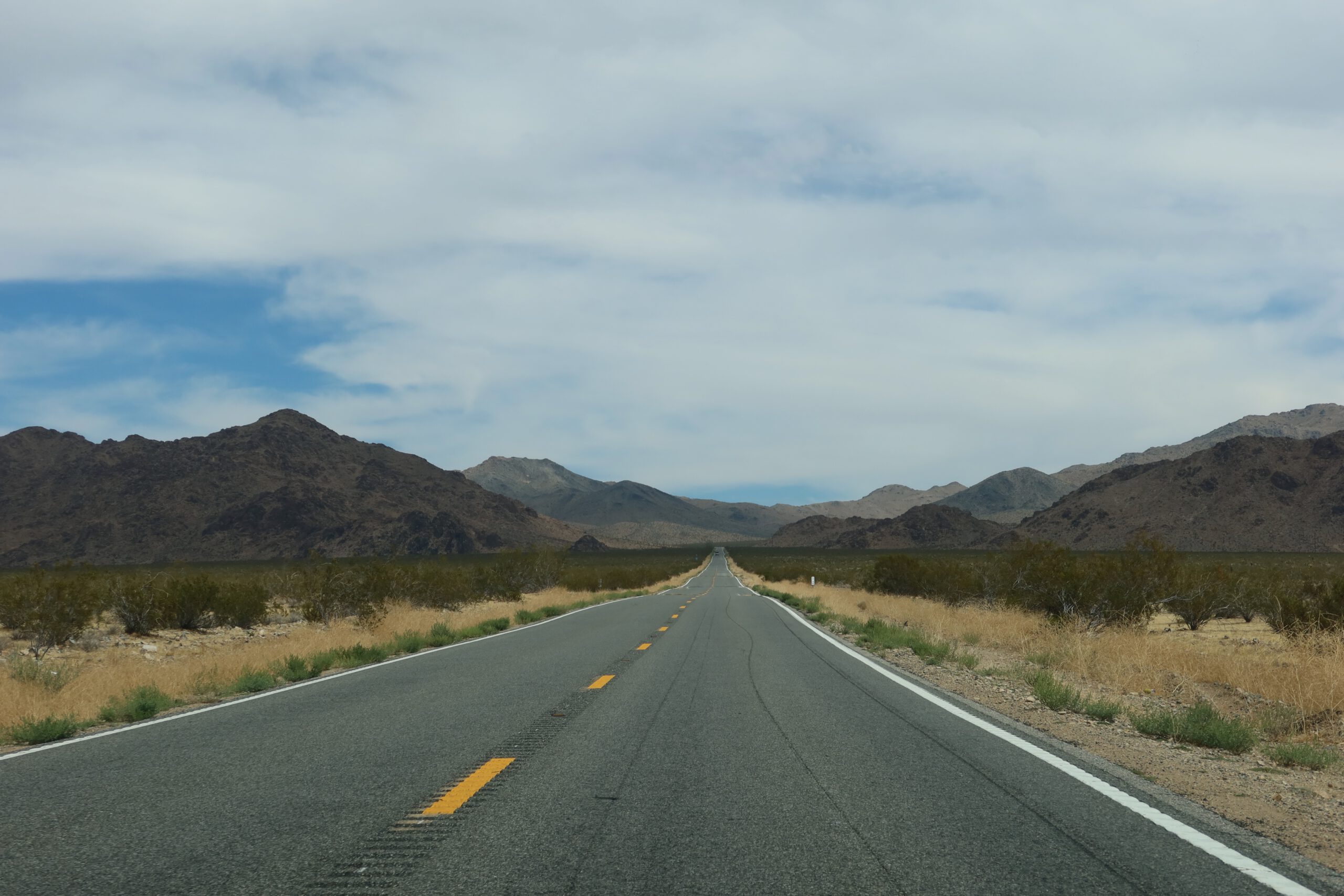
Driving through the Mojave Desert is a unique experience, especially in California. Unlike many remote regions around the world, the Mojave Desert California is crossed by surprisingly well-maintained highways and long, straight roads that cut cleanly through the desert. These roads are built for distance, not density.
Fuel stations, towns, and services are widely spaced, which makes preparation essential. At the same time, the quality of the roads stands out. Smooth asphalt, wide lanes, and long sightlines make driving through the Mojave Desert feel calm and controlled rather than stressful. Even in remote areas, the infrastructure feels solid and dependable.
What makes driving through the Mojave Desert special is the absence of traffic. Long stretches can pass without seeing another vehicle. The road seems to belong entirely to you, the landscape, and the heat shimmering in the distance. It’s a form of driving that encourages reflection rather than speed.
Mojave Desert Road Trip: Our Experience on September 27, 2023
Our Mojave Desert road trip took place on September 27, 2023, during the morning hours in Pacific Time. From the moment we entered the desert, the sense of scale became overwhelming. The Mojave Desert opened up quickly, with endless views and a feeling of total separation from urban life.
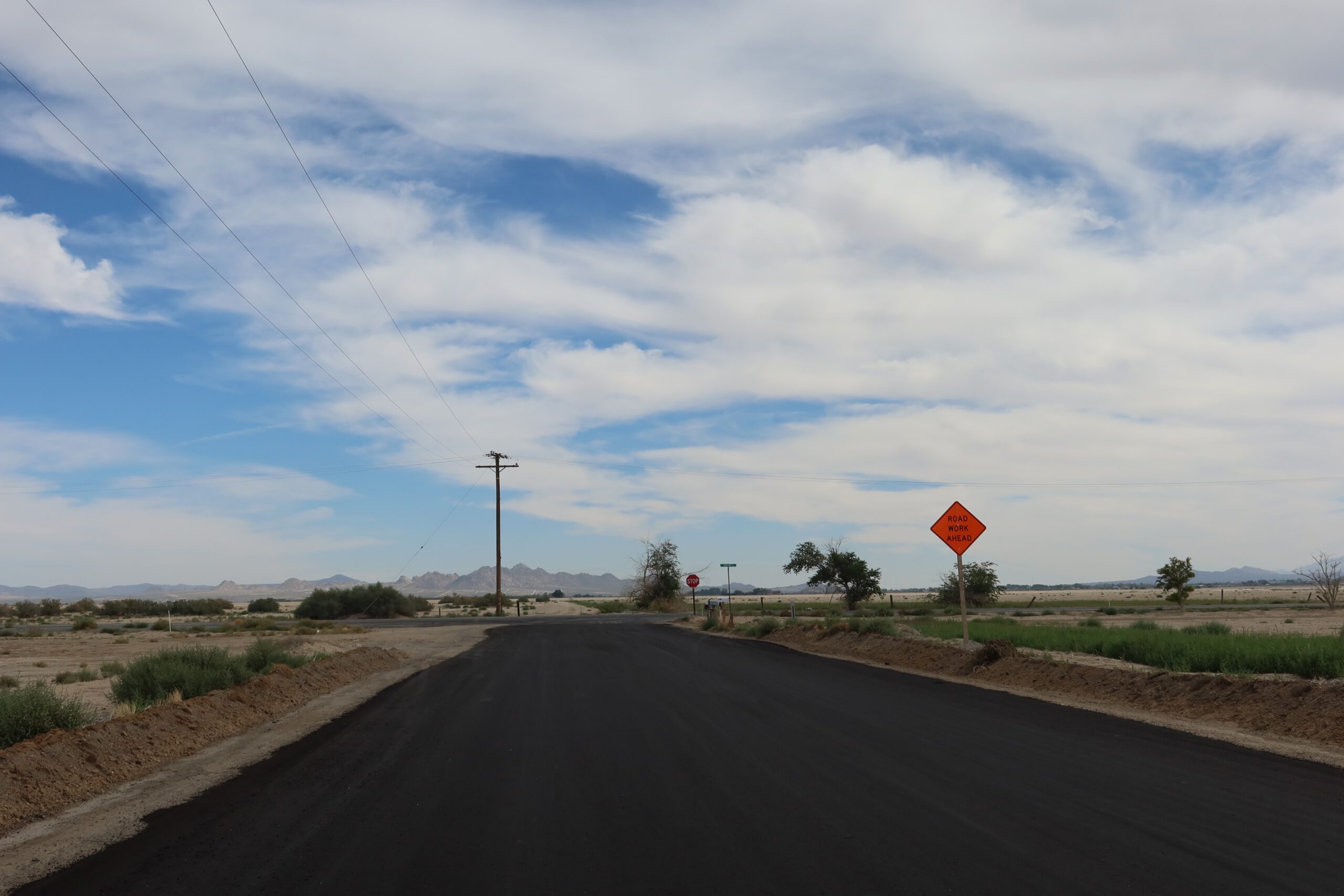
One of the first things we noticed during our Mojave Desert road trip was the quality of the roads. Several sections appeared freshly paved, despite being far from major towns or traffic hubs. Long, straight highways stretched toward the horizon with no visible end. It felt like infrastructure built ahead of demand — roads waiting for a future that hasn’t arrived yet.
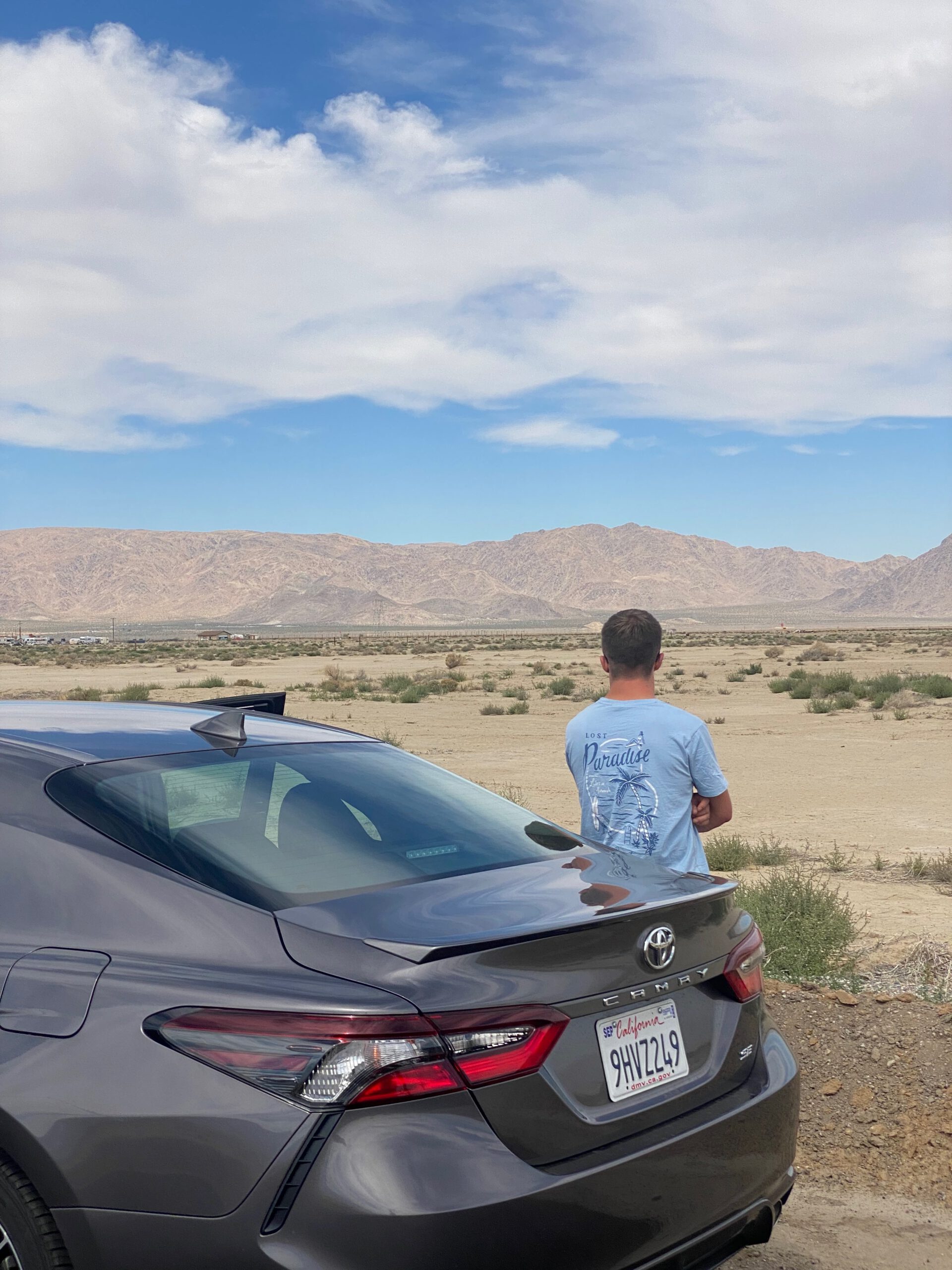
We stopped frequently, stepping out into the open desert air. Even in the morning, temperatures were already approaching 40°C (around 104°F). Yet the heat felt different. The air was extremely dry, making the temperature intense but not suffocating. The lack of humidity made standing outside surprisingly comfortable for short periods.
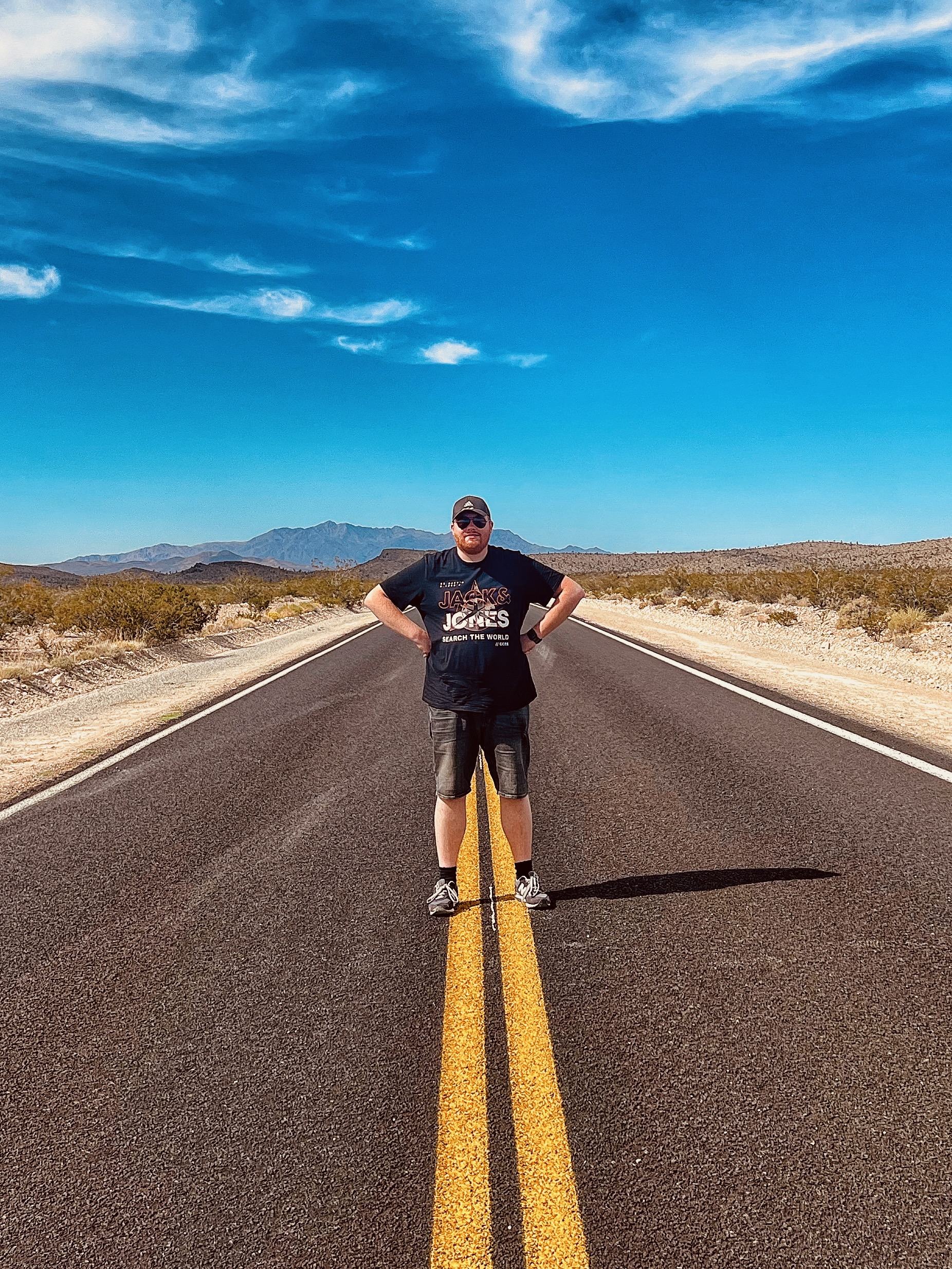
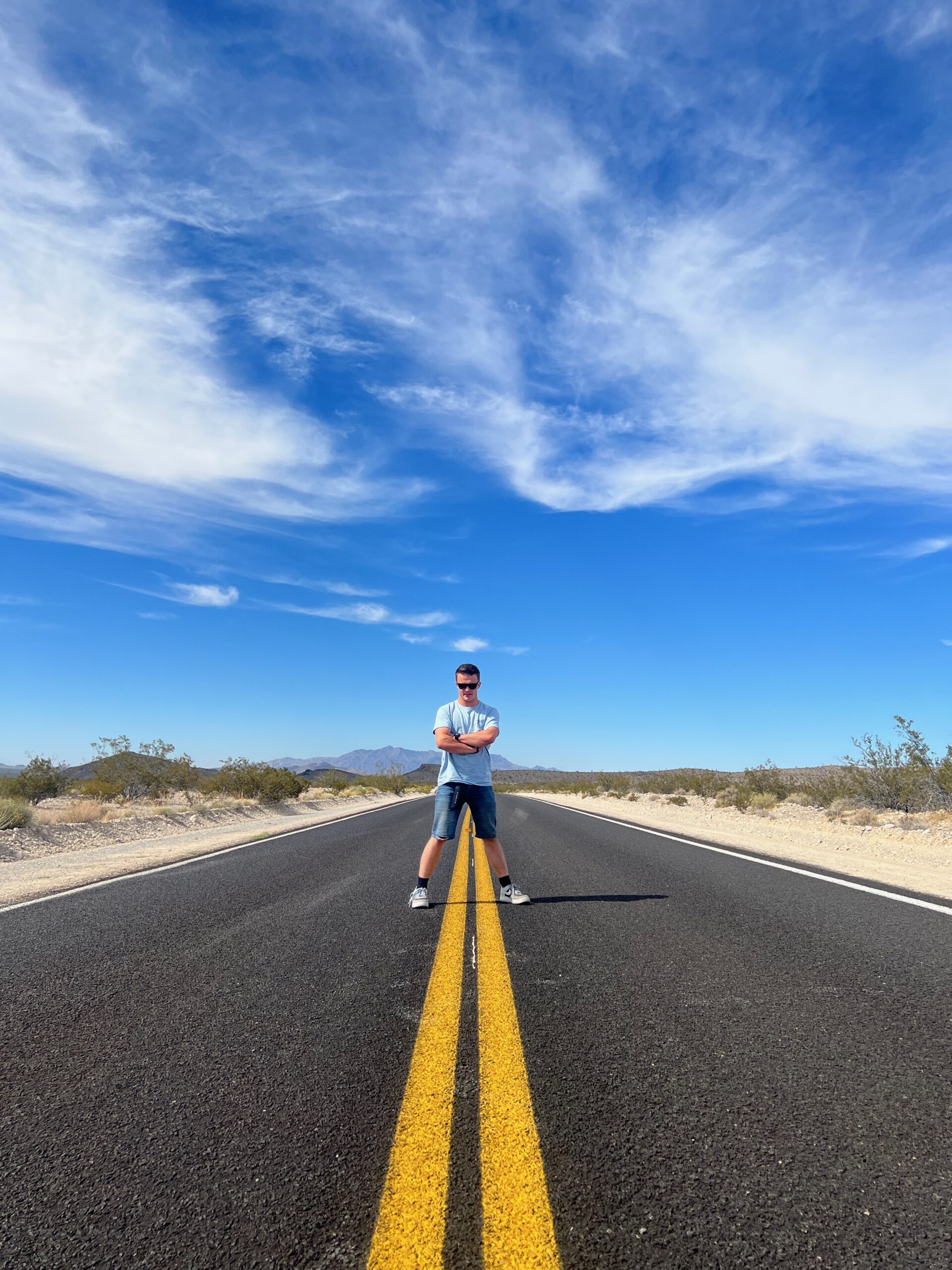
The Mojave Desert road trip experience was defined by silence. No crowds, no constant noise, and no visual clutter. Just desert, sky, and road. Small desert towns appeared occasionally — often nothing more than a gas station or a handful of buildings. Larger cities were rare, reinforcing the feeling of distance and isolation that defines this part of California.
Mojave Desert California: Calm, Space, and American Identity
What stood out most during our drive was how peaceful the Mojave Desert California felt. This is not a desert that overwhelms with spectacle at every turn. Instead, it impresses through scale, consistency, and restraint. The landscape doesn’t change rapidly, but that stability creates a rhythm that draws you in.
The Mojave Desert landscape stretched seamlessly across state lines. There was no dramatic transition when approaching Nevada — just a continuation of desert forms and colors. That continuity reinforced the feeling that the Mojave Desert California is part of something much larger than state borders.
For travelers seeking a slower pace, fewer people, and strong American road-trip vibes, this region delivers effortlessly. The Mojave Desert road trip is not about ticking off attractions. It’s about movement, distance, and presence.
Why Driving Through the Mojave Desert Leaves an Impression
Driving through the Mojave Desert combines two extremes: accessibility and isolation. You are never truly lost, yet you often feel completely alone. That balance is rare. Modern roads guide you through a landscape that feels ancient, untouched, and indifferent to human presence.
Timing matters. Morning light in the Mojave Desert California softens the landscape. Shadows stretch across the ground, colors are muted, and the desert feels calm before the sun reaches its peak. September already brings serious heat, but early hours offer a more forgiving and visually rich experience.
In the end, the Mojave Desert landscape doesn’t demand attention — it earns it. The space, the roads, and the silence combine into an experience that stays with you long after you leave.
If you’re looking for a destination that delivers true American scale, minimal distractions, and a deeply immersive driving experience, a Mojave Desert road trip through California is hard to beat.
Fun fact:
Because of its dry climate and stable conditions, parts of the Mojave Desert California are used to store aircraft long-term with minimal corrosion — turning the desert into an unexpected archive of aviation history. ✈️