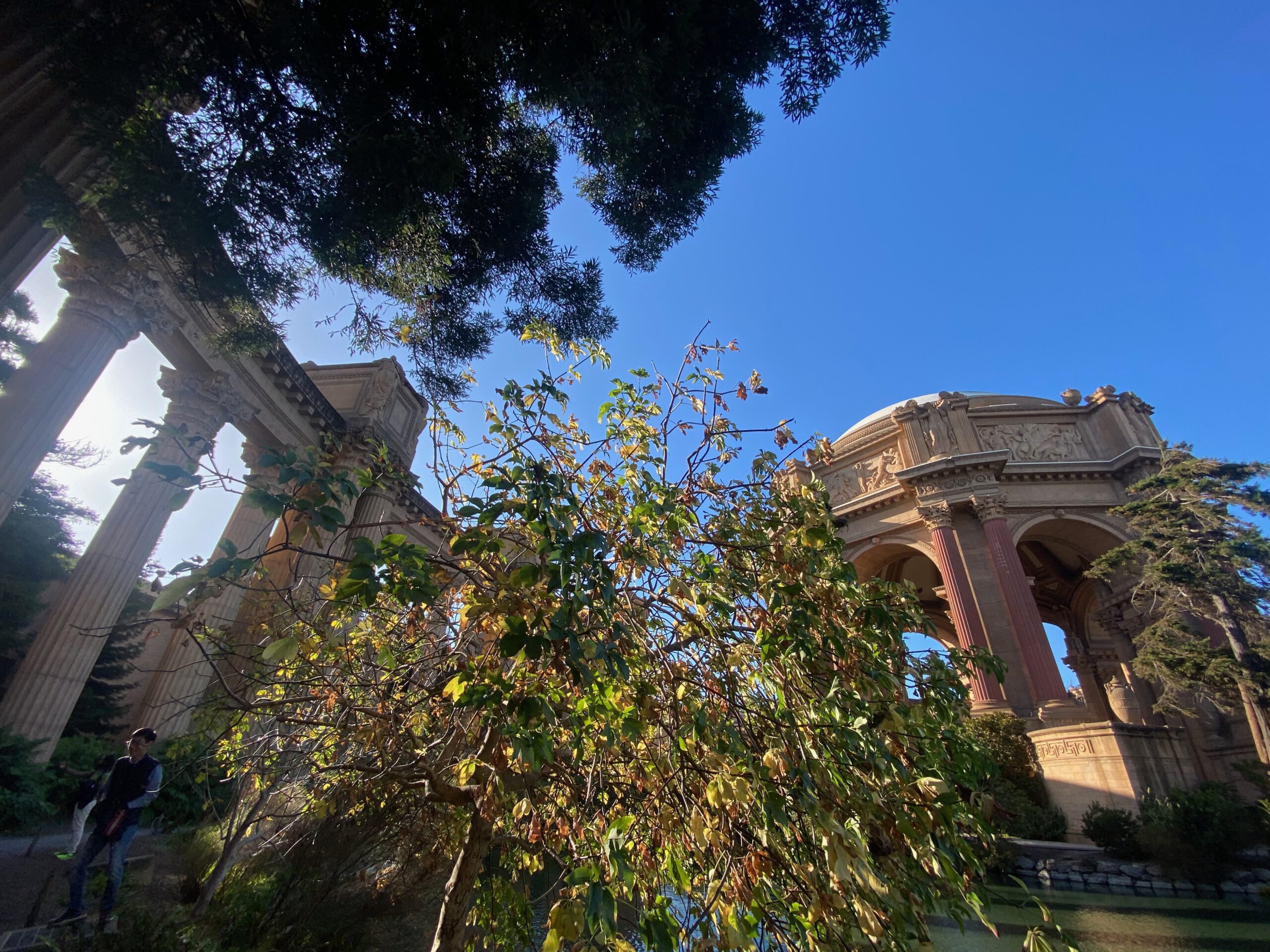


Palace of Fine Arts San Francisco is one of those places that instantly slows you down. Palace of Fine Arts San Francisco feels calm, almost unreal, especially when you arrive at a moment when the city seems to breathe quietly around you. This iconic landmark became our final stop in San Francisco, right before heading back to Europe, and it turned out to be the perfect place to end our journey.
We discovered Palace of Fine Arts San Francisco almost by accident while scrolling through Google Maps. One look at the photos was enough to convince us. In real life, the experience was even better.
Palace of Fine Arts San Francisco, general information and location
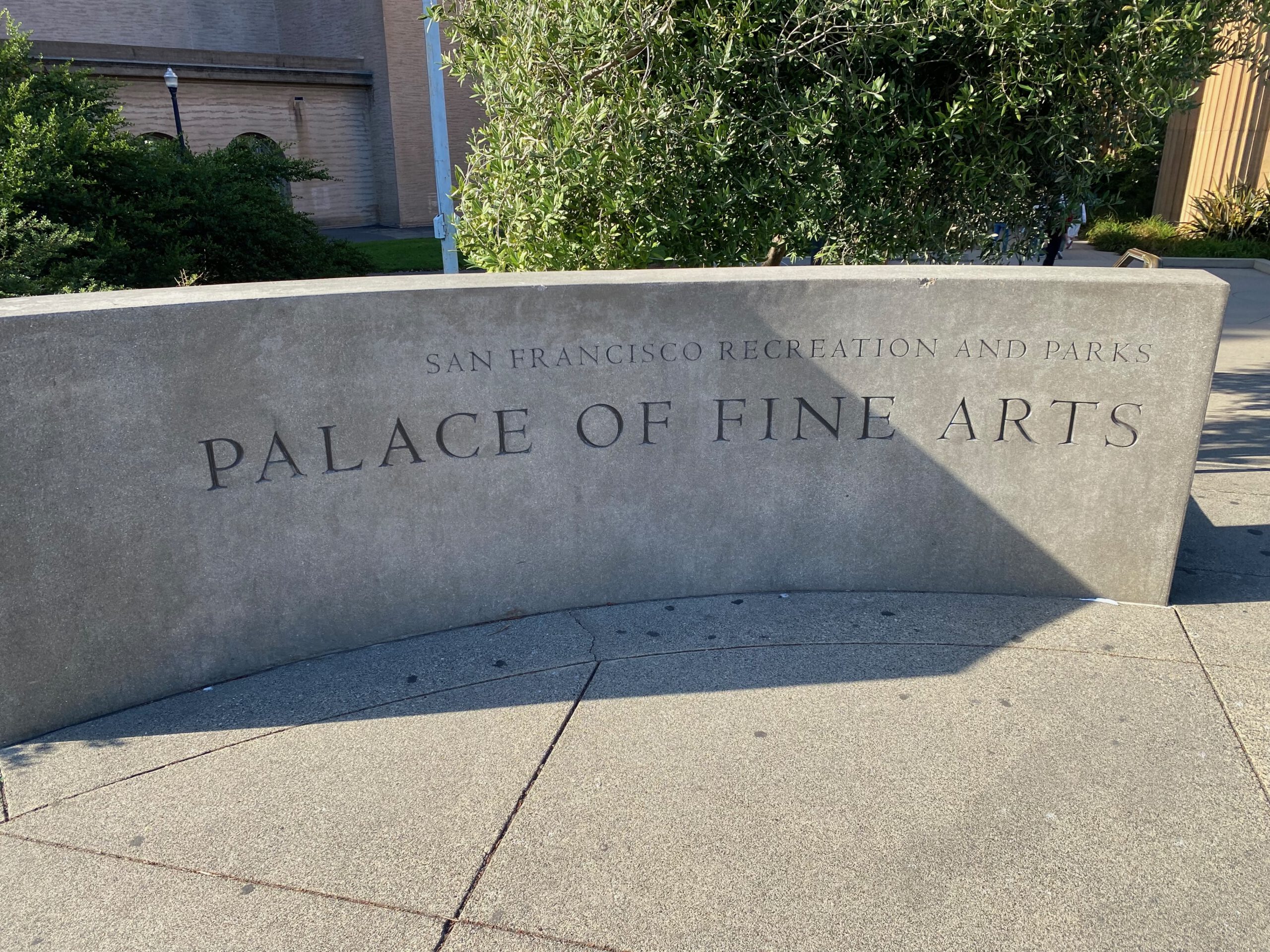
Palace of Fine Arts San Francisco is located in the Marina District, right on the edge of the Presidio. The structure sits beside a peaceful lagoon, surrounded by trees, walking paths, and wide open space. Unlike many famous spots in San Francisco, Palace of Fine Arts San Francisco does not feel cramped or rushed.
The site is freely accessible and open daily. You can walk around the rotunda, stroll along the water, or simply sit and take everything in. No tickets are required for the outdoor area, which makes Palace of Fine Arts San Francisco an easy and rewarding stop for any itinerary.
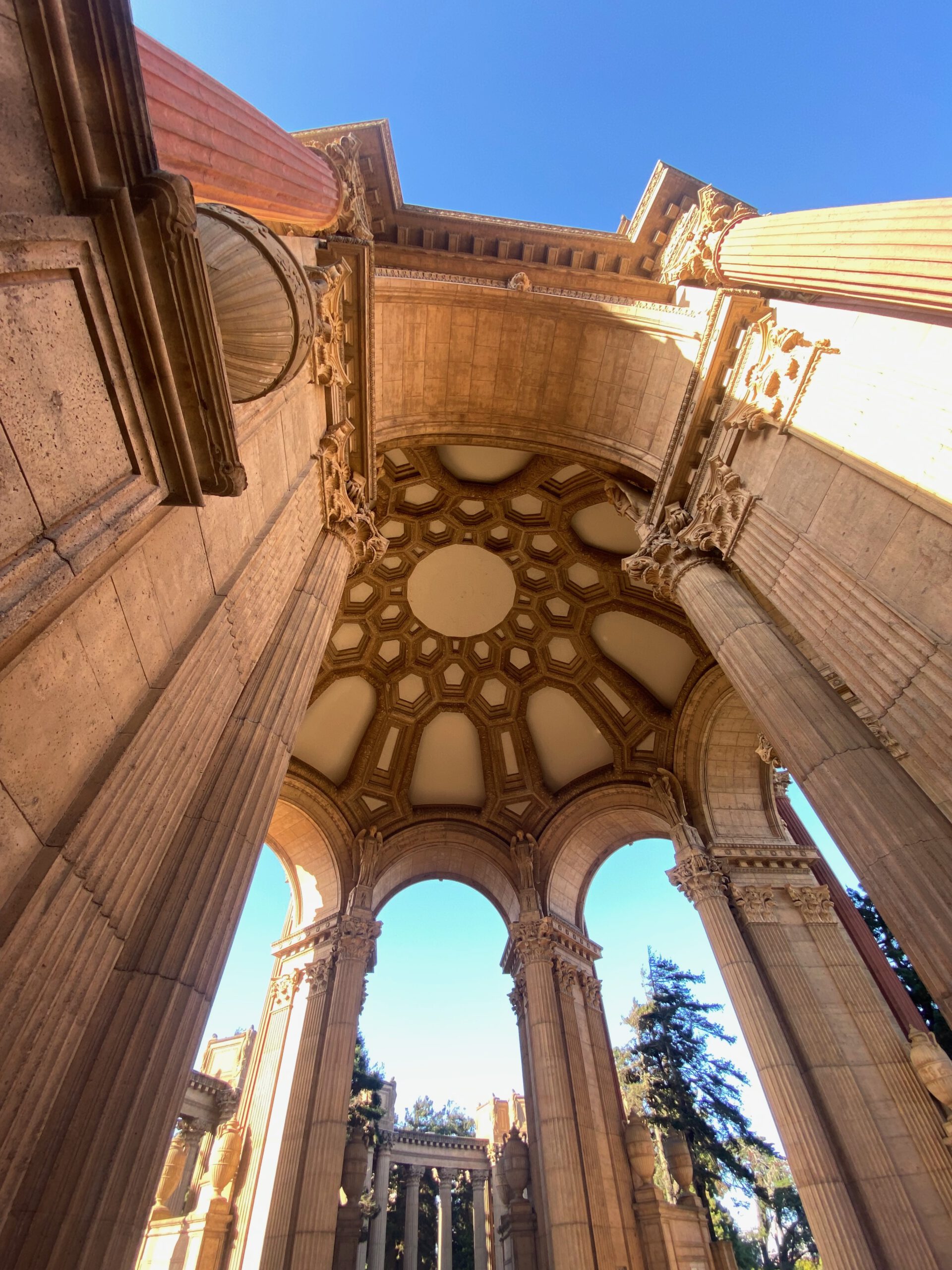
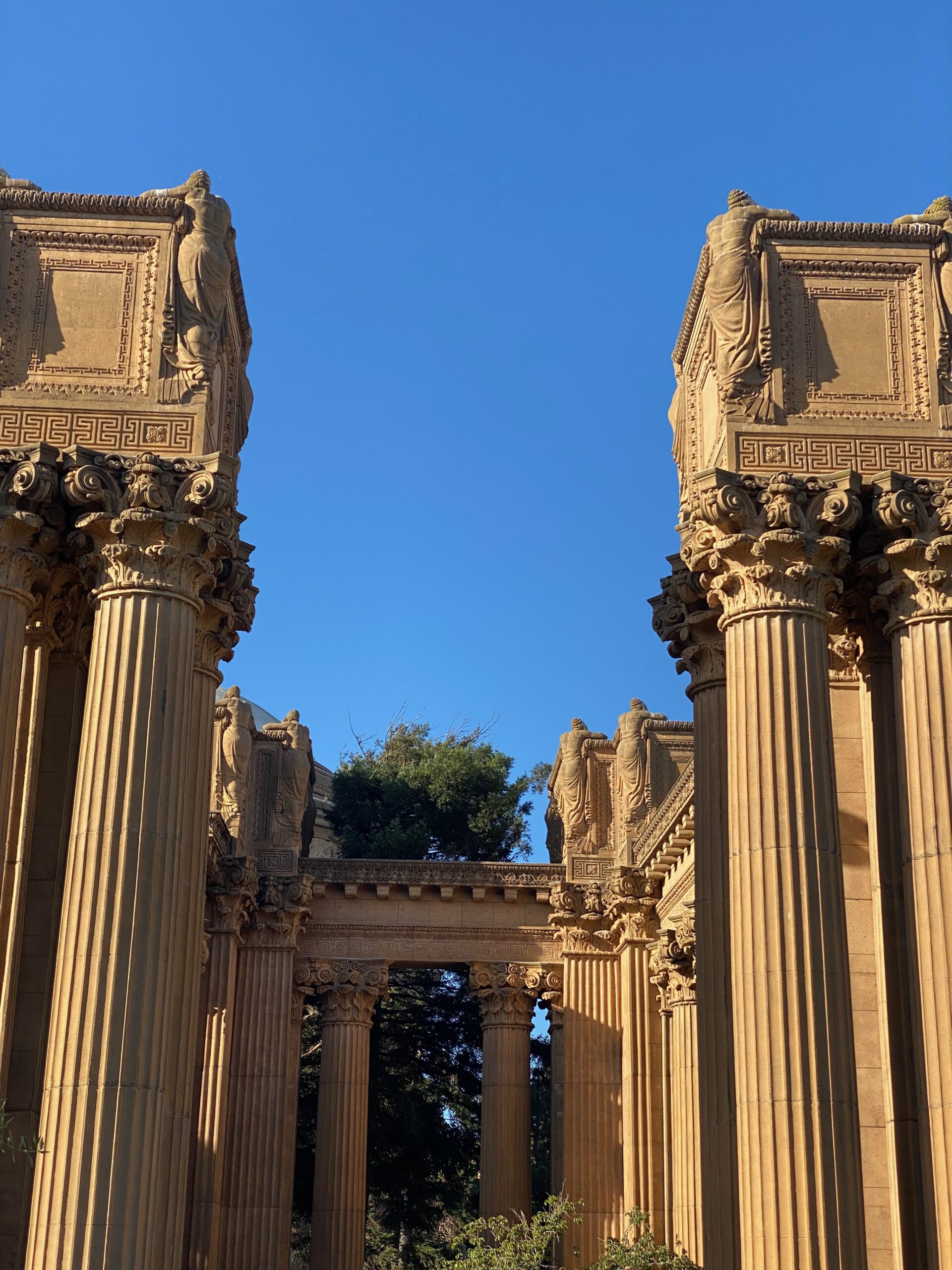
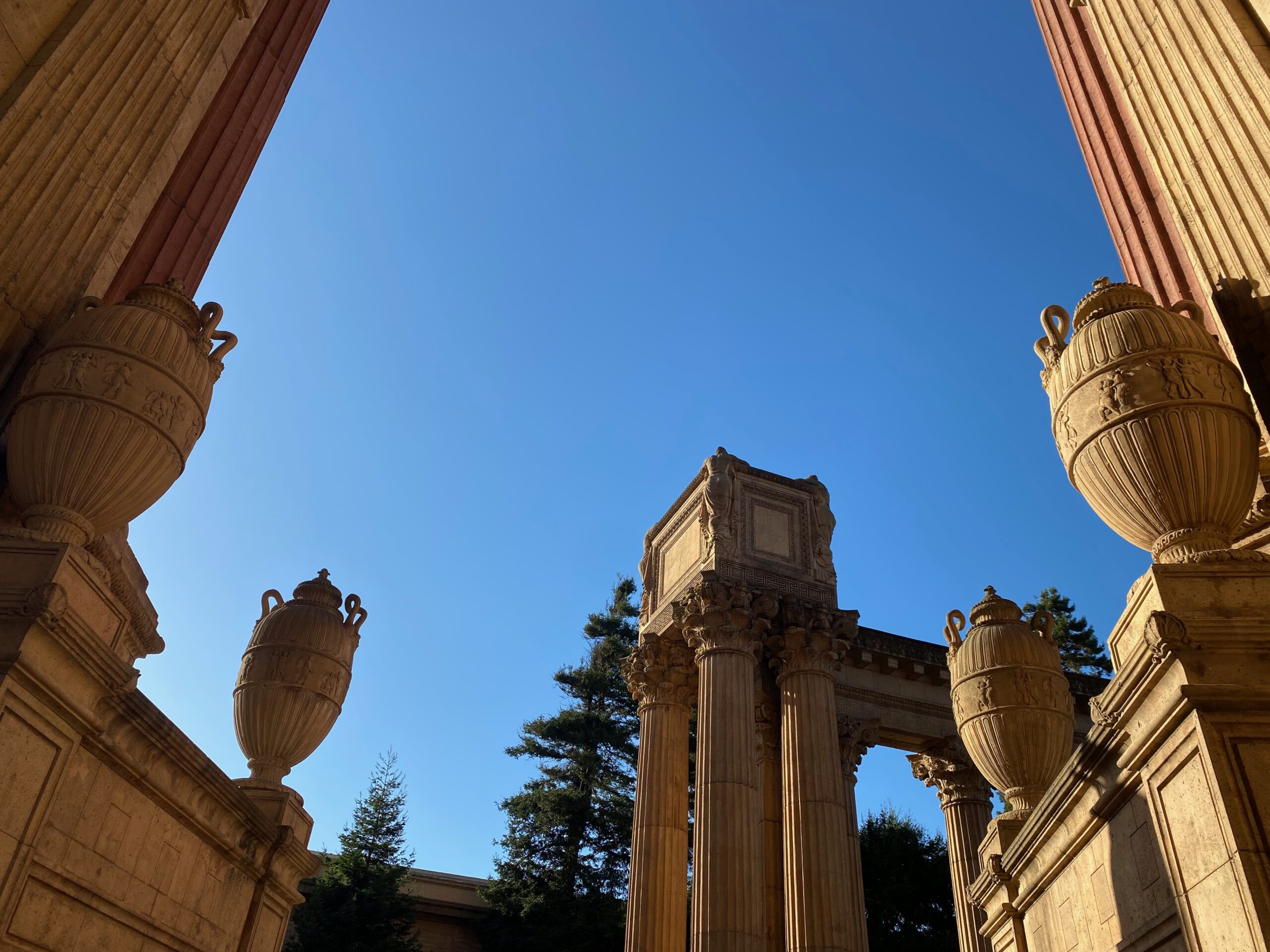
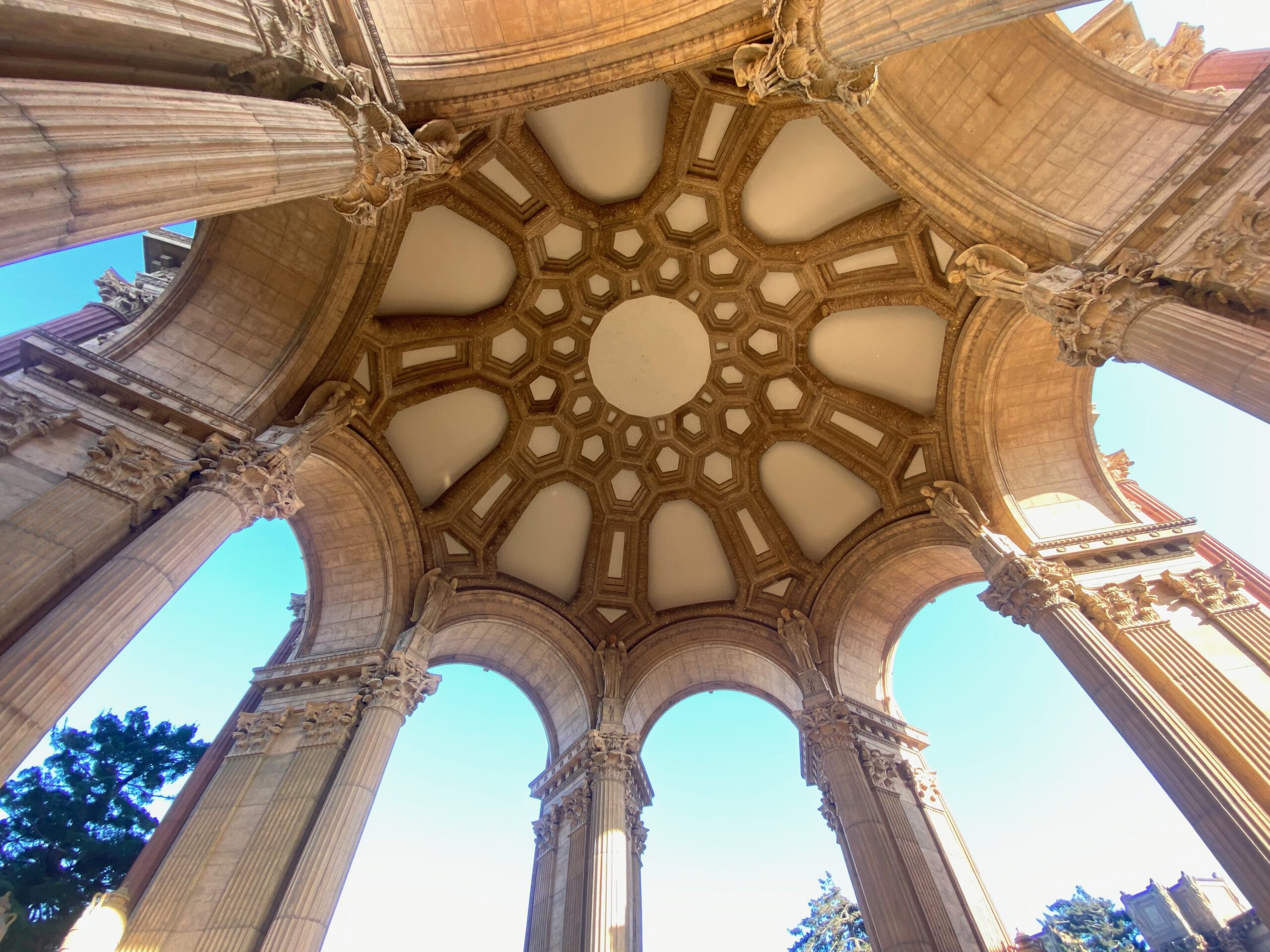
What immediately stands out is the massive rotunda, supported by tall Corinthian columns. The reflection of the structure in the lagoon adds to the almost dreamlike atmosphere. Even on a clear day, Palace of Fine Arts San Francisco feels slightly mysterious, as if it belongs to another time.
The rotunda and the heart of the Palace
The round central structure is called the rotunda, and it forms the emotional core of Palace of Fine Arts San Francisco. Standing underneath it, you notice how sound behaves differently. Voices echo softly, footsteps fade, and music carries beautifully through the open space.
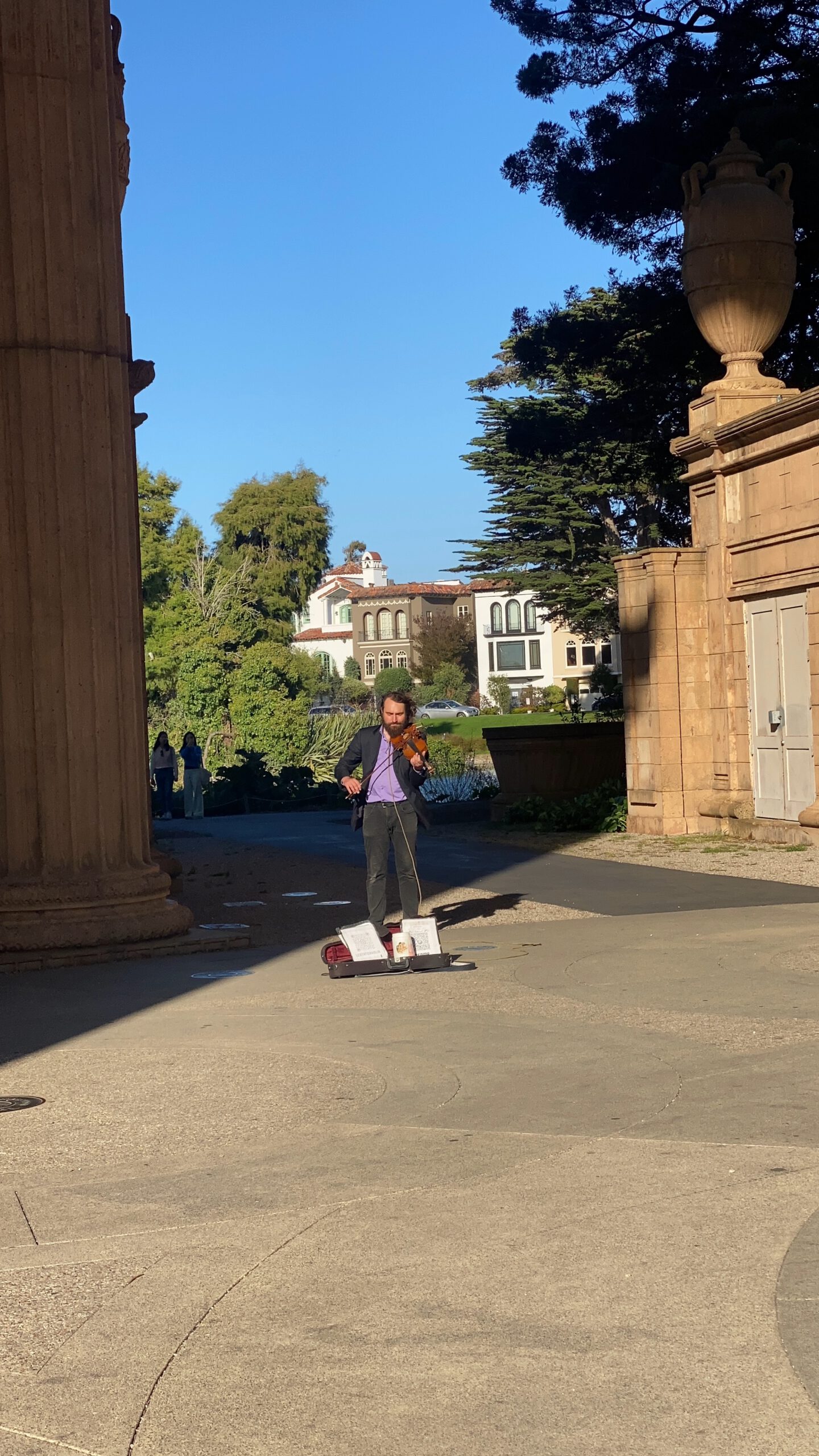
During our visit, it was relatively quiet. Only a handful of people were walking around, which made the experience feel personal. Under the rotunda, a man was playing Arabic instrumental music, later adding vocals that filled the space in a gentle and powerful way. The acoustics amplified every note without overpowering the calm surroundings.
It was one of those unexpected travel moments that stay with you. Palace of Fine Arts San Francisco offered not just a visual highlight, but an emotional one as well.
Palace of Fine Arts San Francisco history and origins
Palace of Fine Arts San Francisco was originally built for the 1915 Panama Pacific International Exposition. This world fair was organized to celebrate the completion of the Panama Canal and to show that San Francisco had fully recovered from the devastating earthquake and fire of 1906.
Architect Bernard Maybeck designed Palace of Fine Arts San Francisco with a bold idea in mind. Instead of creating a shiny, perfect building, he envisioned a structure that looked like a romantic ruin. The design was inspired by ancient Roman architecture and classical European art.
The building was meant to represent the impermanence of greatness, a poetic reminder that even the most powerful civilizations eventually fade. Originally, Palace of Fine Arts San Francisco was constructed using temporary materials and was supposed to be demolished after the exposition.
From temporary structure to permanent icon
Public support saved Palace of Fine Arts San Francisco from demolition. Over the years, the structure deteriorated, but its beauty and cultural value were undeniable. In the 1960s, a full reconstruction took place, rebuilding Palace of Fine Arts San Francisco using durable materials while preserving the original design.
Today, Palace of Fine Arts San Francisco is listed on the National Register of Historic Places and stands as the only surviving structure from the 1915 exposition. What was once meant to be temporary has become one of the most enduring symbols of the city.
Inside the complex, the Palace of Fine Arts Theatre hosts performances, events, and exhibitions. While the interior spaces are often used for organized events, the outdoor area remains freely accessible and is the most iconic part for visitors.
A peaceful contrast to the city
San Francisco is known for its energy, hills, traffic, and constant movement. Palace of Fine Arts San Francisco offers a complete contrast. The lagoon attracts birds, turtles, and reflections that change with the light throughout the day.
Because of its size and layout, Palace of Fine Arts San Francisco rarely feels overcrowded. Even when other famous landmarks are busy, this place often remains calm. That calmness made it the perfect final stop before leaving the city.
Walking slowly around the water, hearing distant music under the rotunda, and seeing the columns reflected in the lagoon felt like a quiet goodbye to San Francisco.
Why Palace of Fine Arts San Francisco is a must visit
Palace of Fine Arts San Francisco is not just beautiful, it is meaningful. It combines architecture, history, art, and atmosphere in a way few places manage to do. Whether you are visiting San Francisco for the first time or returning for a final walk through the city, this location deserves a place on your route.
It is a spot for photographers, history lovers, architecture fans, and travelers who appreciate peaceful moments. Palace of Fine Arts San Francisco does not demand your attention loudly. Instead, it invites you to slow down and look closer.
As a final memory of San Francisco, Palace of Fine Arts San Francisco could not have been a better choice. Calm, powerful, and timeless.